Thursday, December 04, 2014

Schuler Presents THE STEEL BAR to ACC

Reposted from Ingots:

Ron Schuler, Member in Charge of the Pittsburgh office, recently gave a presentation on “The Steel Bar: ‘In-House Lawyers’ in Pittsburgh – History and Ethics,” with special guest Jerry Richey, general counsel of the University of Pittsburgh, to the Pittsburgh chapter of the Association of Corporate Counsel.

Schuler’s talk, which was a preview of his book-in-progress, The Steel Bar: Pittsburgh Lawyers and the Making of Modern America, focused on episodes from the book involving in-house lawyers, with sidebar discussions about ethical issues with Richey.
Schuler discussed the development of the concept of an in-house lawyer in Pittsburgh – “a job that didn’t exist in 1800” – through George Westinghouse’s pioneering appointment of Pittsburgh patent lawyer George Christy as Vice President and general counsel of Westinghouse Air Brake Company in 1873, to the creation of the “in-house law firm” by Alcoa general counsel Leon Hickman in the 1950s. Schuler also commented on the role of the in-house lawyer in the conflict between Carnegie and Frick that led to the “World’s Greatest Lawsuit” and the role of big company GCs — such as Alcoa’s Hickman, PPG’s Leland Hazard and Mellon’s Arthur Van Buskirk — in driving Pittsburgh’s Renaissance civic improvement projects during the 1940s and 50s.
The Steel Bar, Schuler explains, is not just a history of the legal profession in Pittsburgh, but a book about important aspects of American history. “It is about the ways that Pittsburgh lawyers have been engaged in important American issues at the highest levels” – for example, in defining the limits of dissent under a new constitution during the Whiskey Rebellion, improvising the legal inner-workings of American corporate ownership, management and control during Pittsburgh’s great industrial revolution of the 19th century, and working at the center of the crises that defined American labor-management relations, from the 1877 Railroad Riots, to the battle between Carnegie Steel and the steelworkers at Homestead in 1892, to the creation of the NLRB in the 1930s. The book also shows Pittsburgh lawyers and their unique experiences during important national trends and periods, such as the McCarthy Era, machine politics and the rackets, the fight for civil rights during the 1960s, and the ongoing challenges of achieving diversity within the profession. The Steel Bar is expected to be completed in early 2015.
Jerry Richey, who was named general counsel of the University of Pittsburgh in 2013, previously served as general counsel and chief legal officer at CONSOL Energy from 2005 to 2013, and prior to that served as a shareholder and ethics counsel to the firm of Buchanan Ingersoll. Richey is also known to track and field fans as a world-class miler who ran a sub-4-minute mile in the 1968 U.S. Olympic Trials, and still holds the record at the University of Pittsburgh for the 3200 meter race, with a time of 8:39.44.
To learn more about The Steel Bar, click here.

Labels: , , ,

Friday, June 21, 2013

Jacob Margolis: Pittsburgh lawyer, Anarcho-Syndicalist

         Chairman:  Just how would you describe yourself?
         Margolis:  First, syndicalist; I put the syndicalist first, because it is an important thing; syndicalist-anarchist would be my position.


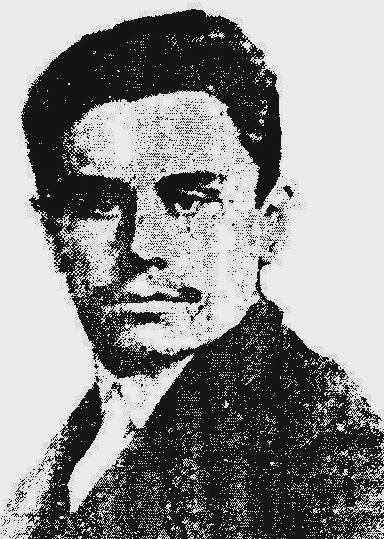
Jacob Margolis, a Pittsburgh lawyer who represented the IWW during the 1919 Steel Strike, told Senator William Kenyon of Iowa that he was an anarchist during a Senate investigation of the Steel Strike.  When he returned home to Pittsburgh, he found that the Allegheny County Bar Association was moving to have him disbarred.  During the legal battle that followed, the ACBA was fed information from the FBI.  Margolis lost his license to practice law in 1920 following arguments before the Pennsylvania Supreme Court, but was reinstated within the bar in 1928.  He spent most of the rest of his career as a writer and lecturer, retiring to Santa Barbara, California during the 1940s.


NOTE: Photo is not available for republication.

Labels: , , , , , ,

Friday, April 26, 2013

Justice Baldwin's Dueling Past

"Duels were not altogether uncommon among these men in this day. ... Henry Baldwin had fought a duel against another lawyer, Isaac Meason, Jr., over a grievance that has been described as either political or romantic in nature – possibly both. During the first round of pistol-fire, Baldwin was hit in the chest and began spitting up blood, so witnesses feared he had been shot through; but apparently a Spanish silver dollar in Baldwin’s waistcoat pocket deflected Meason’s bullet. The parties were scared off by a posse sent by Judge Riddle before they could lob a second volley." Henry Baldwin later became an associate justice of the United States Supreme Court.

See The Steel Bar: Pittsburgh Lawyers and the Making of Modern America.

Labels: , , , ,

Friday, July 17, 2009

103 Year-Old Pittsburgh Lawyer Reflects on Career

[In the course of my research for my upcoming book, I get to interview some pretty interesting folks. Some notes from my interview of Reuben Fingold, a 103-year old retired lawyer living with his wife in Pittsburgh, were published in the July 17 edition of the "Lawyers Journal," a publication of the Allegheny County Bar Association.]

Reuben Fingold, a 103 year-old Shadyside resident who was admitted to the Allegheny County Bar in 1930 and joined the Allegheny County Bar Association in 1933, was honored by the Board of Governors of the ACBA on June 2 for achieving the status of the oldest member of our Bar, and for “his Seventy Six years of service to the Allegheny County Bar Association and the legal community.”

At his side for the occasion was Mr. Fingold’s wife Helen, who is only a few years his junior. “[The inscription on the plaque] is really lovely,” she says, beaming with pride. 

Mr. Fingold’s recollections from his youth and his early years as a practitioner in Pittsburgh are like a time capsule from a bygone era. When he began his law practice, Herbert Hoover was in the White House. Fingold was 22 years old before movies had sound, and his family’s first radio was one that he put together himself from spare parts that he bought at a plumber’s shop in East Liberty. 

His parents lived in McKeesport when they were first married, where his father made men’s suits, drawing patterns for them on large rolls of green paper. “My mother used to tell us how she’d put the two [oldest] babies in a carriage, wheel them down to the wharf in McKeesport, and push the carriage onto a boat” that would take them along the Monongahela River to Pittsburgh, where they would visit his mother’s sister. Eventually, the Fingolds moved to the Hill District, where Reuben Fingold spent his earliest years, and then to Shadyside. 

“One of the things I remember,” Mr. Fingold says, “was when the newspaper came in and it said ‘TITANIC SUNK!’” The year was 1912. “My mother sat down and cried. I was pretty young then, and I didn’t know what the Titanic was, but my mother had come over from Europe” aboard an ocean ship, Fingold explains, and she instantly knew what the passengers on the Titanic must have experienced.

Mr. Fingold’s older brother, A.S. “Abe” Fingold, entered the Bar in 1926; but even before then, Mr. Fingold was fairly certain that he, too, would become an attorney, since he always had a penchant for “asking people all kind of questions.” After undergraduate studies at the University of Pittsburgh, Mr. Fingold enrolled in the Law School at Duquesne. In his first year, he had to take oral final exams, facing the entire Duquesne faculty – which consisted entirely of full-time practicing lawyers at the time – and fielding questions on each of the courses he had studied that year. His would be the last class of Duquesne law students to have to endure the oral exam gauntlet.

On the day Mr. Fingold found out he had passed the Bar, he and his brother Abe happened upon an Allegheny County judge while walking downtown. Abe Fingold greeted the judge and introduced him to his brother, announcing that Reuben had just passed the Bar. Mr. Fingold showed the judge his notification letter, whereupon the judge instructed Mr. Fingold to raise his right hand. “He swore me into the Bar, right then and there on the sidewalk,” Mr. Fingold explains, although he later formalized the event by signing the County registry.

Mr. Fingold set himself up as a sole practitioner in the Jones Law Building, sharing offices with his brother Abe and several more senior lawyers, including W.C. McClure and the John Metzes, father and son. The year 1930, amid the turmoil the Great Depression, was a difficult time to establish a new practice, but Mr. Fingold managed to earn a small living by doing title searches for other lawyers for $10 a search – sometimes accepting even less. “The [deed] books weighed almost as much as me,” he remembers. 

At the age of 36, Mr. Fingold left his Pittsburgh practice behind briefly and volunteered for World War II duty, attaining the rank of Major in the U.S. Army Air Corps and serving in the Judge Advocate General Department. He also designed a few inventions during this period, including some patented improvements to mason jar lids and electrical switches, and a bag holder for blood and plasma that he proposed to Army doctors during the War. 

Before his retirement from the law in the late 1970s, Mr. Fingold had built a comfortable general practice that included a few clients who paid him an annual retainer. Sometimes his job as a lawyer, however, would be merely to convince the right official to pay attention to a problem. One of his clients complained about garbage being thrown down a hillside owned by the client’s aunt; while it was fresh on his mind, Mr. Fingold happened to spot Mayor David L. Lawrence waiting for a streetcar, and he explained the situation to him. The Mayor made a note of the lawyer’s concerns, and the next morning, city maintenance men came and cleaned up the hillside. “Anybody could see David Lawrence,” Fingold remembers. “And he cleaned the city up.”

Reuben Fingold’s experiences recall a time when Pittsburgh was smaller, when streetcars could take you anywhere, and it only cost 15 cents a day if you wanted to park a car downtown. His unheralded career is another illustration of some of the simple virtues that were important to Pittsburgh’s lawyers during the first half of the 20th century, when both life and practice were filled with face-to-face, hands-on experiences – the arts of greeting, conversation, casual persuasion and straight-forward problem-solving, in broad daylight.

Labels: , , , ,

Wednesday, July 18, 2007

Twist Slowly, Slowly in the Wind


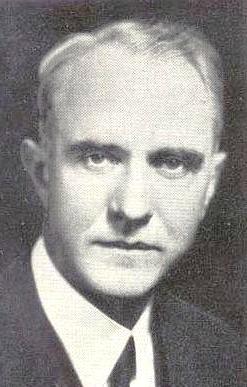
L. Patrick Gray, III, acting director of the U.S. Federal Bureau of Investigation (1972-3), was born on this day in 1916 in St. Louis, Missouri.

A Navy submarine captain and lawyer, Pat Gray served briefly as military assistant to the chairman of the Joint Chiefs of Staff before working on Richard Nixon's 1960 presidential campaign. In 1970, Nixon pulled Gray away from his quiet Connecticut law practice and appointed him assistant U.S. attorney general. After the death of the seemingly indestructible FBI chief J. Edgar Hoover in 1972, Nixon seized the opportunity to try and re-make the FBI as an instrument of the White House by installing his loyal friend Pat Gray as acting director pending confirmation by the Senate.

Faced with the resentment of Hoover loyalists such as Associate Director Mark Felt, Gray nonetheless relied heavily upon the old guard to help him chart his course, even during the FBI's investigation of the Watergate break-in in 1972 that would ultimately be linked to the White House. When leaks about the investigation began showing up in the Washington Post, Nixon asked Gray to fire Mark Felt or at least submit him to a lie-detector test, but Gray refused to do so, failing to believe that Felt would be capable of destroying the FBI's credibility.

At Gray's Senate confirmation hearings, which were the first opportunity the Senate had to question an administration official about Watergate, Gray was candid; he revealed that he had disclosed information about the Watergate investigation to White House counsel John Dean after consulting with the FBI's general counsel, and that in turn Dean had provided him with files from Howard Hunt's White House safe (mainly relating to Hunt's covert investigations on the activities of the Kennedy family) that, in Dean's words, "should never see the light of day," with the request that Gray take charge of destroying them. The White House had denied for months that it had been attempting to interfere with the investigation, but Gray's revelations called the denials into question, escalating the Senate's interest in Watergate; the White House was so angry about Gray's admissions that John Ehrlichman famously remarked, in a taped conversation with Nixon that would be revealed later, that Gray ought to be left to "twist slowly, slowly in the wind." Shortly thereafter, Gray withdrew his name from consideration for the FBI directorate and resigned from the FBI, returning to private practice and maintaining his silence about Nixon and Watergate for more than 30 years.

In 1980, Gray was indicted for having approved illegal break-ins while serving in the Nixon administration, but the charges were dropped and he was given a full pardon by President Reagan (only after Gray had to sell his house to pay for his legal bills); it was brief moment of renewed notoriety for a man who wanted to be left alone.

When Mark Felt revealed that he was "Deep Throat," the source of FBI leaks in the Washington Post's coverage of Watergate, in a 2005 Vanity Fair article, however, Gray decided he could not remain silent any longer. Appearing in an ABC interview with George Stephanopoulos that aired only 12 days before his death, Gray -- terminally ill with pancreatic cancer -- said he felt betrayed by Mark Felt ("I could not be more shocked and disappointed in a man whom I trusted," he said), and that he had no reason at the time to feel that the White House was trying to sandbag him. All told, he said, "the gravest mistake of my 88 years" was getting involved with Nixon at all, and that for years afterward Gray refused all contact with him. Gray said: "If you could have known what was in my heart and mind then, you would have thought I was a vigilante. I was so hurt and so angry at this man, who had not only junked his own presidency, but junked the career of so many other people, many of whom had to go to jail."

Gray died on July 6, 2005 in Miami, Florida.


Labels: ,

Saturday, June 09, 2007

Household Sounds


Fred Waring was born on this day in 1900 in Tyrone, Pennsylvania. He died on July 29, 1983 in State College, Pennsylvania.

Waring was a violinist and banjo player, best known as the leader of a 70-man white-bread swing band, "Fred Waring and the Pennsylvanians," from 1923 up until his death. An expert marketeer and wheeler-dealer, Waring managed to build his rickety college jazz quartet into a diversified corporate venture, operated from his headquarters on Broadway in Manhattan, spawning radio and TV shows, recordings, world tours, summer choral workshops, music publishing, real estate ventures ... and a blender.

Waring's name is indeed associated with the first popular non-commercial electric blender, known as the "Waring blender." In the 1930s, an inventor named Frederick Osius asked Waring (a one-time Penn State engineering student and an incorrigible gear-head) for financing to develop his patent for an electric blender. Waring invested $25,000, but Osius developed technical difficulties with his design, so Waring fired Osius and had the machine redesigned. The new "Miracle Mixer" was introduced at the 1937 National Restaurant Show in Chicago. The following year, Waring changed the name of the product to the "Waring blender" and marketed the machine while touring the country with the Pennsylvanians. The Waring blender became a must-have item, whirring away in every American kitchen (over a million of them were sold by 1954), and commercial versions of the blender became standard laboratory equipment -- apparently even Jonas Salk used a Waring blender while developing the polio vaccine.

Waring's other distinct claim to fame was his direct effect on the nature of music played on the radio. While during the 1920s, it was fairly common for radio stations to hire bands to perform live on the air, the effects of the Depression had forced radio stations to cut back on such gigs, resorting instead to spinning records, despite the fact that records were generally sold with a stamp that prohibited them from being played on the air. Waring and his band were popular recording artists in the 1920s on the Victor label, but by 1932, Waring decided to stop recording, fearing that his records were cutting in to his more lucrative live gigs. He was also well aware of the fact that as a performer, he did not receive a penny when one of his records was played on the radio -- despite the fact that ASCAP, the American Society of Composers and Publishers, had already begun to establish rights on behalf of songwriters to be paid each time their work was broadcast. (The rival rights organization, BMI, was actually established by the National Association of Broadcasters in 1940 to break the grip of ASCAP, but expanded protection for songwriters by signing African-American songwriters who had been barred from participating in ASCAP.)

While Waring was still under contract with Victor, a bootlegging sound engineer made a transcription of one of Waring's live radio performances and sold a copy of it to a radio station. Waring successfully sued both the bootlegger and the radio station, WDAS in Philadelphia, and then he his sights on something bigger -- securing a piece of the action for performers whenever an authorized recording was played on the radio. Waring founded a new organization, the National Association of Performing Artists, and took aim at radio stations. In a case in Pennsylvania court in 1937, Waring successfully enforced a restrictive legend placed on one of his records that stated that the record was "Not Licensed for Broadcast" -- thus, in theory, giving Waring the ability to negotiate a fee for permitting a station to play the record.

In 1940, however, in the federal Second Circuit Court of Appeals, Judge Learned Hand virtually ignored the Waring case and articulated what became settled law in the matter in a case between bandleader Paul Whiteman and RCA (on the one hand) and WBO Broadcasting (owner of radio station WNEW), stating that RCA, Whiteman's label, had no power "to impose ... pretended servitude on the records; and WBO Broadcasting Corporation is free to buy and use them in entire disregard of any attempt to do so." In reading the opinion, one senses the usually redoubtable Hand's reticence to elevate the work of performers to the same status enjoyed by writers, viewing performers' work as somehow inherently ephemeral. (Maybe yes, maybe no; but what, pray tell, would Judge Hand, if he were alive today, be listening to on his iPod?)

The upshot was that, as a result of Whiteman's defeat, radio stations were emboldened to play records without worrying about claims for compensation from the performers. The record companies were quick to see the angles following the Waring and Whiteman cases; they switched their strategy from attempting to collect licensing fees from radio stations to buddying up with radio stations, enticing them to play their records in order to promote their sale. While record companies were trying to increase the free airplay of records, musicians like Fred Waring began receiving fewer invitations to perform live on the radio. Singer-songwriters, slowly and steadily, began to assert themselves as the prime movers in the pop music medium, since at least they'd get paid through ASCAP or BMI for radio airplay.

After heaving a professional sigh, Waring went back to recording after World War II.


Labels: , ,

Monday, February 26, 2007

Katzenjammers


Rudolph Dirks was born on this day in 1877 in Heinde, Schleswig-Holstein. He died on April 2, 1968 in New York City.

Until the introduction of rookie cartoonist Rudy Dirks’ Katzenjammer Kids in December 1897 in William Randolph Hearst’s New York Journal, newspaper comics were largely one-picture jokes with an ever-changing cast of stock characters. Inspired by Wilhelm Busch’s sequential-picture storybook, Max und Moritz (1865), Dirks’ Katzenjammer Kids ("katzenjammer" literally meaning "howling of cats," German slang for hangover) portrayed a regular cast of characters (something only tried before in fits and starts, notably in Outcault’s The Yellow Kid), with action progressing through sequential panels (with or without well-placed dialogue "balloons") to tell a tale, not just a joke. As Dirks’ "comic strips" told tales about the Kids (a pair of mischievous German children, Hans and Fritz, who incessantly played pranks on their Mama Katzenjammer, or later, on the old Captain and his pal the Inspector) on a daily basis, Hearst and his rival newspaper publishers realized that comic strips could be a great promotional tool, even more compelling than the use of recurring characters in a one-frame slice-of-life vignette as Outcault had been doing, as readers would buy the paper to see the Kids in their next mini-adventure.

With a compelling economic reason behind it, Dirks’ comic strip form became the industry standard, inspiring a million imitators. In addition to the basic outline conventions of the comic strip, Dirks was the originator of a number of detail elements which would become instantly understandable comic strip cliches, including sweat beads to indicate exertion, motion lines, and stars to indicate pain.

In 1912, Dirks left Hearst and joined Pulitzer’s World, setting off litigation over the rights to the Katzenjammer Kids which concluded with the ridiculous result of Hearst retaining the name of the strip, and Dirks retaining the likenesses and the names of Hans and Fritz; Harold Knerr lovingly took over the Katzenjammers for Hearst, while Dirks continued to draw Hans and Fritz (later as The Captain and the Kids), the two strips running in parallel for decades, oddly playing off each other’s character developments. The Katzenjammers survived for nearly 100 years, while Dirks drew The Captain and the Kids on and off into the 1950s, when he passed it on to his son John; the strip was discontinued in 1979.

Outside of his newspaper work, Dirks was also a serious artist who established a painter’s colony at Ogunquit, Maine.

Labels: , ,

Saturday, January 27, 2007

The Mind of Hand


"[A] judge is . . . pulled by two opposite forces. On the one hand he must not enforce whatever he thinks best; he must leave that to the common will expressed by the government. On the other, he must try as best he can to put into concrete form what that will is, not by slavishly following the words but by trying honestly to say what was the underlying purpose expressed. Nobody does this exactly right; great judges do it better than the rest of us. It is necessary that someone shall do it, if we are to realize the hope that we can collectively rule ourselves." -- Learned Hand.

U.S. federal judge Learned Hand was born on this day in 1872 in Albany, New York.

Hand served a record 52 years as a federal judge, and although he was never appointed to the U.S. Supreme Court, he is generally considered to have been among the greatest American judges of the 20th century, combining a profound, skeptical mind with a deliberate, succinct writing style and a wide breadth of reading and allusion, peppering his opinions with illustrations from such diverse sources as Plato, Shakespeare, Cervantes and Joel Chandler Harris.

Hand studied philosophy (under William James and George Santayana) and law at Harvard, and began the practice of law in Albany in 1897. After moving to New York City, President Taft appointed Hand to the federal district court for New York in 1909, and President Coolidge elevated him to the U.S. Court of Appeals (2nd Circuit) in 1924.

In 1945, Hand rendered the final decision in the lengthy Alcoa antitrust case after several Supreme Court justices disqualified themselves, ruling that evidence of greed was not necessary to prove a violation under the Sherman Act ("Congress did not condone 'good monopolies' and condemn 'bad ones'; it forbade all."). At times seemingly liberal (he upheld the lower court ruling that James Joyce's Ulysses was not obscene), he also upheld the convictions of several Communist leaders under the Smith Act for conspiracy to overthrow the government -- evidencing his ongoing, evolving concern with distinguishing between the proper exercises of government power from unreasonable restraints in the name of public welfare.

Hand firmly believed in the importance of judges knowing the great works of history, philosophy and literature, because in constitutional matters "everything turns upon the spirit in which [a judge] approaches the questions before him," and he felt that the words of laws were "empty vessels" without a judge's ability to draw upon his reading to fill them.

It is said that as Chief Justice, Taft kept Hand off of the Supreme Court for a number of years due to Hand's support of Theodore Roosevelt's "Bull Moose" presidential candidacy against Taft in 1912. A persistent legend (perhaps apocraphyl) holds that President Hoover intended to appoint Hand to the U.S. Supreme Court, but that he offered the vacancy to Charles Evans Hughes out of political necessity, fully expecting Hughes to reject the offer since Hughes' son would have to resign as Solicitor General if Hughes were on the Court; according to the legend, Hughes astonished everyone by accepting Hoover's offer, and Hand remained the greatest judge never to be elevated to the Supreme Court. Hand died on August 18, 1961 in New York City.

Categories:

Labels: , ,

Saturday, January 06, 2007

Charles Sumner


"Where Slavery is there Liberty cannot be; and where Liberty is there Slavery cannot be." -- C. Sumner.

Abolitionist leader Charles Sumner was born on this day in 1811 in Boston, Massachusetts.

Our 21st century view of Charles Sumner is marked by distinctly contrasting indications. Having had the pleasure of working one summer for editor Beverly Wilson Palmer on the Charles Sumner Papers, I have some additional insights about the man. Sumner was an expert on the arcanities of American jurisprudence and probably among the most brilliant men in politics in his day, but he could come off personally as a marshmallowy romantic schoolboy, remaining a shy bachelor all his life; a living martyr to the anti-slavery cause, he was an American hero, yet his bloodthirsty conduct during the impeachment trial of Andrew Johnson was anything but heroic -- although it may have been perceived that way by some of his contemporaries.

Sumner attended Harvard and studied with Justice Joseph Story, and later he served as a reporter for the U.S. Circuit Court and published 3 volumes of Story's decisions. After an extended stay in Europe, he returned to the U.S. in 1840 to edit a 20-volume set of Supreme Court reports.

His opposition to the Mexican War drew him into the public arena, where he distinguished himself as a passionate, highly literate orator. In 1851, he was selected to fill the large shoes of Daniel Webster as Webster's successor to the U.S. Senate from Massachusetts. There he quickly became the leader of the hardcore anti-slavery caucus, and during the 1856 debates over the question of permitting slavery in the new state of Kansas, Sumner delivered his classic two day-long speech, "The Crime Against Kansas," in which he spared no literary excess in denouncing the Southern advocacy of the slavery system.

Congressman Preston Brooks of South Carolina thought he detected in Sumner's marathon speech an insult against his uncle, Senator Andrew Butler, and in retaliation tracked Sumner down at his desk on the Senate floor and beat him into unconsciousness with his cane. Sumner survived the attack badly injured, and was hailed as having given his body to the abolitionist cause. The North saw in Brooks' attack symptoms of generic Southern brutality -- although Brooks himself was championed as a hero in the South.

Sumner kept his seat in the Senate, but spent much of his time in Europe and elsewhere, recuperating. Yet he was energetic in his Senate appearances, calling for the emancipation of the slaves by President Lincoln, introducing the 13th Amendment to the Constitution in 1864, and initiating the bill which became the Civil Rights Act of 1875, which outlawed racial discrimination in public places until it was nullified by Justice Bradley in the Civil Rights Cases (1883).

As President Johnson's program for a lenient Reconstruction of the South began to emerge, Sumner loudly led the charge for Johnson's impeachment and removal, and even called for Johnson's impeachment again after Johnson was acquitted at trial before the U.S. Senate in June 1868. He later attempted to show compassion for the South by proposing that Civil War battles should not be listed on the regimental colours of Union regiments. For his efforts, he was censured by the Massachusetts legislature, but the censure was later repealed.

Much of Sumner's later career in the Senate concerned foreign relations, backing the American claims against the British for providing ships to the Confederacy during the Civil War and opposing President Grant's proposed annexation of Santo Domingo. Having turned down the Liberal Republican nomination for governor of Massachusetts, Sumner died on March 11, 1872, while still serving in the Senate.

Labels: , , ,

Friday, January 05, 2007

Judge Crater, Please Call Your Office


Years after his unexplained disappearance, Judge Joseph F. Crater's wife Stella mused: "I have wondered often whether Joe simply walked out of the life we had together. What woman wouldn't? Yet, always, I tell myself that he would not have run away. He was too much of a fighter. No matter what anyone says, he was a decent, fine, wonderful man."

New York Supreme Court judge Joseph F. Crater was born on this day in 1889 in Easton, Pennsylvania. A graduate of Lafayette College and Columbia Law, he was a Manhattan lawyer, a law professor at Fordham and NYU, and a footsoldier in New York City's Tammany Hall political machine when Gov. Franklin D. Roosevelt appointed him to fill the unexpired term of a resigning trial judge in April 1930.

On August 6, 1930, Crater hailed a cab on West 45th Street, waved goodbye to the couple with whom he had dinner that evening, and was never seen again. Earlier in the day he had withdrawn $5,100 in large bills from two of his bank accounts and carefully collected a bulky file of legal papers from the files in his office.

Did he go into hiding on his own? Was he murdered by political enemies? Theories about his disappearance abounded: some said he went off on a toot with a showgirl (he was fond of the theater and popular with show people); a punch-drunk fighter claimed he found Crater operating a bingo joint in Africa; a man going to the electric chair in New York told the story that Crater was murdered by gangsters as revenge for Crater sending one of their associates to jail after he accepted a bribe to let him go free; and some earnest prospectors out West said they met him out in the desert, presumably looking for Jacob Waltz's Lost Dutchman mine.

All efforts to find him failed, and he was declared legally dead in 1939. There was evidence that he may have been involved in a shady real estate deal involving the City of New York, and he disappeared during a highly visible investigation of Tammany Hall. Stella always maintained that politics had been the reason for his disappearance.

In 2005, Mrs. Stella Ferrucci-Good, a 91-year old Queens housewife, died leaving behind a letter claiming that Judge Crater was murdered by her husband, a New York cop, and a cab driver, and that he was buried under the boardwalk at Coney Island, at the present site of the New York Aquarium. Although police confirmed that human skeletal remains were found at the Aquarium excavation site in the 1950s, they were immediately buried in a Potter's Field on Hart's Island, making any possibility of an identification just about hopeless.

For many years, Crater's disappearance was a popular parlor room puzzle, and the object of many jokes. "Judge Crater -- please call your office!," became a favorite graffiti slogan, found around the world for a number of years.

Incidentally, Crater wasn't the first New York Supreme Court judge to disappear. 101 years before Crater's disappearance, Judge John Lansing also disappeared under mysterious circumstances -- without any showgirls, Tammany Hall intrigue or Queens widows to provide pat explanations.

Labels: ,

Sunday, September 24, 2006

The Chief Justice


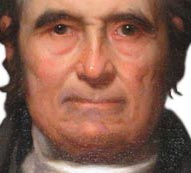
John Marshall is today remembered as the man who most forcefully gave life to the role of the Supreme Court as the final arbiter of constitutional authority in the early American republic. Despite a tide of political opposition to the notion of a strong federal government -- much of it coming from fellow Virginians such as his third cousin once removed, Thomas Jefferson -- Marshall was the eloquent leader of the judicial estate, using the Court as a platform from which to draw a bright line between federal power and the uneasy idiosyncrasies of state parochialism.

John Marshall was born on this day in 1755 near Germantown, Virginia. As an officer in George Washington's undersupplied Continental Army, Marshall survived the brutal winter at Valley Forge, an experience which some credit as one great source for his impatience with weak central sovereignty. After the War, he practiced law at Richmond, ironically arguing for the side of states' rights in his only case before the Supreme Court. In public life, however, he demonstrated his fierce commitment to federalism at every turn, as a leading member of Virginia's constitutional ratification convention and state legislator.

He turned down offers to become U.S. attorney general, minister to France and associate Supreme Court justice, but did at John Adams' behest serve alongside Charles Cotesworth Pinckney and Elbridge Gerry as part of the macho American delegation to France following the "XYZ Affair." Afterward, Adams made Marshall his secretary of state before appointing him as the nation's third chief justice in 1801.

His first dramatic statement on behalf of the Court was in Marbury v. Madison (1803), in which he took the unprecedented step of declaring void a portion of an act of Congress (specifically, section 13 of the Judiciary Act of 1789) because it was, in the opinion of the Court, prohibited by the Constitution. Although Marshall did not say that the Court had the final word on what was constitutional, the decision did manage to breathe life into the Court's power of judicial review, as Marshall scolded Jefferson on the rule of law and positioned the Court as the protector of the principle.

He continued to establish and refine the Court's role in cases such as McCulloch v. Maryland (1819, there upholding a federal statute) and Cohens v. Virginia (1821, affirming the Court's authority to review state court decisions), emphasizing the Federalist principle that the people had, by their adoption of the Constitution, entrusted to the federal government, not to the states, the powers necessary to promote the survival of the nation.

Sometimes his decisions were not enforced by rebellious state courts or officials, and sometimes states'-rights Presidents Jefferson or Jackson fueled the defiance; Jefferson, in particular, could get the man's goat from time to time, causing Marshall to react impetuously along political lines during the anti-Federalists' attempted impeachment of associate justice Samuel Chase in 1805 (Jefferson's unsuccessful counterattack on the Federalism of Marshall's court) and during the Aaron Burr treason trial in 1807 (in which Marshall acquitted the thorn in Jefferson's side based on a strict interpretation of the law on treason). Sometimes you put the wrong two people together in an enclosed space (say, a room, or a government), and they just can't help but get on each other's nerves.

Even by the time Marshall's personal power began to decline on the Court in the mid-1820s, however, Marshall had nonetheless defined the leadership portfolio of the chief justice in American life for all of his successors to the office. Marshall died on July 6, 1835 in Philadelphia.

Categories: ,

Labels: , ,

Thursday, May 25, 2006

That Breckinridge Boy


Henry S. Breckinridge, a hale and hearty scion of an illustrious American family who pops up as a footnote in a lot of unlikely places, was born on this day in 1884 in Chicago, Illinois.

A member of the famous Kentucky Breckinridge clan (his great-grandfather, John, was a U.S. senator and attorney general; his second cousin, once removed, John C. Breckinridge, was U.S. vice president; his uncle, William C.P. Breckinridge, was a rather notorious congressman; and his cousin, Sophonisba, was a Hull House reformer), Henry Breckinridge's appearance at the birthday party of President Benjamin Harrison's grandson while still a youngster was considered noteworthy fodder for the Washington Post society pages.

After attending Princeton and Harvard Law School, without relevant experience Breckinridge was appointed Assistant Secretary of War by President Wilson in 1913, and shortly thereafter was charged with personally delivering $3 million in gold to Europe, to be provided to U.S. citizens stranded in Europe at the outset of World War I. He resigned in 1918 with Secretary of War Lindley Garrison over Wilson's failure to create a reserve force, and served briefly in the U.S. Army in World War I, seeing action as a battalion commander at Vosges, St-Michel and the Meuse-Argonne. After the War, Breckinridge won a bronze medal at the 1920 Olympics as a member of the men's fencing team, in the foil competition, and served as captain of the men's team in the 1928 Olympics.

As a practicing lawyer, Breckinridge represented Charles Lindbergh and acted as his intermediary in the unsuccessful negotiations for the release of Lindbergh's kidnapped child Charles, Jr. in 1932. He was, in fact, the first person Lindbergh called when he realized his infant son was missing, and he later served as a witness in Bruno Hauptmann's trial for the murder of the Lindbergh baby.

In the wake of the tragic crash of the Akron airship off the New Jersey coast in 1933, Breckinridge served as counsel to the joint congressional committee to investigate dirigible disasters -- not a coincidence, perhaps, since his then wife (second of three), Aida de Acosta, was the first woman to pilot a dirigible back in 1903.

He subsequently flirted with electoral politics as an anti-New Deal Democrat, running for Senate from New York as a Constitutional Party candidate in 1934 and entering Democratic presidential preference primaries against President Roosevelt in 1936 before supporting Alf Landon in the general election. Unlike his friend, Col. Lindbergh, however, Breckinridge was a quick supporter of stemming the tide of Nazism in Europe, declaring, "If Hitler makes one move to touch Iceland or Greenland, the United States should immediately occupy them and loose its sea and air power upon the Nazi bandit whose victory would mean the end of all civilized freedom in the world."

Breckinridge died on May 2, 1960 in New York City.

Labels: , , , ,

Thursday, March 30, 2006

Pittsburgh's First Woman Lawyer


"Miss Agnes Fraser Watson's marriage Thursday evening to Herbert Lee Stitt of Pittsburgh, which took place at her mother's residence on Locust Street, Allegheny, was a pretty little ceremony, witnessed by about 50 guests and solemnized by Rev. Henry D. Lindsay, pastor of the North Presbyterian Church. There were but a two flower children in attendance, little Helen Barnes, a niece of the groom, and Harold Watson, a small nephew of the bride. The floral decorations were exceedingly handsome throughout the house. White azaleas, palms and maidenhair fern were used in the drawing room, white carnations in the dining room and all the other apartments were done in pink tulips and spring flowers. The bride wore a wedding gown of white pearl-tinted satin trimmed with duchess lace, in her hair she wore a white aigrette and plume, and she carried a bouquet of white carnations, her favorite flowers."

Sounds like it happened yesterday - but actually it was March 30, 1899, a very important event in the history of Pittsburgh lawyers. The groom was an inspector for the Schoen Pressed Steel Company in Blairsville and the bride . . . was the first woman to enter the bar in Allegheny County, Pennsylvania.

Agnes Fraser Watson, born in Pittsburgh in September 1866 to a Scottish immigrant and his second wife. Agnes lost her father when she was 10, whereupon she and her brother became wards of John Hood. When Agnes was still a toddler, the newspapers headlines were full of the trials and tribulations of pioneers like Myra Bradwell and Arabella Mansfield, the first woman lawyers in the U.S. In 1886, Carrie Kilgore of Philadelphia became the first woman lawyer in Pennsylvania, but only after the same kind of protracted litigation to secure the right of women to practice, that Myra Bradwell and Arabella Mansfield had gone through. Pittsburgh remained closed to all but white men, and there were still only handfuls of women lawyers throughout the U.S. around 1893 when Agnes entered the University of Michigan Law School, one of the earliest law schools in the nation to support the education of women as lawyers.

The buzz around Pittsburgh started slowly, but the press saw Agnes coming. She quietly applied to take the bar exam in the fall of 1895, and was accepted for the exam by N.W. Shafer of the examination board. He was a free thinker and a curmudgeon, and he knew the law was on women's side after the Kilgore case, even if the gentlemen of the Pittsburgh Bar weren't ready for Miss Watson.

The Pittsburgh Post headline on September 14, 1895 was simply "Miss Watson Passes." Out of 26 applicants, only 10 passed the Bar exam -- nine young men and 29-year old Agnes Fraser Watson. "The Plucky Western Girl," as the papers called her, showed them and passed the test.

Now what would happen at the swearing-in ceremony?

The Post reported: "Miss Agnes F. Watson, the first woman who has ever passed the final examination for admission to the Allegheny County bar, was admitted to practice in the various courts of the county yesterday … in Common Pleas No. 1, the nine young men were sworn in first, and then Miss Watson was called up. Mr. Shafer moved for her admission."

Judge Edwin Stowe leaned forward over the bench to study Miss Watson. "Mr. Shafer," he inquired, "has the Supreme Court of Pennsylvania decided the right of women to be admitted to practice?"

"Why, yes Your Honor," said Mr. Shafer, "it had been decided in the case of Miss Kilgore of Philadelphia."

Judge Stowe sat back in his chair, his expression unchanged.

"I want to say if the Supreme Court had not decided the question, I would not consent to any women practicing law in this court. But if women want to practice law and ride bicycles, I suppose it is none of my business. Let her be sworn."

Women practicing law and riding bicycles. On the same day the Post announced Miss Watson's admission, in separate stories it reported that a woman postmistress was appointed at Kennon, Ohio, that it was decided that women would be allowed to attend the national conference of the Methodist Episcopal Church, that women would now be admitted to the Catholic University of Washington, and among a few column inches of filler, the following statement: "A woman lawyer is a woman still, and when the right petitioner comes to court with a good case he will get a favorable decision." Something rather obvious that someone felt needed to be said.

Agnes Watson set up her office at 413 Fourth Avenue downtown, and as far as we know, she practiced by herself for a little over 3 years. Sadly, we know nothing of the details of her practice. All we know for sure is that a few weeks before her pretty wedding to Herbert Stitt on Locust Street in Allegheny, she closed the doors of her practice; and as the papers reported it, following the wedding, she spent weekdays in Blairsville and took carriage rides back to Allegheny on Saturdays to be with her mother, and "all her interests were devoted to homemaking." After 1899, Miss Watson, then Mrs. Stitt, disappears from the stage of history. Did she have children? Did she ever return to professional life? We just don't know, not yet. It appears that by 1930, though, she and her husband were living in the Edgewood, a suburb of Pittsburgh.

In a little over 3 years, her career as a Pittsburgh lawyer was over. By the time the next woman was admitted to the Bar in Allegheny County in 1900, Agnes Watson had already retired.

See The Steel Bar: Pittsburgh Lawyers and the Making of Modern America.

Labels: , , , , , ,

Sunday, March 19, 2006

William Jennings Bryan


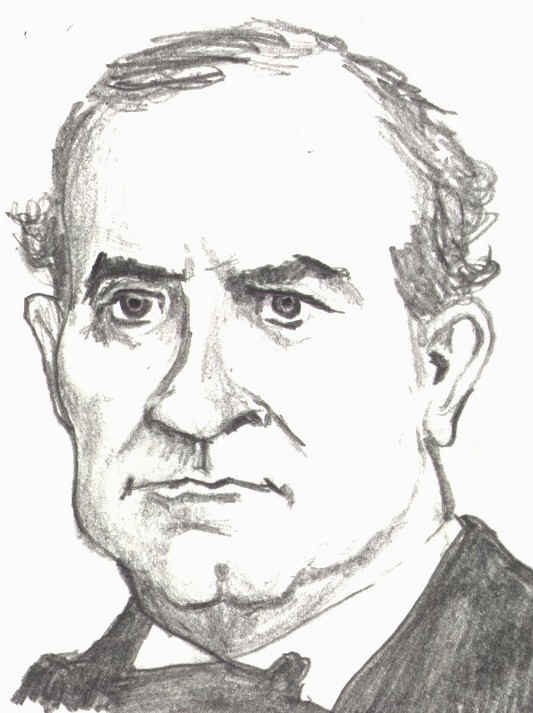
William Jennings Bryan -- who was born on this date in 1860 in Salem, Illinois -- left his mark on the presidential election process by making a national campaign seem like a local one. Decades before TV would further cultivate the illusion of intimacy between voters and politicians, speechifyin' Bryan traversed the country with brash advertisements of his own personality, helped along by the increasing willingness of "non-partisan" newspapers to report on "personality" as though it were "news" (such as Pulitzer's New York World, shedding the party imprimatur in hopes of broadening circulation). Bryan's success in getting the electorate stirred up (even if it did not translate into winning the presidency) begat Teddy Roosevelt's open-countenanced public persona, as much as it begat the populist appeals of national figures from Debs to Huey Long -- all of which set the stage for the media-savvy approach to national politics which had blossomed by the end of the 20th century.

The son of a judge, Bryan entered the Bar in central Illinois in 1883 and married his college sweetheart, Mary Baird, who later also became a lawyer. The couple moved West to Nebraska for greater opportunities, and within a short time Bryan earned a reputation among the hapless Democratic minority there for his fiery orations. He won election to Congress in the 1890 as the rise of the Populist Party chipped away at Republican dominance, echoing Populist themes: big-city moneyed interests (and their gold currency standard, which kept credit artificially tight) were in danger of choking the farmer, his business prospects, and, perhaps most importantly, his moral values.

In Congress, as a member of the House Ways and Means committee, he became a leading national spokesman for agrarian interests, proposing a national graduated income tax and opposing President Cleveland's call to repeal the Sherman Silver Purchase Act. In 1894, Bryan won a non-binding poll to become Nebraska's new U.S. senator, but the Republican legislature ignored the poll and selected someone else, freeing Bryan to take to the countryside (in the guise of journalist for the Omaha World-Herald), denouncing the gold standard in tent-shows like a crusading evangelist.

He went to the 1896 Democratic National Convention as a delegate and a member of the platform committee, which selected him to present the closing argument on behalf of free-silver forces. His oration, now known as the "Cross of Gold" speech, electrified the silver-leaning crowd -- declaring that if you burned down the cities, you could build them over again, but "destroy your farms and the grass will grow in every city in the Union," and reaching a fever-pitch with his closing remarks, delivered with arms outstretched in the attitude of Christ's martyrdom, "You shall not press down upon the brow of labor this crown of thorns, you shall not crucify mankind on a cross of gold!" John Altgeld (who admitted to not understanding parts of Bryan's florid speech) led the Illinois delegation in breaking from supporting Richard Bland in favor of 36-year old ex-Congressman Bryan, and the avalanche followed, giving Bryan the nomination.

Facing William McKinley, the Republican candidate of the bosses and financiers who conducted his well-financed campaign (having raised a record $16 million) from his front porch in Canton, Ohio, Bryan took to the road again with a war chest of just $300,000, traveling 18,000 miles and delivering 600 speeches, and connecting on a personal, visceral level with an unprecedented number of individuals in the course of a presidential campaign. The Northeastern papers depicted Bryan as a wild-eyed anarchist, and even though he lost the election, both McKinley and Bryan garnered a record number of popular votes (7.1 million to 6.5 million), suggesting that Bryan's campaigning had awakened a previously disinterested class of the electorate.

Now the leading voice in the Democratic Party, Bryan easily won the 1900 presidential nomination, facing McKinley again, this time attacking him on his imperialist policies in the wake of the Spanish-American War; he lost again by nearly the same margin (7.2 million to 6.4 million votes).

Bryan started a newspaper, the Commoner, and continued his never-ending speaking tour; when the Democrats met in 1904, they opted for a conservative nonentity, Alton Parker, as nominee, and their defeat in the presidential election was catastrophic. Bryan returned in 1908 even stronger, but found himself walking into an election which seemed to be about who would carry forward the policies of Theodore Roosevelt. Although William Taft was Roosevelt's handpicked successor, Bryan argued that the Republicans had co-opted the Democratic agenda and that he would be better suited to lead that agenda. Bryan lost again by a similar margin (7.6 million to 6.4 million).

In 1912 he threw his support to Woodrow Wilson, who emerged as the victor in the general election as Roosevelt and Taft squared off over Republican votes, and Wilson returned Bryan's favor by naming him secretary of state. As a diplomat, Bryan's populist philosophy translated poorly: he threw mild support to emerging democratic governments, but wasted a lot of time naively signing up non-aggression pacts even as the seeds of World War I were being sown in Europe. As a pacifist, he resigned his post in 1915 over Wilson's confrontational note to Germany following the sinking of Lusitania, but he did support Wilson's conduct of the War, and was an advocate of the League of Nations.

After his tenure as secretary of state, Bryan returned to his interest in what he perceived to be agrarian values and virtues, but often found himself at odds with the progressives who once supported him on social issues: he supported women's suffrage, but would not condemn the Ku Klux Klan at the 1924 Democratic Convention; he was probably the most influential voice in the passage of the 18th Amendment banning the sale of alcoholic beverages; and, in his final hurrah, he took on the teaching of evolution in public schools.

After the Tennessee legislature banned the teaching of "Darwinism," schoolteacher John Scopes accepted the invitation of the ACLU to test the constitutionality of the ban, and was prosecuted for teaching evolution. Clarence Darrow took on his defense, and Bryan agreed to lend his national name to assist the prosecution. During the trial, Darrow called Bryan to the stand to speak for the Fundamentalism position, and succeeded in making Bryan look silly for his fanaticism and his apparent ignorance of science.

Scopes was convicted, but the trial did little to advance the Fundamentalist cause. Bryan collapsed shortly after the trial and died of heart failure at age 65 -- and, of course, the Scopes incident became the basis of a play Inherit the Wind, later filmed with Frederic March in the role based on Bryan.

Labels: , , ,

Thursday, March 16, 2006

James Madison


James Madison could not have hoped to get himself elected to national office in the 21st century. He was a terminally shy, dour 5'-4" dweeb with a weak voice and a frostbite scar on the tip of his nose. Bob Newhart would stand a better chance of getting elected president today -- or Dennis Kucinich, for that matter. Even in the late 18th-early 19th century, some people had their doubts about little Jemmy. The colossal irony is that the engine of the process by which we choose our leaders today was the result of Madison's best life's work, as father of the U.S. Constitution.

Born on this day in 1751 in Montpelier, Virginia, young James Madison was a quiet but tireless and politically aware student at Princeton, graduating in just two years. He stayed on to study philosophy and Hebrew privately with Princeton president John Witherspoon, and returned to his father's home in Montpelier in 1772, half-heartedly pursuing law studies. When the Revolution began, he joined the militia, but was too frail for service. Instead, Madison rode the wave of nation-building, first as a delegate to the Virginia Convention to establish a plan for state government (1776), then as a member of the Virginia House of Delegates (1776-7) -- although he lost his seat in the next election because he failed to honor the custom of passing out whiskey to voters. He became the youngest member of the Continental Congress in 1780, and in his front-line support of the principles of strong central government with guaranteed fundamental freedoms, he found his capacity for leadership and began to form his political philosophy.

Back in the Virginia House of Delegates in 1784, he fought tooth-and-nail against Patrick Henry's attempt to establish the Episcopal church as the state religion. By 1787, with a career's worth of experiences with the squabbling loose affiliation of states under the Articles of Confederation and a commitment to personal liberties, Madison became a leading light of the U.S. Constitutional Convention -- as one of the principal draftsman of the document, a recorder of the Convention's proceedings, and a pragmatic advocate. Indeed, from the outside looking in, European commentators tend to credit Madison with being the most influential partisan in the creation of American political institutions and America's most important political philosopher.

He extended his influence after the Convention while the states debated the Constitution's ratification: he led the fight in Virginia against anti-Constitution forces led by his old nemesis Patrick Henry and, for the benefit of the national cause and for posterity, was one of the authors of the Federalist Papers, still the most often quoted commentary on the Constitution, with Alexander Hamilton and John Jay. Under the pseudonym of "Publius" (collectively and individually used by all three of them), Madison brilliantly articulated the case for the separation of executive, legislative and judicial powers, a structure he summed up with the notion that "Ambition must be made to counteract ambition." Henry kept Madison out of the newly created U.S. Senate, but Madison did win election to Congress, where he authored and pushed through the first 10 amendments to the Constitution, known as the "Bill of Rights" -- including the freedoms of speech, assembly and religion.

With the broad outlines of the new government drawn, the operating policies of Washington's administration began to cause rifts between the Federalist Hamilton and the states' rights views of Thomas Jefferson, leading Jefferson and Madison to form the Democratic-Republican Party, the forerunner of the Democrats, in 1792. Jefferson named Madison as his secretary of state in 1801, and as such Madison mainly concerned himself with piracy and British and French harassment of American ships, approaching the latter with an embargo against the two nations.

In a bit of poetic irony, during this period Madison's name graced the caption of the Supreme Court's first dramatic demonstration of its authority as the supreme arbiter of "constitutionality," Marbury v. Madison (1803), written by the Court's first great chief justice, John Marshall; in it, William Marbury, who had been appointed justice of the peace by President Adams prior to the end of his term but who had failed to receive his commission, sued Madison as secretary of state to Adams' successor, President Jefferson, to force him to deliver the commission. Marshall's opinion declared that Madison should have delivered the commission, but also that the Judiciary Act of 1789, the act by which Marbury had received his writ of mandamus against Madison, was void because it was unconstitutional -- thereby happily serving Marshall's dual objectives of establishing the authority of the Supreme Court and making Jefferson look foolish.

When Jefferson retired in 1808, Madison was his heir apparent for the presidency, and he won rather easily. As president, he revised his embargo policy by challenging either Britain or France to be the first to recognize the independence of American ships in exchange for an embargo of U.S. trade against the non-consenting nation; Napoleon jumped at the bargain, and Madison proceeded with an embargo against Britain. The embargo escalated into a declaration of war against the British in 1812. Although American military operations were mostly disastrous (notably in Madison's failed bid to conquer Canada, and in the British burning of the White House and the Capitol in August 1814), the war ended in a draw. Madison was faulted for the poor effort, but the shutdown of foreign trade during the war did manage to spark the native economy and ultimately had the effect of reducing American dependence on the economy of Britain.

Madison left office after his second term in 1817 and returned to Montpelier. He spent his final years farming, covering the gambling debts of his spendthrift stepson, serving as rector of the University of Virginia, and promoting the gradual abolition of slavery. He died at Montpelier on June 28, 1836.

Incidentally, James Madison was a second cousin of the 12th U.S. president, Zachary Taylor.

Labels: , , ,

Sunday, February 19, 2006

She Traded Her Sarong for an Apron


Somewhere out there, there lives a housewife, known to her friends and family for her radiant charm, who is celebrating her 94th birthday today.* I hope she forgives me for bringing to light a little tale that received some tabloid attention about 75 years ago. It has a happy ending.

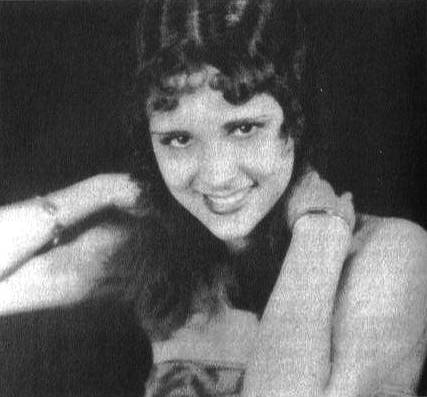
Dorothy Janis was a minor silent film starlet, born Dorothy Penelope Jones on this day in 1912 in Dallas, Texas. There's an emphasis on "minor" here: Dorothy Jones was a mere 15 years old when she tagged along with her cousin, a Hollywood extra, onto the Fox Studio lot, but the 5'-0", 94-lb. high school student was immediately noticed by a casting director for her dark, exotic good looks and was cast as an Arabian girl in Fleetwing (1927).

Within a year, although she was just 16, Dorothy Janis (as she came to be known) was signed by Metro to a 5-year contract. Metro said publicly that Janis was 18 and half-Cherokee; neither fact was true, and Metro seemed to know better enough about her status as a minor to have her contract supervised by a court. After a pair of silent 'horse operas' (Kit Carson, 1928; and The Overland Telegraph, 1929, with Tim McCoy), Janis won the romantic lead opposite hunky Ramon Novarro in a part-talkie, The Pagan (1929, directed by W.S. Van Dyke), notable for the fact that Janis (without a chaperone at 16), Novarro and the entire cast and crew went to Tahiti to make the film, back in the days when location shooting was extremely rare. The film is kind of a cult-hit among aficionados today, in part for Novarro's popular recording of "The Pagan Love Song," featured in the movie.

Dorothy made one talkie (Lummox, 1930, directed by Herbert Brenon) before joining director Harry Gerson and another crew for a tour of the Malay Peninsula to make a film to be entitled The White Captive. When the company returned to Hollywood at the end of 1930, however, the studio found that Gerson's footage was virtually unusable; worse yet, poor Janis found herself at the epicenter of a tabloid scandal.

Sidney Lund, a newlywed sound technician who traveled with the White Captive company, apparently formed a crush on Janis during the 6-month trip, inspiring Mrs. Lund, a former vaudeville dancer, to file for divorce and to sue Janis for $25,000 for "alienation of affection." Mrs. Lund's claim was all the rage in Hollywood at the time: earlier that year, Clara Bow settled a "love theft" suit by the wife of a Texas physician, and Josef von Sternberg's wife had unsuccessfully sued Marlene Dietrich. Nevertheless, it was typically a difficult claim to prove (you had to first establish that there was love in the marriage, then that said love was destroyed by the defendant, and finally that the defendant destroyed said love maliciously), and probably even more so where the virginal Janis was concerned.

Mrs. Lund eventually got her divorce but dropped her suit against Janis; White Captive was never released; and the 19-year old Janis -- movie star, world traveler and enfant celebre -- perhaps understandably left behind her singular Hollywood career to visit an aunt in Chicago, where she met and married dance bandleader Wayne King.

Meanwhile, California abolished "alienation of affection" lawsuits in 1939. By 2001, all but 9 states had abolished the cause of action, citing the sense in which such lawsuits irresponsibly assume that some people (in our case, Mr. Lund) have no control over their own emotions as being a bad basis for damages. On the other hand, in states such as Hawaii, North Carolina and Utah where the claim is still recognized, family advocates argue that it provides an effective disincentive to monkey business. In 1997, a woman in North Carolina won $1 million worth of disincentive from her ex-husband's monkey business partner.

Dorothy and her husband apparently needed no such disincentives; they were together for over 50 years, until King's death in 1985. Few knew or could even have imagined that the happy housewife and mother of two once wore a sarong in the Tahitian jungles listening to Ramon Novarro croon the "Pagan Love Song."

* Some sources suggest that this is actually Dorothy's 96th birthday. Either way, she sure has lived a remarkable life -- I'll let you do the math adjustments if you'd prefer to find her to be two years older.


Labels: ,

Friday, February 10, 2006

'Against Such Things There is No Law'


Marxist legal theorist Evgeny Pashukanis was born on this date in 1891.

A Russian of Lithuanian parentage, Pashukanis joined the Bolsheviks in 1912, and following the Russian Revolution in 1917 became a leading writer in Soviet jurisprudence. Unlike other Soviet legal writers, however, who thought that pre-Revolutionary forms (i.e. laws and courts) could be adapted to serve the cause of the Revolution by changing the content of the laws and putting revolutionaries in positions of authority on the courts, Pashukanis' critique began with the radical view that the concept of "law" itself was an outgrowth of capitalist society -- a product of the capitalist's desire to protect property and dominate the proletariat -- and that in its highest evolution a post-capitalist society would see a "withering away" of the law in favor of new forms of social behavior and organization based on the absence of commodity fetishism, much like the "withering away of the state" proposed by Karl Marx himself.

Pashukanis' vision of a disappearance of laws echoes the brash optimism of a revolutionary from another period -- the Apostle Paul in his Epistle to the Galatians, in which he writes: "Christ redeemed us from the curse of the law, having become a curse for us . . . Stand firm therefore in the liberty by which Christ has made us free, and don’t be entangled again with a yoke of bondage . . . the fruit of the Spirit is love, joy, peace, patience, kindness, goodness, faith, gentleness, and self-control. Against such things there is no law."
There is, of course, much that separates theoretical Christianity from theoretical Marxism -- but at the core of both Paul and Marx was a fervent belief in the better part of one's nature, unlocked within a new order of social relations, as well as a hopeful expectation of ethical expression that can only come from within, and not from an old set of rules.

Pashukanis' critique of the nature of legal authority was destined to be short-lived within the atmosphere of terror imposed by Soviet dictator Joseph Stalin, who gave lip service to Marxism as Pashukanis and the theorists saw it, but ruled as a despot. At the age of 46, Pashukanis was murdered by Stalin's secret police, and his writings were burned by the Soviets, only to reappear in translation in the 1950s.

Labels: , , , ,

Tuesday, December 13, 2005

The Martini, and the Understanding of the Framers

The ever-lovin' Wonkette reports that the combative, famously "Borked" former U.S. Supreme Court nominee Robert Bork has gone out on a limb with yet another controversial stand in a recent letter to the editor of the Wall Street Journal:


Martini's Founding Fathers: Original Intent Debatable

Eric Felten's essay on the dry martini is itself near-perfect ("Don't Forget the Vermouth," Leisure & Arts, Pursuits, Dec. 10). His allusion to constitutional jurisprudence is faulty, however, since neither in law nor martinis can we know the subjective "original intent" of the Founding Fathers. As to martinis, the intent may have been to ease man's passage through this vale of tears or, less admirably, to employ the tactic of "candy is dandy, but liquor is quicker."

What counts in mixology is the "original understanding" of the martini's essence by those who first consumed it. The essence remains unaltered but allows proportions to evolve as circumstances change. Mr. Felten's "near-perfect martini" is the same in principle as the "original-understanding martini" and therefore its legitimate descendant. Such latter-day travesties as the chocolate martini and the raspberry martini, on the other hand, are the work of activist bartenders.

Mr. Felten lapses into heresy only once. He prefers the olive to the lemon peel because the former is a "snack." Dropping a snack into a classic drink is like garnishing filet mignon with ketchup. The correct response when offered an olive is, "When I want a salad, I'll ask for it."

Robert H. Bork
The Hudson Institute
Washington


I, too -- along with the estimable Ms. Cox -- happen to agree with Judge Bork's assessment of the silliness of such creations as the chocolate martini and the raspberry martini. Indeed, if we're throwing silly drinks around, I would immediately hurl an apple martini into that very same swill-bucket.

However, I would observe that Judge Bork's arguments regarding the heresy of the olive as a garnish for a true martini reveal the problems inherent, in both jurisprudence and mixology, within Judge Bork's use of "original understanding" as a decisional methodology.

We all have our favorite framers. I prefer John Jay, for example, to Ben Franklin -- but that's just me, I suppose. In the world of the cocktail, I prefer David Embury, who offers his own opinion regarding the perfect martini in The Fine Art of Mixing Drinks (1948; reviewed by yours truly in a previous post here). After citing several popular yet mediocre recipes for a martini, Embury offers the following as a preferred formula:


MARTINI DE LUXE or GIBSON DE LUXE

1 part Lillet Vermouth
7 parts imported English Gin
Stir well ["If you shake the martini, it becomes a Bradford," according to Embury] in a bar glass or Martini pitcher with large cubes of ice and pour into chilled cocktail glasses. Twist lemon peel over the top.

The distinction between the Martini and the Gibson is simple. The Martini is served with an olive, the Gibson with a small pickled cocktail onion.
If you can get olives stuffed with any kind of nuts, they make the perfect accompaniment to a Martini.

Embury insists that his 7-to-1 ratio was derived after extensive experimentation, and that it is the proportion "most pleasing to the average palate," although some have been known to prefer a ratio as high as 10-to-1.

You and your framer can protest all you want, but if my framer says I can have an olive (even an olive stuffed with a nut!), then by the Constitution of this great land of ours, I will have one.

Labels: , , ,

Sunday, October 30, 2005

Clement Haynesworth

The withdrawal of Harriet Miers' nomination to the Supreme Court brings to mind another failed nomination -- that of Clement Haynesworth, who was born on this day in 1912 in Greenville, South Carolina.

Haynesworth was a somewhat flamboyant but respected Greenville lawyer when he was appointed to the U.S. Court of Appeals for the Fourth Circuit by Dwight Eisenhower in 1957. President Nixon attempted to appoint Haynesworth to the Supreme Court to fill the vacancy created by the resignation of Abe Fortas (following allegations that he received questionable honoraria), but Haynesworth's appointment was scuttled in the Senate when it was discovered that Haynesworth's wife owned stock in a company which came before him in litigation in the Fourth Circuit. Senate Democrats also claimed he was too conservative when it came to civil rights and labor issues, and they were still pretty sore about the Fortas thing.

You never can tell about such things, however. Remaining on the Fourth Circuit bench, it has been noted that Haynesworth's opinions were largely responsible for liberalizing prisoner's rights in the Fourth Circuit. As a sidelight, I'm told he was also, incidentally, the Circuit's authority on insurance "suicide" cases involving sexual self-asphyxiation.

Unfortunately, Haynesworth is today unfairly grouped with Nixon's other failed appointee, Harrold Carswell -- about whom Nebraska senator Roman Hruska, trying to give his support to an unsupportable candidate, said "Mediocre people deserve representation, too." Haynesworth died after an illustrious career as a jurist, in 1989.

Labels: , ,

Thursday, October 27, 2005

H.R. Haldeman


While we await a possible announcement regarding indictments in the Plame Leak investigation (or not), it is perhaps fitting and appropriate that we remember H.R. "Bob" Haldeman, President Nixon's chief of staff and convicted Watergate conspirator, who was born on this day in 1926 in Los Angeles.

The son of one of the California businessmen who contributed to the private political expense fund which inspired Richard Nixon's famous "Checkers" mea culpa in 1952, Haldeman was an ad executive who helped to engineer Nixon's winning image during the 1968 presidential campaign. After the election, Nixon appointed Haldeman as his White House chief of staff.

The lynchpin of Bob Haldeman's administrative approach was the cultivation of an image for himself, one of ruthlessness to front-line adversaries and constituents outside the White House as well as among the hired help. Sporting a military-style crew-cut long after it had fallen out of fashion, Haldeman was an arrogant, cold-blooded field marshal who enforced his sense of order upon White House calendars and to-do lists in the service of Nixon's objectives, and he reveled in press descriptions of Nixon's "efficient Prussians" (Haldeman and John Ehrlichman, Nixon's domestic adviser) building a "Berlin wall" around the Oval Office.

As the White House puppet-master he knew about the covert plans of the Watergate burglars and participated in the cover-up; the infamous "18-1/2-minute gap" in the White House tapes contained a conversation he had with Nixon which many believe would have shown that Nixon had known all along about the entire Watergate affair.

After the Watergate story broke and he was forced to resign in April 1973, Haldeman grew his hair to a neat and somewhat fashionable length in a last-ditch attempt to soften his public image; nevertheless he was convicted of conspiracy and obstruction of justice and served 18 months in prison.

Afterwards, Haldeman went into the real estate development business and published two memoirs, The Ends of Power (1978) and The Haldeman Diaries (1994) in which he took responsibility for the paranoiac atmosphere which prevailed in the White House. He died in 1993.

After Bob Haldeman, the position of White House chief of staff became a public one, reserved in large part for ex-officeholders -- ex-Senator Howard Baker, ex-Governor John Sununu, ex-Congressman Leon Panetta, ex-Secretary of Transportation Andrew Card, etc. In effect, it became a position demanding as much public trust as most elected positions -- while positions such as deputy chief of staff and chief of staff to the vice president have, until the recent scrutiny of the press, been faceless to the public at large.

Labels: , ,