Wednesday, September 17, 2014

That Time When a Pittsburgh Lawyer Governed Part of Ukraine

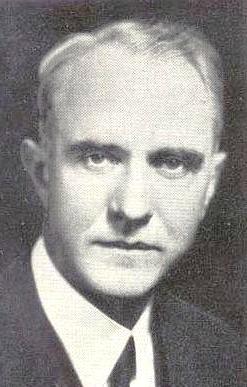
Gregory Zatkovich was born in Austria-Hungary and "immigrated to Pennsylvania with his parents at age 2.  His father was the editor of an activist journal supporting Rusyn-Americans, an ethnic group from Carpathian Ruthenia, an area now within Slovakia and western Ukraine.  Zatkovich grew up in Pittsburgh, received his bachelor’s degree from the University of Pennsylvania in 1907, and earned his law degree there three years later.  He entered the Pittsburgh bar in October 1910.  In July 1918, as the Austro-Hungarian monarchy was on the verge of collapse, Rusyn-Americans began to agitate for the independence of Carpathian Ruthenia.  As a leader of the Rusyn movement, however, Zatkovich was convinced by members of the Wilson administration that merging Carpathian Ruthenia into a new Czech state was the only viable option, and he was convinced to sign the “Philadelphia Agreement” with Czech president Tomas Masaryk, upon the promise that Carpathian Ruthenia would be granted autonomy within the new Czech state.  Masaryk appointed Zatkovich governor of the province on April 20, 1920.  He served for a little less than a year, resigning on April 17, 1921 over disagreements on the border with Slovakia, and returned to his practice in Pittsburgh."  

"He has the distinction of being the only American citizen to have presided as governor over a province that would later become a part of the U.S.S.R."  

Zatkovich later served as Pittsburgh city solicitor during the administration of Mayor William McNair in the 1930s.

From THE STEEL BAR: PITTSBURGH LAWYERS AND THE MAKING OF MODERN AMERICA

Labels: , , ,

Friday, June 21, 2013

Jacob Margolis: Pittsburgh lawyer, Anarcho-Syndicalist

         Chairman:  Just how would you describe yourself?
         Margolis:  First, syndicalist; I put the syndicalist first, because it is an important thing; syndicalist-anarchist would be my position.


Jacob Margolis, a Pittsburgh lawyer who represented the IWW during the 1919 Steel Strike, told Senator William Kenyon of Iowa that he was an anarchist during a Senate investigation of the Steel Strike.  When he returned home to Pittsburgh, he found that the Allegheny County Bar Association was moving to have him disbarred.  During the legal battle that followed, the ACBA was fed information from the FBI.  Margolis lost his license to practice law in 1920 following arguments before the Pennsylvania Supreme Court, but was reinstated within the bar in 1928.  He spent most of the rest of his career as a writer and lecturer, retiring to Santa Barbara, California during the 1940s.


NOTE: Photo is not available for republication.

Labels: , , , , , ,

Friday, April 26, 2013

Justice Baldwin's Dueling Past

"Duels were not altogether uncommon among these men in this day. ... Henry Baldwin had fought a duel against another lawyer, Isaac Meason, Jr., over a grievance that has been described as either political or romantic in nature – possibly both. During the first round of pistol-fire, Baldwin was hit in the chest and began spitting up blood, so witnesses feared he had been shot through; but apparently a Spanish silver dollar in Baldwin’s waistcoat pocket deflected Meason’s bullet. The parties were scared off by a posse sent by Judge Riddle before they could lob a second volley." Henry Baldwin later became an associate justice of the United States Supreme Court.

See The Steel Bar: Pittsburgh Lawyers and the Making of Modern America.

Labels: , , , ,

Friday, July 17, 2009

103 Year-Old Pittsburgh Lawyer Reflects on Career

[In the course of my research for my upcoming book, I get to interview some pretty interesting folks. Some notes from my interview of Reuben Fingold, a 103-year old retired lawyer living with his wife in Pittsburgh, were published in the July 17 edition of the "Lawyers Journal," a publication of the Allegheny County Bar Association.]

Reuben Fingold, a 103 year-old Shadyside resident who was admitted to the Allegheny County Bar in 1930 and joined the Allegheny County Bar Association in 1933, was honored by the Board of Governors of the ACBA on June 2 for achieving the status of the oldest member of our Bar, and for “his Seventy Six years of service to the Allegheny County Bar Association and the legal community.”

At his side for the occasion was Mr. Fingold’s wife Helen, who is only a few years his junior. “[The inscription on the plaque] is really lovely,” she says, beaming with pride. 

Mr. Fingold’s recollections from his youth and his early years as a practitioner in Pittsburgh are like a time capsule from a bygone era. When he began his law practice, Herbert Hoover was in the White House. Fingold was 22 years old before movies had sound, and his family’s first radio was one that he put together himself from spare parts that he bought at a plumber’s shop in East Liberty. 

His parents lived in McKeesport when they were first married, where his father made men’s suits, drawing patterns for them on large rolls of green paper. “My mother used to tell us how she’d put the two [oldest] babies in a carriage, wheel them down to the wharf in McKeesport, and push the carriage onto a boat” that would take them along the Monongahela River to Pittsburgh, where they would visit his mother’s sister. Eventually, the Fingolds moved to the Hill District, where Reuben Fingold spent his earliest years, and then to Shadyside. 

“One of the things I remember,” Mr. Fingold says, “was when the newspaper came in and it said ‘TITANIC SUNK!’” The year was 1912. “My mother sat down and cried. I was pretty young then, and I didn’t know what the Titanic was, but my mother had come over from Europe” aboard an ocean ship, Fingold explains, and she instantly knew what the passengers on the Titanic must have experienced.

Mr. Fingold’s older brother, A.S. “Abe” Fingold, entered the Bar in 1926; but even before then, Mr. Fingold was fairly certain that he, too, would become an attorney, since he always had a penchant for “asking people all kind of questions.” After undergraduate studies at the University of Pittsburgh, Mr. Fingold enrolled in the Law School at Duquesne. In his first year, he had to take oral final exams, facing the entire Duquesne faculty – which consisted entirely of full-time practicing lawyers at the time – and fielding questions on each of the courses he had studied that year. His would be the last class of Duquesne law students to have to endure the oral exam gauntlet.

On the day Mr. Fingold found out he had passed the Bar, he and his brother Abe happened upon an Allegheny County judge while walking downtown. Abe Fingold greeted the judge and introduced him to his brother, announcing that Reuben had just passed the Bar. Mr. Fingold showed the judge his notification letter, whereupon the judge instructed Mr. Fingold to raise his right hand. “He swore me into the Bar, right then and there on the sidewalk,” Mr. Fingold explains, although he later formalized the event by signing the County registry.

Mr. Fingold set himself up as a sole practitioner in the Jones Law Building, sharing offices with his brother Abe and several more senior lawyers, including W.C. McClure and the John Metzes, father and son. The year 1930, amid the turmoil the Great Depression, was a difficult time to establish a new practice, but Mr. Fingold managed to earn a small living by doing title searches for other lawyers for $10 a search – sometimes accepting even less. “The [deed] books weighed almost as much as me,” he remembers. 

At the age of 36, Mr. Fingold left his Pittsburgh practice behind briefly and volunteered for World War II duty, attaining the rank of Major in the U.S. Army Air Corps and serving in the Judge Advocate General Department. He also designed a few inventions during this period, including some patented improvements to mason jar lids and electrical switches, and a bag holder for blood and plasma that he proposed to Army doctors during the War. 

Before his retirement from the law in the late 1970s, Mr. Fingold had built a comfortable general practice that included a few clients who paid him an annual retainer. Sometimes his job as a lawyer, however, would be merely to convince the right official to pay attention to a problem. One of his clients complained about garbage being thrown down a hillside owned by the client’s aunt; while it was fresh on his mind, Mr. Fingold happened to spot Mayor David L. Lawrence waiting for a streetcar, and he explained the situation to him. The Mayor made a note of the lawyer’s concerns, and the next morning, city maintenance men came and cleaned up the hillside. “Anybody could see David Lawrence,” Fingold remembers. “And he cleaned the city up.”

Reuben Fingold’s experiences recall a time when Pittsburgh was smaller, when streetcars could take you anywhere, and it only cost 15 cents a day if you wanted to park a car downtown. His unheralded career is another illustration of some of the simple virtues that were important to Pittsburgh’s lawyers during the first half of the 20th century, when both life and practice were filled with face-to-face, hands-on experiences – the arts of greeting, conversation, casual persuasion and straight-forward problem-solving, in broad daylight.

Labels: , , , ,

Saturday, January 27, 2007

The Mind of Hand


"[A] judge is . . . pulled by two opposite forces. On the one hand he must not enforce whatever he thinks best; he must leave that to the common will expressed by the government. On the other, he must try as best he can to put into concrete form what that will is, not by slavishly following the words but by trying honestly to say what was the underlying purpose expressed. Nobody does this exactly right; great judges do it better than the rest of us. It is necessary that someone shall do it, if we are to realize the hope that we can collectively rule ourselves." -- Learned Hand.

U.S. federal judge Learned Hand was born on this day in 1872 in Albany, New York.

Hand served a record 52 years as a federal judge, and although he was never appointed to the U.S. Supreme Court, he is generally considered to have been among the greatest American judges of the 20th century, combining a profound, skeptical mind with a deliberate, succinct writing style and a wide breadth of reading and allusion, peppering his opinions with illustrations from such diverse sources as Plato, Shakespeare, Cervantes and Joel Chandler Harris.

Hand studied philosophy (under William James and George Santayana) and law at Harvard, and began the practice of law in Albany in 1897. After moving to New York City, President Taft appointed Hand to the federal district court for New York in 1909, and President Coolidge elevated him to the U.S. Court of Appeals (2nd Circuit) in 1924.

In 1945, Hand rendered the final decision in the lengthy Alcoa antitrust case after several Supreme Court justices disqualified themselves, ruling that evidence of greed was not necessary to prove a violation under the Sherman Act ("Congress did not condone 'good monopolies' and condemn 'bad ones'; it forbade all."). At times seemingly liberal (he upheld the lower court ruling that James Joyce's Ulysses was not obscene), he also upheld the convictions of several Communist leaders under the Smith Act for conspiracy to overthrow the government -- evidencing his ongoing, evolving concern with distinguishing between the proper exercises of government power from unreasonable restraints in the name of public welfare.

Hand firmly believed in the importance of judges knowing the great works of history, philosophy and literature, because in constitutional matters "everything turns upon the spirit in which [a judge] approaches the questions before him," and he felt that the words of laws were "empty vessels" without a judge's ability to draw upon his reading to fill them.

It is said that as Chief Justice, Taft kept Hand off of the Supreme Court for a number of years due to Hand's support of Theodore Roosevelt's "Bull Moose" presidential candidacy against Taft in 1912. A persistent legend (perhaps apocraphyl) holds that President Hoover intended to appoint Hand to the U.S. Supreme Court, but that he offered the vacancy to Charles Evans Hughes out of political necessity, fully expecting Hughes to reject the offer since Hughes' son would have to resign as Solicitor General if Hughes were on the Court; according to the legend, Hughes astonished everyone by accepting Hoover's offer, and Hand remained the greatest judge never to be elevated to the Supreme Court. Hand died on August 18, 1961 in New York City.

Categories:

Labels: , ,

Saturday, January 06, 2007

Charles Sumner


"Where Slavery is there Liberty cannot be; and where Liberty is there Slavery cannot be." -- C. Sumner.

Abolitionist leader Charles Sumner was born on this day in 1811 in Boston, Massachusetts.

Our 21st century view of Charles Sumner is marked by distinctly contrasting indications. Having had the pleasure of working one summer for editor Beverly Wilson Palmer on the Charles Sumner Papers, I have some additional insights about the man. Sumner was an expert on the arcanities of American jurisprudence and probably among the most brilliant men in politics in his day, but he could come off personally as a marshmallowy romantic schoolboy, remaining a shy bachelor all his life; a living martyr to the anti-slavery cause, he was an American hero, yet his bloodthirsty conduct during the impeachment trial of Andrew Johnson was anything but heroic -- although it may have been perceived that way by some of his contemporaries.

Sumner attended Harvard and studied with Justice Joseph Story, and later he served as a reporter for the U.S. Circuit Court and published 3 volumes of Story's decisions. After an extended stay in Europe, he returned to the U.S. in 1840 to edit a 20-volume set of Supreme Court reports.

His opposition to the Mexican War drew him into the public arena, where he distinguished himself as a passionate, highly literate orator. In 1851, he was selected to fill the large shoes of Daniel Webster as Webster's successor to the U.S. Senate from Massachusetts. There he quickly became the leader of the hardcore anti-slavery caucus, and during the 1856 debates over the question of permitting slavery in the new state of Kansas, Sumner delivered his classic two day-long speech, "The Crime Against Kansas," in which he spared no literary excess in denouncing the Southern advocacy of the slavery system.

Congressman Preston Brooks of South Carolina thought he detected in Sumner's marathon speech an insult against his uncle, Senator Andrew Butler, and in retaliation tracked Sumner down at his desk on the Senate floor and beat him into unconsciousness with his cane. Sumner survived the attack badly injured, and was hailed as having given his body to the abolitionist cause. The North saw in Brooks' attack symptoms of generic Southern brutality -- although Brooks himself was championed as a hero in the South.

Sumner kept his seat in the Senate, but spent much of his time in Europe and elsewhere, recuperating. Yet he was energetic in his Senate appearances, calling for the emancipation of the slaves by President Lincoln, introducing the 13th Amendment to the Constitution in 1864, and initiating the bill which became the Civil Rights Act of 1875, which outlawed racial discrimination in public places until it was nullified by Justice Bradley in the Civil Rights Cases (1883).

As President Johnson's program for a lenient Reconstruction of the South began to emerge, Sumner loudly led the charge for Johnson's impeachment and removal, and even called for Johnson's impeachment again after Johnson was acquitted at trial before the U.S. Senate in June 1868. He later attempted to show compassion for the South by proposing that Civil War battles should not be listed on the regimental colours of Union regiments. For his efforts, he was censured by the Massachusetts legislature, but the censure was later repealed.

Much of Sumner's later career in the Senate concerned foreign relations, backing the American claims against the British for providing ships to the Confederacy during the Civil War and opposing President Grant's proposed annexation of Santo Domingo. Having turned down the Liberal Republican nomination for governor of Massachusetts, Sumner died on March 11, 1872, while still serving in the Senate.

Labels: , , ,

Tuesday, December 12, 2006

John Jay


Possibly the one participant in the American Revolution who deserves more credit in schoolhouses than he currently gets for shaping the American nation, John Jay was viewed by contemporaries as the nation's greatest diplomat and one of its greatest legal minds.

Born on this day in 1745 in New York City, a graduate of Columbia (King's College), Jay successfully practiced law in New York City from 1768, and was initially opposed to colonial agitation and estrangement from England, fearing that American independence would result in mob rule. While he served in the First Continental Congress, he helped to formulate the "Olive Branch Petition" (an attempt at reconciliation with the King, which George III refused to read) and considered leaving North America altogether.

With the adoption of the Declaration of Independence, however, he cast his lot with the revolutionaries and became a fervent supporter of American independence. In 1777, he drafted New York's first constitution and served as the state's first chief justice. The following year, New York sent Jay to the Second Continental Congress, where he was elected president, and in 1779 he was sent to Spain on a diplomatic mission. An exceptionally perceptive negotiator, he was summoned to Paris by Benjamin Franklin to assist in reaching a peace accord with England. Despite being told not to act without the knowledge and concurrence of the French, Jay surreptitiously opened direct talks with the British and on his own won exceedingly liberal terms resulting in the Treaty of Paris (1783), which formally ended the Revolutionary War.

Upon his return he was named secretary of foreign affairs to the Continental Congress, a post which he served in for 5 years. His frustration with the weakness of Congress led him to argue for a stronger central government, and along with Alexander Hamilton and James Madison, Jay authored essays for The Federalist in favor of a new Constitution to replace the Articles of Confederation.

In 1789, George Washington appointed Jay as the first chief justice of the U.S. Supreme Court. As chief justice, Jay was disappointed over the high Court's lack of apparent legitimacy. Nevertheless, he handed down some decisions which were important in shaping the role of the Court, defending the separation of powers among the branches of government in Hayburn's Case (1792) and affirming the subordination of the states to the federal government in Chisholm v. Georgia (1793). When the latter decision was met with defiance and the introduction of the 11th Amendment in Congress, Jay took his leave from the Court, and Washington sent him to England again to negotiate another treaty over certain disagreements which had accumulated since 1783.

The Jay Treaty (1794) settled conflicts over unpaid debts, sequestration of Loyalist estates and New World trading rights, establishing bilateral commissions for the resolution of future disputes. While in England, Jay was elected governor of New York, and upon his return he officially resigned from the Court to serve in the New York statehouse. At the end of Jay's term in 1800, John Adams asked him to return to the Supreme Court, but Jay refused, declaring that the Court lacked "energy, weight and dignity." Alienated by the anti-federalist policies of Thomas Jefferson, Jay retired to his farm in Westchester County, New York for the last 27 years of his life, emerging occasionally to support the anti-slavery cause.

Categories: ,

Labels: ,

Sunday, September 24, 2006

The Chief Justice


John Marshall is today remembered as the man who most forcefully gave life to the role of the Supreme Court as the final arbiter of constitutional authority in the early American republic. Despite a tide of political opposition to the notion of a strong federal government -- much of it coming from fellow Virginians such as his third cousin once removed, Thomas Jefferson -- Marshall was the eloquent leader of the judicial estate, using the Court as a platform from which to draw a bright line between federal power and the uneasy idiosyncrasies of state parochialism.

John Marshall was born on this day in 1755 near Germantown, Virginia. As an officer in George Washington's undersupplied Continental Army, Marshall survived the brutal winter at Valley Forge, an experience which some credit as one great source for his impatience with weak central sovereignty. After the War, he practiced law at Richmond, ironically arguing for the side of states' rights in his only case before the Supreme Court. In public life, however, he demonstrated his fierce commitment to federalism at every turn, as a leading member of Virginia's constitutional ratification convention and state legislator.

He turned down offers to become U.S. attorney general, minister to France and associate Supreme Court justice, but did at John Adams' behest serve alongside Charles Cotesworth Pinckney and Elbridge Gerry as part of the macho American delegation to France following the "XYZ Affair." Afterward, Adams made Marshall his secretary of state before appointing him as the nation's third chief justice in 1801.

His first dramatic statement on behalf of the Court was in Marbury v. Madison (1803), in which he took the unprecedented step of declaring void a portion of an act of Congress (specifically, section 13 of the Judiciary Act of 1789) because it was, in the opinion of the Court, prohibited by the Constitution. Although Marshall did not say that the Court had the final word on what was constitutional, the decision did manage to breathe life into the Court's power of judicial review, as Marshall scolded Jefferson on the rule of law and positioned the Court as the protector of the principle.

He continued to establish and refine the Court's role in cases such as McCulloch v. Maryland (1819, there upholding a federal statute) and Cohens v. Virginia (1821, affirming the Court's authority to review state court decisions), emphasizing the Federalist principle that the people had, by their adoption of the Constitution, entrusted to the federal government, not to the states, the powers necessary to promote the survival of the nation.

Sometimes his decisions were not enforced by rebellious state courts or officials, and sometimes states'-rights Presidents Jefferson or Jackson fueled the defiance; Jefferson, in particular, could get the man's goat from time to time, causing Marshall to react impetuously along political lines during the anti-Federalists' attempted impeachment of associate justice Samuel Chase in 1805 (Jefferson's unsuccessful counterattack on the Federalism of Marshall's court) and during the Aaron Burr treason trial in 1807 (in which Marshall acquitted the thorn in Jefferson's side based on a strict interpretation of the law on treason). Sometimes you put the wrong two people together in an enclosed space (say, a room, or a government), and they just can't help but get on each other's nerves.

Even by the time Marshall's personal power began to decline on the Court in the mid-1820s, however, Marshall had nonetheless defined the leadership portfolio of the chief justice in American life for all of his successors to the office. Marshall died on July 6, 1835 in Philadelphia.

Categories: ,

Labels: , ,

Thursday, May 25, 2006

That Breckinridge Boy


Henry S. Breckinridge, a hale and hearty scion of an illustrious American family who pops up as a footnote in a lot of unlikely places, was born on this day in 1884 in Chicago, Illinois.

A member of the famous Kentucky Breckinridge clan (his great-grandfather, John, was a U.S. senator and attorney general; his second cousin, once removed, John C. Breckinridge, was U.S. vice president; his uncle, William C.P. Breckinridge, was a rather notorious congressman; and his cousin, Sophonisba, was a Hull House reformer), Henry Breckinridge's appearance at the birthday party of President Benjamin Harrison's grandson while still a youngster was considered noteworthy fodder for the Washington Post society pages.

After attending Princeton and Harvard Law School, without relevant experience Breckinridge was appointed Assistant Secretary of War by President Wilson in 1913, and shortly thereafter was charged with personally delivering $3 million in gold to Europe, to be provided to U.S. citizens stranded in Europe at the outset of World War I. He resigned in 1918 with Secretary of War Lindley Garrison over Wilson's failure to create a reserve force, and served briefly in the U.S. Army in World War I, seeing action as a battalion commander at Vosges, St-Michel and the Meuse-Argonne. After the War, Breckinridge won a bronze medal at the 1920 Olympics as a member of the men's fencing team, in the foil competition, and served as captain of the men's team in the 1928 Olympics.

As a practicing lawyer, Breckinridge represented Charles Lindbergh and acted as his intermediary in the unsuccessful negotiations for the release of Lindbergh's kidnapped child Charles, Jr. in 1932. He was, in fact, the first person Lindbergh called when he realized his infant son was missing, and he later served as a witness in Bruno Hauptmann's trial for the murder of the Lindbergh baby.

In the wake of the tragic crash of the Akron airship off the New Jersey coast in 1933, Breckinridge served as counsel to the joint congressional committee to investigate dirigible disasters -- not a coincidence, perhaps, since his then wife (second of three), Aida de Acosta, was the first woman to pilot a dirigible back in 1903.

He subsequently flirted with electoral politics as an anti-New Deal Democrat, running for Senate from New York as a Constitutional Party candidate in 1934 and entering Democratic presidential preference primaries against President Roosevelt in 1936 before supporting Alf Landon in the general election. Unlike his friend, Col. Lindbergh, however, Breckinridge was a quick supporter of stemming the tide of Nazism in Europe, declaring, "If Hitler makes one move to touch Iceland or Greenland, the United States should immediately occupy them and loose its sea and air power upon the Nazi bandit whose victory would mean the end of all civilized freedom in the world."

Breckinridge died on May 2, 1960 in New York City.

Labels: , , , ,

Thursday, March 30, 2006

Pittsburgh's First Woman Lawyer


"Miss Agnes Fraser Watson's marriage Thursday evening to Herbert Lee Stitt of Pittsburgh, which took place at her mother's residence on Locust Street, Allegheny, was a pretty little ceremony, witnessed by about 50 guests and solemnized by Rev. Henry D. Lindsay, pastor of the North Presbyterian Church. There were but a two flower children in attendance, little Helen Barnes, a niece of the groom, and Harold Watson, a small nephew of the bride. The floral decorations were exceedingly handsome throughout the house. White azaleas, palms and maidenhair fern were used in the drawing room, white carnations in the dining room and all the other apartments were done in pink tulips and spring flowers. The bride wore a wedding gown of white pearl-tinted satin trimmed with duchess lace, in her hair she wore a white aigrette and plume, and she carried a bouquet of white carnations, her favorite flowers."

Sounds like it happened yesterday - but actually it was March 30, 1899, a very important event in the history of Pittsburgh lawyers. The groom was an inspector for the Schoen Pressed Steel Company in Blairsville and the bride . . . was the first woman to enter the bar in Allegheny County, Pennsylvania.

Agnes Fraser Watson, born in Pittsburgh in September 1866 to a Scottish immigrant and his second wife. Agnes lost her father when she was 10, whereupon she and her brother became wards of John Hood. When Agnes was still a toddler, the newspapers headlines were full of the trials and tribulations of pioneers like Myra Bradwell and Arabella Mansfield, the first woman lawyers in the U.S. In 1886, Carrie Kilgore of Philadelphia became the first woman lawyer in Pennsylvania, but only after the same kind of protracted litigation to secure the right of women to practice, that Myra Bradwell and Arabella Mansfield had gone through. Pittsburgh remained closed to all but white men, and there were still only handfuls of women lawyers throughout the U.S. around 1893 when Agnes entered the University of Michigan Law School, one of the earliest law schools in the nation to support the education of women as lawyers.

The buzz around Pittsburgh started slowly, but the press saw Agnes coming. She quietly applied to take the bar exam in the fall of 1895, and was accepted for the exam by N.W. Shafer of the examination board. He was a free thinker and a curmudgeon, and he knew the law was on women's side after the Kilgore case, even if the gentlemen of the Pittsburgh Bar weren't ready for Miss Watson.

The Pittsburgh Post headline on September 14, 1895 was simply "Miss Watson Passes." Out of 26 applicants, only 10 passed the Bar exam -- nine young men and 29-year old Agnes Fraser Watson. "The Plucky Western Girl," as the papers called her, showed them and passed the test.

Now what would happen at the swearing-in ceremony?

The Post reported: "Miss Agnes F. Watson, the first woman who has ever passed the final examination for admission to the Allegheny County bar, was admitted to practice in the various courts of the county yesterday … in Common Pleas No. 1, the nine young men were sworn in first, and then Miss Watson was called up. Mr. Shafer moved for her admission."

Judge Edwin Stowe leaned forward over the bench to study Miss Watson. "Mr. Shafer," he inquired, "has the Supreme Court of Pennsylvania decided the right of women to be admitted to practice?"

"Why, yes Your Honor," said Mr. Shafer, "it had been decided in the case of Miss Kilgore of Philadelphia."

Judge Stowe sat back in his chair, his expression unchanged.

"I want to say if the Supreme Court had not decided the question, I would not consent to any women practicing law in this court. But if women want to practice law and ride bicycles, I suppose it is none of my business. Let her be sworn."

Women practicing law and riding bicycles. On the same day the Post announced Miss Watson's admission, in separate stories it reported that a woman postmistress was appointed at Kennon, Ohio, that it was decided that women would be allowed to attend the national conference of the Methodist Episcopal Church, that women would now be admitted to the Catholic University of Washington, and among a few column inches of filler, the following statement: "A woman lawyer is a woman still, and when the right petitioner comes to court with a good case he will get a favorable decision." Something rather obvious that someone felt needed to be said.

Agnes Watson set up her office at 413 Fourth Avenue downtown, and as far as we know, she practiced by herself for a little over 3 years. Sadly, we know nothing of the details of her practice. All we know for sure is that a few weeks before her pretty wedding to Herbert Stitt on Locust Street in Allegheny, she closed the doors of her practice; and as the papers reported it, following the wedding, she spent weekdays in Blairsville and took carriage rides back to Allegheny on Saturdays to be with her mother, and "all her interests were devoted to homemaking." After 1899, Miss Watson, then Mrs. Stitt, disappears from the stage of history. Did she have children? Did she ever return to professional life? We just don't know, not yet. It appears that by 1930, though, she and her husband were living in the Edgewood, a suburb of Pittsburgh.

In a little over 3 years, her career as a Pittsburgh lawyer was over. By the time the next woman was admitted to the Bar in Allegheny County in 1900, Agnes Watson had already retired.

See The Steel Bar: Pittsburgh Lawyers and the Making of Modern America.

Labels: , , , , , ,

Sunday, March 19, 2006

William Jennings Bryan


William Jennings Bryan -- who was born on this date in 1860 in Salem, Illinois -- left his mark on the presidential election process by making a national campaign seem like a local one. Decades before TV would further cultivate the illusion of intimacy between voters and politicians, speechifyin' Bryan traversed the country with brash advertisements of his own personality, helped along by the increasing willingness of "non-partisan" newspapers to report on "personality" as though it were "news" (such as Pulitzer's New York World, shedding the party imprimatur in hopes of broadening circulation). Bryan's success in getting the electorate stirred up (even if it did not translate into winning the presidency) begat Teddy Roosevelt's open-countenanced public persona, as much as it begat the populist appeals of national figures from Debs to Huey Long -- all of which set the stage for the media-savvy approach to national politics which had blossomed by the end of the 20th century.

The son of a judge, Bryan entered the Bar in central Illinois in 1883 and married his college sweetheart, Mary Baird, who later also became a lawyer. The couple moved West to Nebraska for greater opportunities, and within a short time Bryan earned a reputation among the hapless Democratic minority there for his fiery orations. He won election to Congress in the 1890 as the rise of the Populist Party chipped away at Republican dominance, echoing Populist themes: big-city moneyed interests (and their gold currency standard, which kept credit artificially tight) were in danger of choking the farmer, his business prospects, and, perhaps most importantly, his moral values.

In Congress, as a member of the House Ways and Means committee, he became a leading national spokesman for agrarian interests, proposing a national graduated income tax and opposing President Cleveland's call to repeal the Sherman Silver Purchase Act. In 1894, Bryan won a non-binding poll to become Nebraska's new U.S. senator, but the Republican legislature ignored the poll and selected someone else, freeing Bryan to take to the countryside (in the guise of journalist for the Omaha World-Herald), denouncing the gold standard in tent-shows like a crusading evangelist.

He went to the 1896 Democratic National Convention as a delegate and a member of the platform committee, which selected him to present the closing argument on behalf of free-silver forces. His oration, now known as the "Cross of Gold" speech, electrified the silver-leaning crowd -- declaring that if you burned down the cities, you could build them over again, but "destroy your farms and the grass will grow in every city in the Union," and reaching a fever-pitch with his closing remarks, delivered with arms outstretched in the attitude of Christ's martyrdom, "You shall not press down upon the brow of labor this crown of thorns, you shall not crucify mankind on a cross of gold!" John Altgeld (who admitted to not understanding parts of Bryan's florid speech) led the Illinois delegation in breaking from supporting Richard Bland in favor of 36-year old ex-Congressman Bryan, and the avalanche followed, giving Bryan the nomination.

Facing William McKinley, the Republican candidate of the bosses and financiers who conducted his well-financed campaign (having raised a record $16 million) from his front porch in Canton, Ohio, Bryan took to the road again with a war chest of just $300,000, traveling 18,000 miles and delivering 600 speeches, and connecting on a personal, visceral level with an unprecedented number of individuals in the course of a presidential campaign. The Northeastern papers depicted Bryan as a wild-eyed anarchist, and even though he lost the election, both McKinley and Bryan garnered a record number of popular votes (7.1 million to 6.5 million), suggesting that Bryan's campaigning had awakened a previously disinterested class of the electorate.

Now the leading voice in the Democratic Party, Bryan easily won the 1900 presidential nomination, facing McKinley again, this time attacking him on his imperialist policies in the wake of the Spanish-American War; he lost again by nearly the same margin (7.2 million to 6.4 million votes).

Bryan started a newspaper, the Commoner, and continued his never-ending speaking tour; when the Democrats met in 1904, they opted for a conservative nonentity, Alton Parker, as nominee, and their defeat in the presidential election was catastrophic. Bryan returned in 1908 even stronger, but found himself walking into an election which seemed to be about who would carry forward the policies of Theodore Roosevelt. Although William Taft was Roosevelt's handpicked successor, Bryan argued that the Republicans had co-opted the Democratic agenda and that he would be better suited to lead that agenda. Bryan lost again by a similar margin (7.6 million to 6.4 million).

In 1912 he threw his support to Woodrow Wilson, who emerged as the victor in the general election as Roosevelt and Taft squared off over Republican votes, and Wilson returned Bryan's favor by naming him secretary of state. As a diplomat, Bryan's populist philosophy translated poorly: he threw mild support to emerging democratic governments, but wasted a lot of time naively signing up non-aggression pacts even as the seeds of World War I were being sown in Europe. As a pacifist, he resigned his post in 1915 over Wilson's confrontational note to Germany following the sinking of Lusitania, but he did support Wilson's conduct of the War, and was an advocate of the League of Nations.

After his tenure as secretary of state, Bryan returned to his interest in what he perceived to be agrarian values and virtues, but often found himself at odds with the progressives who once supported him on social issues: he supported women's suffrage, but would not condemn the Ku Klux Klan at the 1924 Democratic Convention; he was probably the most influential voice in the passage of the 18th Amendment banning the sale of alcoholic beverages; and, in his final hurrah, he took on the teaching of evolution in public schools.

After the Tennessee legislature banned the teaching of "Darwinism," schoolteacher John Scopes accepted the invitation of the ACLU to test the constitutionality of the ban, and was prosecuted for teaching evolution. Clarence Darrow took on his defense, and Bryan agreed to lend his national name to assist the prosecution. During the trial, Darrow called Bryan to the stand to speak for the Fundamentalism position, and succeeded in making Bryan look silly for his fanaticism and his apparent ignorance of science.

Scopes was convicted, but the trial did little to advance the Fundamentalist cause. Bryan collapsed shortly after the trial and died of heart failure at age 65 -- and, of course, the Scopes incident became the basis of a play Inherit the Wind, later filmed with Frederic March in the role based on Bryan.

Labels: , , ,

Friday, February 10, 2006

'Against Such Things There is No Law'


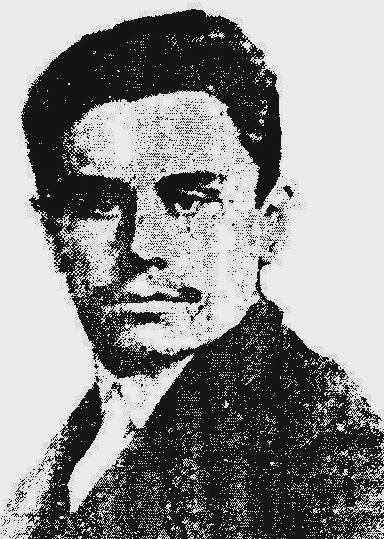
Marxist legal theorist Evgeny Pashukanis was born on this date in 1891.

A Russian of Lithuanian parentage, Pashukanis joined the Bolsheviks in 1912, and following the Russian Revolution in 1917 became a leading writer in Soviet jurisprudence. Unlike other Soviet legal writers, however, who thought that pre-Revolutionary forms (i.e. laws and courts) could be adapted to serve the cause of the Revolution by changing the content of the laws and putting revolutionaries in positions of authority on the courts, Pashukanis' critique began with the radical view that the concept of "law" itself was an outgrowth of capitalist society -- a product of the capitalist's desire to protect property and dominate the proletariat -- and that in its highest evolution a post-capitalist society would see a "withering away" of the law in favor of new forms of social behavior and organization based on the absence of commodity fetishism, much like the "withering away of the state" proposed by Karl Marx himself.

Pashukanis' vision of a disappearance of laws echoes the brash optimism of a revolutionary from another period -- the Apostle Paul in his Epistle to the Galatians, in which he writes: "Christ redeemed us from the curse of the law, having become a curse for us . . . Stand firm therefore in the liberty by which Christ has made us free, and don’t be entangled again with a yoke of bondage . . . the fruit of the Spirit is love, joy, peace, patience, kindness, goodness, faith, gentleness, and self-control. Against such things there is no law."
There is, of course, much that separates theoretical Christianity from theoretical Marxism -- but at the core of both Paul and Marx was a fervent belief in the better part of one's nature, unlocked within a new order of social relations, as well as a hopeful expectation of ethical expression that can only come from within, and not from an old set of rules.

Pashukanis' critique of the nature of legal authority was destined to be short-lived within the atmosphere of terror imposed by Soviet dictator Joseph Stalin, who gave lip service to Marxism as Pashukanis and the theorists saw it, but ruled as a despot. At the age of 46, Pashukanis was murdered by Stalin's secret police, and his writings were burned by the Soviets, only to reappear in translation in the 1950s.

Labels: , , , ,

Wednesday, January 18, 2006

Flood v. Kuhn, 407 U.S. 258 (1972)


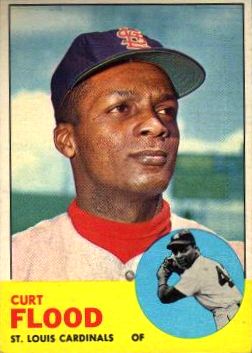
A seven-time Gold Glove-winning centerfielder who had batted over .300 in 6 of 12 seasons, Curt Flood (who was born on this day in 1938 in Houston, Texas) balked when the St. Louis Cardinals notified him that they were trading him to the Philadelphia Phillies after the 1969 season. At that time, teams enforced a "reserve clause" upon all major league players, which gave the teams the right to trade players without their permission. Flood, incensed that he was being treated as a piece of property that could be bought and sold without his say, took his case to court with the support from the Major League Baseball Players Association, writing "I believe any system that produces that result violates my basic rights as a citizen and inconsistent with the laws of the United States."

The case ultimately went before the U.S. Supreme Court, which voted 5 to 3 in 1972 against Flood. Nevertheless, Flood's case, with its underpinnings of being attached to the Civil Rights movement, galvanized Marvin Miller and the Players' Association, which achieved Flood's aims 4 years after his case by introducing the concept of "free agency" for any player with 10 years' service with 1 team. Many have since claimed that "free agency" has resulted in the degradation of fan loyalty and the spiraling of costs, but it is hard to argue with Flood's essential premise in favor of human rights.

Flood himself never reaped the benefits of "free agency." He retired from baseball after one more season with the Washington Senators (close to the Supreme Court) in 1971 to become a broadcaster for the Oakland A's, and to paint. His portrait of Martin Luther King, Jr. now hangs in the King family home. Flood died of throat cancer on January 20, 1997.

Categories: , ,

Labels: ,

Tuesday, December 13, 2005

The Martini, and the Understanding of the Framers

The ever-lovin' Wonkette reports that the combative, famously "Borked" former U.S. Supreme Court nominee Robert Bork has gone out on a limb with yet another controversial stand in a recent letter to the editor of the Wall Street Journal:


Martini's Founding Fathers: Original Intent Debatable

Eric Felten's essay on the dry martini is itself near-perfect ("Don't Forget the Vermouth," Leisure & Arts, Pursuits, Dec. 10). His allusion to constitutional jurisprudence is faulty, however, since neither in law nor martinis can we know the subjective "original intent" of the Founding Fathers. As to martinis, the intent may have been to ease man's passage through this vale of tears or, less admirably, to employ the tactic of "candy is dandy, but liquor is quicker."

What counts in mixology is the "original understanding" of the martini's essence by those who first consumed it. The essence remains unaltered but allows proportions to evolve as circumstances change. Mr. Felten's "near-perfect martini" is the same in principle as the "original-understanding martini" and therefore its legitimate descendant. Such latter-day travesties as the chocolate martini and the raspberry martini, on the other hand, are the work of activist bartenders.

Mr. Felten lapses into heresy only once. He prefers the olive to the lemon peel because the former is a "snack." Dropping a snack into a classic drink is like garnishing filet mignon with ketchup. The correct response when offered an olive is, "When I want a salad, I'll ask for it."

Robert H. Bork
The Hudson Institute
Washington


I, too -- along with the estimable Ms. Cox -- happen to agree with Judge Bork's assessment of the silliness of such creations as the chocolate martini and the raspberry martini. Indeed, if we're throwing silly drinks around, I would immediately hurl an apple martini into that very same swill-bucket.

However, I would observe that Judge Bork's arguments regarding the heresy of the olive as a garnish for a true martini reveal the problems inherent, in both jurisprudence and mixology, within Judge Bork's use of "original understanding" as a decisional methodology.

We all have our favorite framers. I prefer John Jay, for example, to Ben Franklin -- but that's just me, I suppose. In the world of the cocktail, I prefer David Embury, who offers his own opinion regarding the perfect martini in The Fine Art of Mixing Drinks (1948; reviewed by yours truly in a previous post here). After citing several popular yet mediocre recipes for a martini, Embury offers the following as a preferred formula:


MARTINI DE LUXE or GIBSON DE LUXE

1 part Lillet Vermouth
7 parts imported English Gin
Stir well ["If you shake the martini, it becomes a Bradford," according to Embury] in a bar glass or Martini pitcher with large cubes of ice and pour into chilled cocktail glasses. Twist lemon peel over the top.

The distinction between the Martini and the Gibson is simple. The Martini is served with an olive, the Gibson with a small pickled cocktail onion.
If you can get olives stuffed with any kind of nuts, they make the perfect accompaniment to a Martini.

Embury insists that his 7-to-1 ratio was derived after extensive experimentation, and that it is the proportion "most pleasing to the average palate," although some have been known to prefer a ratio as high as 10-to-1.

You and your framer can protest all you want, but if my framer says I can have an olive (even an olive stuffed with a nut!), then by the Constitution of this great land of ours, I will have one.

Labels: , , ,

Sunday, October 30, 2005

Clement Haynesworth

The withdrawal of Harriet Miers' nomination to the Supreme Court brings to mind another failed nomination -- that of Clement Haynesworth, who was born on this day in 1912 in Greenville, South Carolina.

Haynesworth was a somewhat flamboyant but respected Greenville lawyer when he was appointed to the U.S. Court of Appeals for the Fourth Circuit by Dwight Eisenhower in 1957. President Nixon attempted to appoint Haynesworth to the Supreme Court to fill the vacancy created by the resignation of Abe Fortas (following allegations that he received questionable honoraria), but Haynesworth's appointment was scuttled in the Senate when it was discovered that Haynesworth's wife owned stock in a company which came before him in litigation in the Fourth Circuit. Senate Democrats also claimed he was too conservative when it came to civil rights and labor issues, and they were still pretty sore about the Fortas thing.

You never can tell about such things, however. Remaining on the Fourth Circuit bench, it has been noted that Haynesworth's opinions were largely responsible for liberalizing prisoner's rights in the Fourth Circuit. As a sidelight, I'm told he was also, incidentally, the Circuit's authority on insurance "suicide" cases involving sexual self-asphyxiation.

Unfortunately, Haynesworth is today unfairly grouped with Nixon's other failed appointee, Harrold Carswell -- about whom Nebraska senator Roman Hruska, trying to give his support to an unsupportable candidate, said "Mediocre people deserve representation, too." Haynesworth died after an illustrious career as a jurist, in 1989.

Labels: , ,

Monday, October 03, 2005

Where do Supreme Court Justices Come From?


Apropos of President Bush's nomination of Harriet Miers, a woman with no previous judicial experience, to the U.S. Supreme Court to replace the retiring Justice Sandra Day O'Connor, it is worth remembering that a number of previous Supreme Court justices came to the Court without judicial experience (including the following men who served during the 20th century):

Melville Fuller – Leading Chicago lawyer and Democratic campaigner
George Shiras – Pittsburgh corporate lawyer
William Moody – U.S. attorney general; prosecutor of Lizzie Borden
Charles Evans Hughes – Governor of NY before his first appointment to the Court
James McReynolds – U.S. attorney general and anti-Semite
Louis Brandeis – Public interest lawyer and successful bond investor
George Sutherland – U.S. senator from Utah
Pierce Butler – Railroad lawyer
Harlan Stone – U.S. attorney general, formerly Columbia law dean
Owen J. Roberts – lawyer, prosecutor of the Teapot Dome defendants
James Byrnes – U.S. senator from South Carolina
Stanley Reed – U.S. solicitor general
William O. Douglas – Chairman of the Securities and Exchange Commission
Felix Frankfurter – Harvard law professor and former assistant U.S. attorney
Robert H. Jackson – U.S. attorney general
Harold Burton – U.S. senator from Ohio
Tom Clark – U.S. attorney general
Earl Warren – Governor of California
Arthur Goldberg – U.S. secretary of labor
Byron White – U.S. deputy attorney general, former NFL rushing leader
Abe Fortas – lawyer, a founder of the firm Arnold & Porter
Lewis Powell – lawyer, a partner with a predecessor of Hunton & Williams
William Rehnquist – lawyer with the U.S. Office of Legal Counsel

They've come in all political stripes.

Using these as potential categories of public life from which President Bush could have chosen a nominee, I suppose we should be thankful that he did not choose Utah U.S. Senator Orrin Hatch, former NFL rushing leader O.J. Simpson or California governor Arnold Schwarzenegger.

Labels: , ,

Wednesday, September 28, 2005

Rebel Lawyers


Last week I gave my 4th annual “Whiskey Rebellion” speech for the local chapter of the Federal Bar Association.

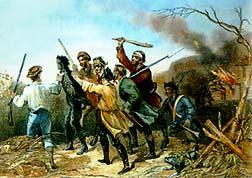
The Whiskey Rebellion, in case you’ve forgotten the American history you were never taught anyway, was an insurrection in 1794 by settlers in the Monongahela Valley in Western Pennsylvania who fought against a federal tax on whiskey by tarring-and-feathering revenue collectors and conducting other mischief. President Washington led 13,000 soldiers to quell the insurrection – which was the first and only time a sitting president led troops into battle.

It turns out to have been a very important, if almost forgotten event, in American history, because it was the first dramatic opportunity for the United States government to prove its legitimacy to its own people, and to impose the will of the federal government upon the contrary desires of a state or local constituency. It was also an important test of the limits and protocols of dissent within the infant Republic, the ability to disagree with the policies of the government without being branded as a traitor.

Of all the truly interesting things I could have discussed concerning the Whiskey Rebellion, unfortunately I had to focus on the activities of lawyers during the Rebellion, because people were actually paying to listen to me so that they could obtain Continuing Legal Education “Ethics” credit for the year.

There were two lawyers who played major roles in the Rebellion. One was Hugh Henry Brackenridge, a Princeton-educated pro-federal carpetbagger and Pittsburgh’s first-ever lawyer, who campaigned against the whiskey excise tax but stopped short of urging rebellion. The other was David Bradford, an allegedly mentally unstable country lawyer, the deputy attorney general of Washington County who was to be branded as a traitor, a thief and a ringleader of the insurrection for giving violent speeches and rousing the public outcry.

Both lawyers ended up as losers in the conflict -- but both found redemption, after a fashion.

Brackenridge’s pamphlets and articles condemning the excise tax became well known among the politicians in Congress and in President Washington’s cabinet – so much so that Washington’s soldiers chanted anti-Brackenridge epithets on their way to quell the insurrection. But to his fellow Pittsburghers, Brackenridge was a traitor to the cause because he would not support armed resistance against the feds. He ended up losing the trust of his neighbors as an advocate, until he was finally elevated to the Pennsylvania Supreme Court. (This is sometimes what happens when no one else will have you.)

David Bradford had a warrant out for his arrest, and he ended up escaping South to New Orleans, and then to the fringes of Spanish West Florida, before being pardoned by President John Adams. Then, strange as it may seem, President Thomas Jefferson, who was having troubles with Spanish Florida during his term, actually sought out Bradford to help him with the situation, recalling how well Bradford was able to stir up the residents of Western Pennsylvania during the Whiskey Rebellion. I think it says something about the young Republic's willingness to forgive and forget an honest mistake that Bradford might be asked by his president to serve his country once again. After all, it was only a few years before that some of the English-speaking inhabitants of North America had decided to throw off the yoke of the only apparent authority which then existed -- that of the British crown. They claimed that they were being taxed without representation, and they claimed that they had a God-given right to govern themselves. Who could blame Bradford for thinking he might have had the colorable authority to do the same a scant few years after the last time it was done?

And therein lies the gist of my message to the lawyers assembled (in case you missed the speech itself). In a free society, lawyers are given a wide berth when it comes to challenging the existing legal order without being branded as traitors. Although “precedent” is a powerful element in our system, even John Roberts, in his recent confirmation hearings, had to admit that it was not inviolable; the ability to break precedent is, for example, what moved us from the “separate but equal” doctrine of Plessy v. Ferguson to the integration imperative in Brown v. Board of Education. And yet, procedural and ethical rules seem to place limits on a lawyer’s ability to launch arguments that are not grounded in current law – as evidenced by the sanctions that can be imposed against lawyers for “frivolous” claims, for example. So – how is a lawyer to know when he or he has gone too far? What are the limits of a lawyer’s working dissent?

It is part of a lawyer’s job to exercise our independent judgment -- not only about the advice we give to our clients, but about the advice we give to ourselves. We are always, at some level, consciously or unconsciously, asking ourselves: where there are no outright prohibitions and no black-letter rules to guide us, do we have an argument that this is legal? And if it is found to be illegal, what's the magnitude of the consequences? David Bradford obviously got a break, because this was, after all, a first test for the federals. The next guy no doubt took his lumps.

The profession urges us to be men and women of our time – it urges us to be wide-awake and practical, using our wits and our experience and our street sense as we go about our duties. And this applies, I think, to the advice we give ourselves as much as it does to the advice we give others. We take measure of our actions in the context of our times -- and whether we are laboring to maintain the status quo or to effect radical change in society, if we still have our dignity by the end of it all, then it seems to me we’re on the right track.

Labels: , , , ,