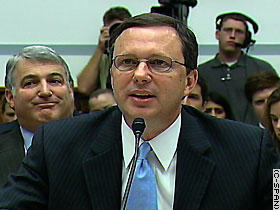
Fred Cuny
I love hanging out with engineers. Recently, as the vicissitudes of New Orleans have played out in the aftermath of Hurricane Katrina, I've listened to a number of engineers casually lay out their suggestions as to how New Orleans should be rebuilt with the aim of avoiding a similar catastrophe in the future. "Take down the levees, see where the water flows, rebuild only to the waterline," says one. "Keep the existing levees, lay out a greenspace just inside those levees, build another set of levees on the inside of the greenspace," says another. All the ideas make good sense, but when you introduce human desires and needs into the mix, the equation changes dramatically.
Frederick C. Cuny, born on this day in 1944 in New Haven, Connecticut, was an engineer who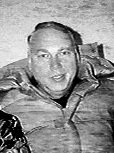 made disasters his life's work. In 1969, Fred Cuny took a leave of absence from a Fort Worth engineering firm to assist in an airlift of food to Biafra, the beginning of a career of relief work in which he exorcised his impatience with bureaucratic red-tape and waste by founding Intertect Relief and Reconstruction Corp., a relief mission technical assistance and training company. Through Intertect, Cuny designed and built refugee camps in Bangladesh in 1971; created a housing reconstruction and materials recycling program following the 1976 Guatemala earthquake; and helped refugees return to their homes in Ethiopia in 1985. He even argued with Mother Teresa over the viability of concrete housing in the mud-puddles of Calcutta, and was right.
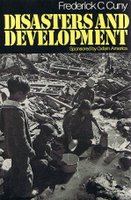 After almost 20 years of working in disaster relief, Cuny assembled his experiences in his book, Disasters & Development
 (1983), and trained relief workers in the "Cuny approach" to disaster relief -- using disasters and violent conflicts as catalysts for economic development in the Third World, by figuring out how to reestablish and strengthen resource distribution systems following a disaster rather than merely encouraging dependent or combative behavior by handing out food and drawing able-bodied populations to the edges of airstrips.
Reading Disasters & Development today, one experiences an eerie sense of familiarity, as Cuny describes the chronology of relief and government action following a hypothetical Third World hurricane -- the cross-jurisdictional bickering, looting, corruption and the gradual tailing off of emergency relief, leaving lasting deficits in housing, food distribution, potable water and other necessities. Most interestingly, Cuny observes that disasters always hit the poor disproportionately -- not only because the poor live in sub-standard dwellings in areas where land is cheap and therefore often more vulnerable to the elements, but also because prior to a disaster, all resources are spent on maintaining a minimum level of development, with few resources being free for improvement. When a disaster hits an impoverished community, the effect is often epochal, setting back the meager advancements of decades of step-by-step improvements in matters of sanitation and construction. Were he alive today, no doubt Cuny would have said as much about Katrina.
After helping Palestinians in Kuwait and Kurds on the Turkish border following the Gulf War, Cuny went to Sarajevo in 1993, where he secretly built a water filtration plant (concealing it from hostile authorities in an abandoned highway tunnel) to meet the emergency need for potable water outside the range of sniper fire while the Bosnian conflict raged around the city. By 1995, Cuny had begun to articulate the need for the world's major powers to develop a systematic approach to dealing with regional conflicts, and to cease using well-intentioned humanitarian aid as a replacement for decisive political or military action.
In his last crusade, he visited Chechniya and returned to the U.S. waging a war of words against the brutality of Russian attacks; he returned shortly thereafter with a plan for a cease-fire, combined with recommendations to set up a medical center to deal with the cholera outbreak, distribution of repair kits to restore damaged homes and the establishment of an emergency radio station to help separated families find each other. Soon after his return to Chechniya, however, Cuny disappeared. President Clinton raised the question of Cuny's disappearance with Russian president Yeltsin, but it was later discovered that the Russians had been spreading false propaganda about Cuny (that he was anti-Islamic) which resulted in his being detained and executed by Chechen intelligence officials in April 1995.
Frederick C. Cuny, born on this day in 1944 in New Haven, Connecticut, was an engineer who
 made disasters his life's work. In 1969, Fred Cuny took a leave of absence from a Fort Worth engineering firm to assist in an airlift of food to Biafra, the beginning of a career of relief work in which he exorcised his impatience with bureaucratic red-tape and waste by founding Intertect Relief and Reconstruction Corp., a relief mission technical assistance and training company. Through Intertect, Cuny designed and built refugee camps in Bangladesh in 1971; created a housing reconstruction and materials recycling program following the 1976 Guatemala earthquake; and helped refugees return to their homes in Ethiopia in 1985. He even argued with Mother Teresa over the viability of concrete housing in the mud-puddles of Calcutta, and was right.
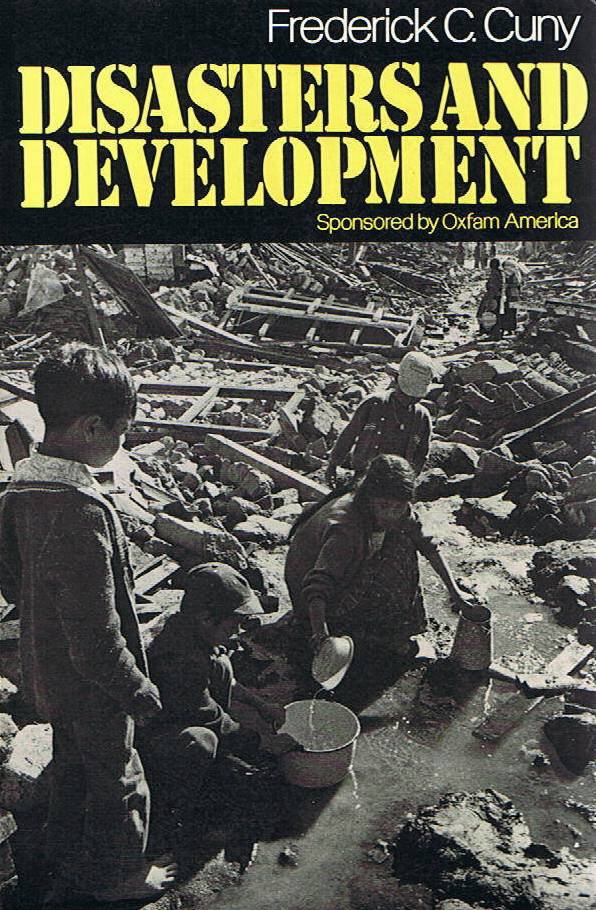 After almost 20 years of working in disaster relief, Cuny assembled his experiences in his book, Disasters & Development (1983), and trained relief workers in the "Cuny approach" to disaster relief -- using disasters and violent conflicts as catalysts for economic development in the Third World, by figuring out how to reestablish and strengthen resource distribution systems following a disaster rather than merely encouraging dependent or combative behavior by handing out food and drawing able-bodied populations to the edges of airstrips.
Reading Disasters & Development today, one experiences an eerie sense of familiarity, as Cuny describes the chronology of relief and government action following a hypothetical Third World hurricane -- the cross-jurisdictional bickering, looting, corruption and the gradual tailing off of emergency relief, leaving lasting deficits in housing, food distribution, potable water and other necessities. Most interestingly, Cuny observes that disasters always hit the poor disproportionately -- not only because the poor live in sub-standard dwellings in areas where land is cheap and therefore often more vulnerable to the elements, but also because prior to a disaster, all resources are spent on maintaining a minimum level of development, with few resources being free for improvement. When a disaster hits an impoverished community, the effect is often epochal, setting back the meager advancements of decades of step-by-step improvements in matters of sanitation and construction. Were he alive today, no doubt Cuny would have said as much about Katrina.
After helping Palestinians in Kuwait and Kurds on the Turkish border following the Gulf War, Cuny went to Sarajevo in 1993, where he secretly built a water filtration plant (concealing it from hostile authorities in an abandoned highway tunnel) to meet the emergency need for potable water outside the range of sniper fire while the Bosnian conflict raged around the city. By 1995, Cuny had begun to articulate the need for the world's major powers to develop a systematic approach to dealing with regional conflicts, and to cease using well-intentioned humanitarian aid as a replacement for decisive political or military action.
In his last crusade, he visited Chechniya and returned to the U.S. waging a war of words against the brutality of Russian attacks; he returned shortly thereafter with a plan for a cease-fire, combined with recommendations to set up a medical center to deal with the cholera outbreak, distribution of repair kits to restore damaged homes and the establishment of an emergency radio station to help separated families find each other. Soon after his return to Chechniya, however, Cuny disappeared. President Clinton raised the question of Cuny's disappearance with Russian president Yeltsin, but it was later discovered that the Russians had been spreading false propaganda about Cuny (that he was anti-Islamic) which resulted in his being detained and executed by Chechen intelligence officials in April 1995.
Labels: Books, Disaster Relief, Fred Cuny, Hurricane Katrina
posted by Ron Schuler at
9:06 AM
0 Comments