Monday, December 17, 2007

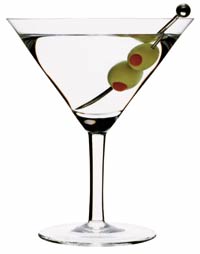
Of Martinis, "Bradfords" and "Teslas"


My apologies to regular readers who may have been showing up at this space every morning hoping for a new "parlour trick." It is has been a busy season, full of deals, machinations and pre-holiday chores -- but I hope to see my way clear to writing more when 2008 begins.

One thing, however, has inspired me to put pen to paper once again ... I was out with my wife the other day, trailing behind her as she rummaged through the holiday sales at a local Sur la Table, when I stumbled upon a most disconcerting item: the Waring Pro WM007 Professional Electric Martini Maker.

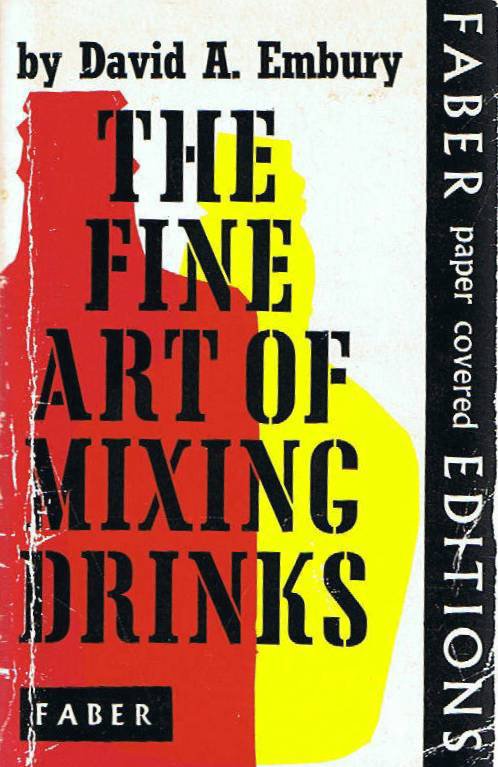
First of all, we all know about Waring and his blender, and also about his Pennsylvanians. More power to the fellow, I guess, for the laser-like focus of his life and imagination upon things that rotate (phonograph turntables, blending blades, etc.). I know that, after soda fountains, taverns and bars were among Waring's first customers, but Waring was no doubt hawking his blender to poor fellows who were forced, by the preferences of their clientele, to make frozen cocktails of one type or another, such as a Frozen Daquiri or a Margarita. The venerable David Embury says as much. "Frozen cocktails require the use of a Waring Blendor or similar electric mixer of the type used at soda fountains," Embury writes in deadpan manner in his book The Fine Art of Mixing Drinks. "The egg-beater type of electric mixer cannot be used." Implicit in his observation that a "Waring Blendor" is something that is normally seen at a soda fountain is the opinion, no doubt, that frozen cocktails are for grown-ups who still have adolescent tastes. In his chapter on "Glassware, Gimmicks, and Gadgets," Embury remains pointedly silent on the necessity of keeping a "Waring Blendor" around a well-equipped bar.

Now the people who own Waring's name have unleashed this strange little device on the American consumer market, the Electric Martini Maker -- an appliance whose essential mechanism is not simply rotation (as in the machine's "Stir" mode), but also vigorous shaking (as in its "Shake" mode). Yes, that's right, the Waring 007 can give you a Martini that's either "shaken" or "stirred" at your command.

Notwithstanding James Bond's request for a "shaken, not stirred" Martini, first uttered by Sean Connery in Goldfinger and used ad infinitum ever since, David Embury is very clear on the matter. Martinis are, strictly speaking, always stirred. "If you shake the Martini," Embury maintains, "it becomes a Bradford."

Embury continues: "The real distinction between the two methods is simple. Shaking produces a colder cocktail quicker than stirring. Therefore, since frigidity is highly desirable in all cocktails, shaking is normally the preferable method. However, with some cocktails another consideration enters into the picture, and that is 'eye appeal.' A substantial part of the charm of certain cocktails such as the Martini and the Manhattan is their clear, almost scintillating translucence. A stirred cocktail will remain clear; a shaken cocktail will be cloudy or even muddy in appearance. This result is particularly noticeable where vermouth or any other wine is an ingredient. Therefore, you should never shake a cocktail containing wine unless you want a muddy looking drink. This cloudiness will clear somewhat as the drink stands, but it will never have quite the limpid appeal of the drink that is stirred. ... Incidentally, there are very few cocktails that can be made with the beautiful translucence of the Martini and the Manhattan. This is because more cocktails are made with citrus juices than with vermouths, and the citrus juices themselves are not translucent."

(Why a Bradford? I have no idea, although it does call to mind one hopelessly foggy, early morning airplane flight I took from the airfield at Bradford, Pennsylvania that forced me to admit to myself, then and there, that I was taking the worst calculated risk of my life. I'd be willing to bet, though, that Embury himself never experienced such a thing.)

Embury's distinctions seem quaint and almost archaic now, in a world of filled with muddy Mocha Fudge Latte Martinis and Apple Cinnamon Vanilla Martinis. It does, however, prompt me to wonder what the appropriate name should be for a Martini that is neither shaken nor stirred by human hands, but rather, jerked around by a Waring Pro WM007 Professional Electric Martini Maker. One is tempted to call it a "Waring," but I refuse to cast aspersions on Fred Waring without more evidence of his posthumous complicity. Perhaps we can call it a "Tesla," in honor of the unfairly maligned inventor of the AC current transmission system. Then again, I wouldn't want to further sully his memory, either.

Call it what you like -- the Waring Electric Martini Maker will not be under my Christmas tree this year or any other. I'm not a Luddite, even if I do prefer to chop my own vegetables, when making Salsa, instead of using an electric food processor. It's all about aesthetics. Give me the manually crafted beauty of a dry, translucent Martini (made with Gin, as all Martini aficionados agree), and keep the electricity out of my aperitif.

And if that isn't reason enough not to be experimenting with electricity and cocktails, try this review of the Waring Electric Martini Maker by Dave Wells:

Let's recap. You pay $99.95 (plus tax/shipping) for the machine. You measure the ingredients. You pour the ingredients. You add the ice. The machine wiggles the shaker - either up and down ('shaken') or in a circular motion ('stirred') probably for much longer than necessary. You pour the martini. You wash the jigger and the shaker. You find a place to store the bulky unitasking device. Wow, aren't modern conveniences wonderful?Indeed.


Labels: , ,

Wednesday, December 14, 2005

You say Martooni, I say Martini


Some of my friends warned me that I was biting off more olive than I could chew by taking on the rhetorically gifted Judge Bork with regard to mixological activism and the Martini (see my previous post, "The Martini, and the Understanding of the Framers"). Just as I was girding myself for a nasty letter from the Hudson Institute, however, I suddenly come to find that I have some fellow with the presumptuous moniker of "Dr. Cocktail" on my tail -- who claims (see his comment at Martini Republic) that I was "a trifle disingenuous" in my assertion of the authenticity of an olive-garnished Martini at the expense of the Martini garnished with a twist of lemon.

Okay, now, in the sentence above I was being a trifle disingenuous in my haste to dismiss Dr. Cocktail. I have long known of Dr. Cocktail, and have admired his fascinating website, CocktailDB. Indeed, although he probably won't remember it, I have actually corresponded with Dr. Cocktail regarding some trivial matter concerning chamomile grappa.

Nonetheless, I am buoyed by the support of other Martini enthusiasts, including Lonnie Bruner of DC Drinks (who additionally wishes to point out, in case you were thinking of it, that vodka does not belong in a Martini) and certified mixologist Steven Soto of Newport Beach, California, who concurs with the purity and appropriateness of the olive, helpfully confessing: "My style of adding the vermouth is a squirt in the shaker, swish it, toss it in the sink, then continue making the martini."

It may be years before this issue can be settled, and I will certainly be the first to volunteer my palate to the cause.

In the meantime, Dr. Cocktail, in response to your comment -- I just want to point out to you that John Adams was one of the signatories of the Olive Branch Petition of 1775, which indicates an early predilection for the olive. Even if it is true that he later repudiated the little green dupe, I guess I'm wondering why I should even consider the opinion of a Founding Father whose favorite drink was Madeira wine. I'll stick with Mr. Embury, thank you very much -- an excellent lawyer as well as an excellent bartender.

Labels: ,

Tuesday, December 13, 2005

The Martini, and the Understanding of the Framers

The ever-lovin' Wonkette reports that the combative, famously "Borked" former U.S. Supreme Court nominee Robert Bork has gone out on a limb with yet another controversial stand in a recent letter to the editor of the Wall Street Journal:


Martini's Founding Fathers: Original Intent Debatable

Eric Felten's essay on the dry martini is itself near-perfect ("Don't Forget the Vermouth," Leisure & Arts, Pursuits, Dec. 10). His allusion to constitutional jurisprudence is faulty, however, since neither in law nor martinis can we know the subjective "original intent" of the Founding Fathers. As to martinis, the intent may have been to ease man's passage through this vale of tears or, less admirably, to employ the tactic of "candy is dandy, but liquor is quicker."

What counts in mixology is the "original understanding" of the martini's essence by those who first consumed it. The essence remains unaltered but allows proportions to evolve as circumstances change. Mr. Felten's "near-perfect martini" is the same in principle as the "original-understanding martini" and therefore its legitimate descendant. Such latter-day travesties as the chocolate martini and the raspberry martini, on the other hand, are the work of activist bartenders.

Mr. Felten lapses into heresy only once. He prefers the olive to the lemon peel because the former is a "snack." Dropping a snack into a classic drink is like garnishing filet mignon with ketchup. The correct response when offered an olive is, "When I want a salad, I'll ask for it."

Robert H. Bork
The Hudson Institute
Washington


I, too -- along with the estimable Ms. Cox -- happen to agree with Judge Bork's assessment of the silliness of such creations as the chocolate martini and the raspberry martini. Indeed, if we're throwing silly drinks around, I would immediately hurl an apple martini into that very same swill-bucket.

However, I would observe that Judge Bork's arguments regarding the heresy of the olive as a garnish for a true martini reveal the problems inherent, in both jurisprudence and mixology, within Judge Bork's use of "original understanding" as a decisional methodology.

We all have our favorite framers. I prefer John Jay, for example, to Ben Franklin -- but that's just me, I suppose. In the world of the cocktail, I prefer David Embury, who offers his own opinion regarding the perfect martini in The Fine Art of Mixing Drinks (1948; reviewed by yours truly in a previous post here). After citing several popular yet mediocre recipes for a martini, Embury offers the following as a preferred formula:


MARTINI DE LUXE or GIBSON DE LUXE

1 part Lillet Vermouth
7 parts imported English Gin
Stir well ["If you shake the martini, it becomes a Bradford," according to Embury] in a bar glass or Martini pitcher with large cubes of ice and pour into chilled cocktail glasses. Twist lemon peel over the top.

The distinction between the Martini and the Gibson is simple. The Martini is served with an olive, the Gibson with a small pickled cocktail onion.
If you can get olives stuffed with any kind of nuts, they make the perfect accompaniment to a Martini.

Embury insists that his 7-to-1 ratio was derived after extensive experimentation, and that it is the proportion "most pleasing to the average palate," although some have been known to prefer a ratio as high as 10-to-1.

You and your framer can protest all you want, but if my framer says I can have an olive (even an olive stuffed with a nut!), then by the Constitution of this great land of ours, I will have one.

Labels: , , ,

Thursday, November 03, 2005

Food and Drink, and My Baby and Me

I've often said that among the things that brought my wife and I together are a mutual appreciation for fresh seafood, particularly sushi and oysters on the half shell, and a good stiff drink here and there. In honor of my dear redhead's birthday today (don't worry, dear, there'll be gifts to unwrap later), I note the important contributions of two fellow November 3 birthdays to the wonderful worlds of food and drink.

On the side of liquid lubrication, today is the 119th anniversary of the birth of Manhattan lawyer and cocktail enthusiast David Embury. Embury, as readers of this space will recall, was a senior tax attorney with the venerable firm of Curtis, Mallet-Prevost, Colt and Mosle, but is better remembered as the author of The Fine Art of Mixing Drinks (1948). See my previous post, "Cocktail Rules," for a brief review of that excellent and highly recommended work. Mr. Embury was born on this day in 1886 in Pine Woods, New York, and passed away on July 6, 1960 in New Rochelle, New York.

From the world of food, today is the 287th anniversary of the birth of British Secretary of State and First Lord of the Admiralty John Montagu, better known as the 4th Earl of Sandwich. Educated at Eton and Cambridge, Sandwich took his seat in the House of Lords at age 21 and became a commissioner of the Admiralty. In 1763, he garnered some bad publicity over his role in the prosecution of his former drinking buddy, John Wilkes, on charges of obscenity, earning the turncoat nickname of "Jemmy Twitcher," from John Gay's The Beggar's Opera. This and a rather notorious affair with a 17-year old singer named Martha Ray who was later shot and killed by a jealous suitor seem to have made him unpopular, a fact which may have unfairly obscured his genuine accomplishments. His two turns as First Lord of the Admiralty are generally considered to have been unsuccessful, his enemies charging that under his watch unseaworthy, poorly equipped ships were sent into battle -- although some commentators observe that, while his administration may have been corrupt, the real problem was that he was shackled by the tight budget given to the Navy by Lord North. One mariner, Captain James Cook, certainly appreciated his administration, and named the Sandwich Islands after him, but they were later to be renamed as the Hawaiian Islands.

Sandwich's surest claim to fame (apart from being portrayed by Bill Murray in a memorable SNL sketch which featured the deathless line, "Give me a Sandwich and a Douchebag, and there is nothing I cannot do") -- is the invention of the sandwich, a toasted bread-and-salt beef convenience food he is said to have concocted in order to enjoy a meal without the necessity of leaving the gambling table; apologists point out it was just as likely that he enjoyed his fast-food while working long hours at his desk in the Admiralty.

Despite his connection with the Admiralty, unfortunately there is no evidence that Sandwich ever tried putting fried haddock, or any other sea creature for that matter, between two pieces of bread.

Labels: , ,

Thursday, September 15, 2005

Cocktail Rules


I recently became aware of a terrific book on cocktails, originally published in 1948, entitled The Fine Art of Mixing Drinks by David A. Embury. It is encyclopedic, witty and well-written, and it is an anthropological treasure chest of forgotten concoctions, neglected ingredients, rituals that now seem downright exotic to us, and impeccable standards.

The author, David Augustus Embury, was a partner and one of the senior tax attorneys of the venerable old Manhattan law firm of Curtis, Mallet-Prevost, Colt and Mosle, known for its public international law expertise. The firm exists today, but unfortunately it cannot bring itself to acknowledge Embury’s formidable contribution to American culture. A spokesman for the firm simply laughed at me and declined to provide any pertinent information about Embury.(1)

Like all good lawyers, though, Embury begins by defining his terms. A cocktail, for Embury, is an “aperitif cocktail – i.e., one to be taken before a meal as a stimulant to the appetite and an aid to digestion.” This quaint definition opens a window onto a lost world, in which on any given evening men and women “dressed for dinner,” donning formalwear and gathering together “at the club” for a couple of drinks before casually assembling a party for dining. Breezy conversation, and the slow, deliberate savoring of an evening’s available tastes, were the primary practices of such outings.

No doubt Embury became an enthusiast of the cocktail while coming of age in college around World War I, a time when some of the greatest of America’s 20th century homegrown entertainments were on the verge of maturing, asking more of their audiences rather than less: silent films were stretching beyond their novelty status, finally building a vocabulary and assuming a decorum to rival the “legitimate stage”; quadrilles had given way to the subtly playful rhythms of ragtime, which in New Orleans was fusing with blues to create jazz; and baseball was shaking off the rowdiness of its turn-of-the-century play and becoming an observational landscape for intellectuals.

All of these – silent films, jazz and baseball -- are now rarefied air, and like the cocktail itself, have each experienced a precipitous decline in their drawing power. The hallmarks of each were that they required a loyal aesthetic temperament, a sophisticated palate and an understanding of special rules. They created, in their respectively segregated fan bases, a fellowship of attentive, informed appreciation. Such are the disciplines that Embury brings to his rarified topic.

This was all well before the collegiate stage had adopted its current interest in beer pong, Jello shots and Everclear-and-Kool Aid. While these are strictly numbing rituals, Embury takes pains to explain that the experience of a cocktail is intended to be bracing and uplifting. It must whet the appetite as well as stimulate the mind, and it must be pleasing to the eye as well. The overall effect of a well-made cocktail, according to Embury, should be as follows: “Taut nerves relax; taut muscles relax; tired eyes brighten; tongues loosen; friendships deepen; the whole world becomes a better place in which to live.” It makes one wonder whether the UN might be more effective with some expert mixologists on staff.

In the service of such goals, however, Embury also advocated moderation. Embury’s careful and exacting advice on this matter is worth repeating. “But how, you may ask, is the average person to know exactly how many drinks he can stand? Should he go on just one binge and have a record kept of how much he consumes in order that thereafter he may know when to stop? My answer is 'No.' It is best that you never find out the limit of your capacity. There is just one safe and simple rule which, if rigidly adhered to, will afford you a maximum of pleasure in your drinking with a minimum of danger of ever becoming drunk. When you reach a point where you feel absolutely sure that you could stand one more but have some slight doubt as to what two more might do to you, STOP. If you resolutely refuse to take even the one extra that you are certain would be O.K., you will maintain your physical stability, your mental balance, and your moral aplomb.”

I could have used this advice once or twice in my own career, but I assure you that now I have committed it to memory almost as a shibboleth.

Embury is nothing if not opinionated. He prefers glass cocktail shakers with metal lids to all-metal shakers, arguing that glass is a better insulator from outside temperatures during the shaking process. Among American whiskeys, Pennsylvania ryes and Kentucky bourbons are the best, and all others are “vastly inferior.” All true Rickeys are made with limes, and never with lemons. Rules are rules.

Perhaps Embury’s most controversial opinion involves proportions. With all the mathematical discipline of an Internal Revenue Code expert, Embury argues, for example, that all “sours” can be made using the same proportions (8:2:1) and that many cocktails, indeed, may be viewed through an isomorphic model – hence his classic statement that “the Side Car is nothing but a Daiquiri with brandy in the place of rum and Cointreau in the place of sugar syrup or orgeat.” This “unified theory of mixing” led one recent reviewer to carp, “Well, all right. And Romeo and Juliet is the same as Two Gentlemen of Verona, if you delete the tragic ending and make Juliet a man.”

Despite Embury’s occasional excesses, his directory of drinks makes for some charming nostalgia. Try ordering a Millionaire, a Tennessee, a Colonel Lindbergh or a Seventh Heaven today, and I think you’ll see what I mean. And if you want to explain to your bartender that a particular drink is only properly made with Oloroso Sherry, Kümmel or Csaszar, you’ll probably experience a similar feeling of anachronism.

It isn’t enough, in most bars today, to say that David Embury knew what he was talking about, but a dip into his world in the pages of The Fine Art of Mixing Drinks is still a worthwhile diversion.

(1) Embury was also, for many years, the head of a national organization of college fraternities – which is probably more to the point, notwithstanding the Hollywood stereotype of the dipsomaniacal lawyer, ably essayed by such fellows as Reginald Denny (not the beating victim, but a British character actor) throughout the 1930s.

See also:

CocktailDB logo

And: Ron Schuler's Parlour Tricks: Food and Drink, and My Baby and Me.


Labels: , , , , ,