Wednesday, October 17, 2007

Local Notes #2


Cleveland, by the numbers, last night:

Rating of the martinis at downtown eatery One Walnut: 10 out of 10
Home Runs witnessed at Jacobs Field last night: 5
Series Game Count: Cleveland 3, Boston 1.
Time on the clock when my head hit the pillow: 3:38 a.m.


Labels: , ,

Wednesday, August 08, 2007

Local Notes, #1


  • On the evening of August 2, Jeremy Messersmith, on something of an extended national tour, opened for The Donuts and Alyssa Jean and the Gypsy Blue Band at The Fire on Girard Street in Philadelphia. The gnome-like one-man AV club spent most of his set crawling around on stage pulling cables, kicking footpedals and pushing buttons, but the ultimate effect was presumably as intended by Messersmith -- small lyrical gestures and the voice of a bunny rabbit over a raft of electronica that single-handedly calls to mind the stuff of Matt Hales (Aqualung). The Donuts, meanwhile, were on fire at The Fire; lead singer J. Bearclaw apparently had a bad day at his day job, which led him to snarl his way through a Wallenda-tight set that included songs from The Donuts' latest CD (Jet Ear), concluding by throwing his guitar and storming off the stage without so much as a valedictory.

  • In Can-Am League play last night, the Atlantic City Surf faced Les Capitales de Quebec, and the stylish minor league girlfriend corps was out at Bernie Robbins Stadium in full force. Amid cries of "Sacre bleu!" and "Viva le frommage!" (I made up that second one), Les Capitales bested the struggling Surfites, 7-4. Despite six innings of shaky pitching by AC's Monte Mansfield, I did not have to come out of Section 216 and pitch the 7th inning myself.

  • Thanks to a service call by yours truly yesterday, Grandpere now enjoys all cable channels between 27 and 55 as well as audio. His on-screen menus, however, are still in Spanish. Score that one Grandpere, 2, his JVC remote, 1.

Labels: , ,

Barry Bonds at Three Rivers Stadium, circa 1988


Could this lean young man be the same fellow who just broke Hank Aaron’s all-time home run record?

Other questions occur to me. Am I the same fellow I was when I snapped this shot? Is my head as small as it was back then? Am I still a good guy when I take an Extra Strength Excedrin? Am I funnier after I’ve had a couple of beers? Am I smarter after getting a good night’s sleep? Am I any skinnier after I skip a few meals? Am I absolutely certain that I am still comprised of the same molecular structure, still fundamentally defined by a string of pointed messages written long ago in trails of deoxyribonucleic acid, after I get off a five-hour plane flight, after emerging from a dip in the ocean, or after an episode of quiet soul-searching and insomnia at 4 in the morning?

I don’t know any of the answers to the questions people pose about Barry Bonds. I humbly admit, however, that I don’t know the precise answers to the questions I am posing about myself. I am merely guessing at this point.

I do know that I would not be capable of hitting a single home run in the majors -- straight, sober, on Excedrin, on beer, or otherwise.


Labels: ,

Tuesday, July 31, 2007

Little Hurler, Big Name, Weak Heart


“Pembroke Finlayson” was surely a mouthful of a name for a 5’-6,” 140-pound lad. Known as the “Midget Twirler,” young Mr. Finlayson made two very brief appearances in major league baseball, pitching for the Brooklyn club, before reaching the age of 22. He might have worked his way back to the bigs if he’d only made it to age 23.

Pembroke Finlayson was born in Cheraw, South Carolina on this day in 1888, the son of Henry Wright Finlayson and his wife Charity. Among Pembroke’s siblings were brothers Richmond Tooks Finlayson, Henry Angus Finlayson and Jennings Finlayson, and sisters Daisy, Sallie, Mammie Lou, Carrie Isabel and Winnie Kennedy Finlayson. The Finlaysons had a penchant for colorful monikers.

South Carolina was hardly a bastion of big league baseball talent in those days; there weren’t many South Carolinians who had played in the big leagues. The first was Charleston native John Bass, who started at shortstop (batting ninth, three spots behind the pitcher) for the Cleveland Forest Citys against the Fort Wayne Keokuks in the very first game of the National Association on May 4, 1871 – said by some to be the very first professional ballgame ever.

After that, there were very few other Palmetto Staters in the majors during the early days of baseball. Charleston briefly had a ball club in the Southern League during the 1890s, the Seagulls; and from out of that city came Tom Colcolough, who had a winning record (8-5) despite an ERA of 7.08 for the 1894 Pittsburgh Pirates, and Pat Luby, who pitched over a 100 games during the 1890s with the Chicago Colts and the Louisville club. Luby equalled a record in 1890 for most hit batsmen in an inning (3). Doc McJames from Williamsburg County, a graduate of the South Carolina Medical College in Charleston, was in and out of the majors for a few years before dying in 1901 from injuries suffered in a horse buggy accident at the age of 28.

Later, of course, there was a promising rookie breaking into the majors in 1908, a contemporary of Finlayson’s from Pickens County, who went by the name of Shoeless Joe Jackson. But baseball around the turn of the 20th century was still a game dominated by Northeastern city boys, and Pembroke Finlayson might not have commanded much attention as a ballplayer had his father not moved the family to Brooklyn in 1901, where Henry Finlayson plied his trade as a dry goods wholesaler.

In Brooklyn, young Pembroke was surrounded by baseball. You could hardly swing a bat without hitting an industrial or commercial team -- collections of laborers who toiled at their labor during weekdays but put on company colors on summer evenings and Saturdays to play for bragging rights – or some other “diamond nine” sponsored by a church or a gentlemen’s lodge. As a teenager, Finlayson showed enough prowess on the mound to be tapped to pitch for a club called the Marquettes, sponsored by the Church of Thomas Aquinas, who played their home games at the Marquette Oval at 4th Avenue and 8th Street in South Brooklyn. He also caught on with the Missouri-Pacific ballclub, a commercial team sponsored by the colorful railroad magnate George Jay Gould, though it is unclear whether Finlayson ever actually worked for the line; he may have been a ringer, which would have been consistent with Gould’s business practices.

Finlayson apparently commanded enough attention as a local phenom to be signed, at the tender age of 19, by the Lynn Shoemakers in Lynn, Massachusetts. Despite sounding like another industrial team, the Lynn Shoemakers were a franchise of the New England League, a Class B rookie circuit whose president was Tim Murnane, an old hand who had been a regular on Harry Wright’s champion Boston clubs during the 1870s. The league had some bona fide stars, including owner/manager Jesse Burkett of the Worcester Busters and player/manager Sliding Billy Hamilton of the Haverhill Hustlers – aging heavyweights who settled in New England to play out the final days of their Hall of Fame careers. Finlayson’s club dragged in at the end of the 1907 season in a distant second place to Burkett’s Busters for the New England championship.

It must have been a heady atmosphere for young Finlayson, who acquitted himself well enough to be noticed by the scouts of Brooklyn owner Charley Ebbets, who signed him along with a former Brown University second-sacker named Harry Partee, on February 22, 1908.

Unfortunately, the Brooklyn ballclub of the National League in 1907 was not the heralded Brooklyn Dodgers of the 1940s and 50s, the ballclub of Duke Snider, Don Newcombe, Roy Campanella, Pee Wee Reese and Jackie Robinson. The Brooklyn Superbas of 1907, as they were then known, had been on a slow and steady slide since Ned Hanlon led them to the National League pennant in 1899 and 1900. Under the guidance of a new manager, Patsy Donovan, they went from finishing 5th in 1906, to 5th again in 1907.

1908 wasn’t looking much better. After a 13-22 start, Ebbets reassured reporters on May 30: “[Outfielder Harry] Lumley and [First Baseman Tim] Jordan will get to hitting, and then Brooklyn will begin to crawl up.” Staff aces Irvin “Kaiser” Wilhelm and Nap Rucker, a 34-year old spitball specialist and his 23-year old knuckleballing protégé, were pitching well enough, but none of Brooklyn’s starting batsmen were showing much promise at that point. The fact that you’ve never heard of Harry Lumley or Tim Jordan should be a clue to the outcome of Ebbets’ prediction …

At any rate, a little over a week later, Pembroke Finlayson made his major league debut before a hometown crowd of about 5,000 patrons. Cincinnati, holding second place in the National League in a close race with the Cubs, had already beaten the Superbas in the first two outings of the series at Brooklyn’s home field, Washington Park – located a mere five blocks north of where Finlayson used to pitch for the Marquettes. On June 6, the third game in the series, Brooklyn scored first, in the second inning; but Nap Rucker gave up two runs to the Reds as he struggled through the third inning. At the start of the fourth inning, Donovan sent Finlayson to the mound.

It was a bit of a disaster, unfortunately. In 1/3 of an inning, Finlayson walked four straight Reds, leaving the score at 3-1 when Donovan pulled him and replaced him with George Bell. Bell would do no better; by the end of the 4th inning, Bell had given up 5 more runs. The final score was 8-2, and soon Finlayson was sent packing, back to the minors for the remainder of the season.

That was June. Brooklyn finished the season in 7th place with a dismal record of 53-101, only a handful of games ahead of the basement-dwelling St. Louis club. The Superbas pitchers had three 20-game losers among them (Wilhelm, 16-22; Jim Pastorius, 4-20; and Harry McIntire, 11-20), and were a mere six more losses away from having five 20-game losers (Rucker lost 19, and Bell lost 15). The team batting average for the 1908 season was an appalling .213.

In some ways, Finlayson’s return to the minors was the best thing that could have happened to him. Ultimately, during the 1908 season, Finlayson apparently managed to get innings and good practice with the Rochester Bronchos in the Eastern League, the Nashville Volunteers of the Southern Association, and the Brockton Tigers in the New England League, where Brooklyn kept an option on his contract.

While Burkett and his Busters coasted to another New England championship that year, the Tigers finished in 4th place under the management of Steve Flanagan. Finlayson could perhaps be forgiven for not focusing on his game as the 1908 season drew to a close, for in February of 1909 it was reported that Finlayson had eloped with his hometown sweetheart, Catherine Hoff, daughter of a Brooklyn merchant, in Bridgeport, Connecticut, a month ahead of their planned March 6 wedding. “Call it off, we are married,” they are alleged to have wired home. The couple leased an apartment in Brockton, where Finlayson would be playing in the Spring.

The Superbas had done little in the off-season to improve their lineup. Jordan, Lumley, Rucker and Wilhelm were all on hand for what promised to be a veritable repeat of the 1908 season. By September, the Superbas were a joke, in 7th place again with a 41-75 record through the end of August. Finlayson was brought into Washington Park again on September 1, just in time for a whopper of a loss against pitcher Orval Overall and the 2nd place Chicago Cubs. As the Chicago Tribune whimsically reported it:

The Cubs crossed the great divide which separates Manhattan from Martini, and whaled the life out of Charley Ebbet’s pets, 12 to 0, by way of trying to keep from freezing in the ocean blasts, which felt as if they were Dr. Cook’s advance agents from the north.

[Player-manager Frank] Chance’s men kept up their vengeful record on this trip by beating Mr. Bell, who was responsible for ringing down the curtain on their winning streak during the last series with the eastern clubs in Chicago. What the Cubs did to Bell is plainly to be seen in the score by innings, which show eight large tallies in the first two rounds, which were Bell’s limit. In that time we slaughtered his delivery for nine clean hard swats, of which [leftfielder Joe] Stanley and Chance got two apiece, and were helped out by some bush league work behind the belfry.

Finlayson, one of thirty odd stars gathered by Brooklyn’s dragnet from the minors this year, was asked to finish Bell’s job, and, without having much in the way of pitching wares, he was a lot better than Bell.


Finlayson gave up a double to Chance in the 4th inning, who scored on third baseman Harry Steinfeldt’s bunt. He then pitched four spotless innings, before giving up three runs in the 9th. Overall gave up only two hits on the day.

Finlayson saw no further action in Brooklyn for the season. The Superbas managed to pull ahead of the Cardinals in the last two games of the season to eke out a 6th place finish. Charley Ebbets took no consolation from the Superbas relatively strong finish; in December of 1909, he put a score of his stable of players on the market – and among them was Pembroke Finlayson. It is unclear whether Ebbets had any firm bites for the little man, however. During the 1910 season, Finlayson pitched for the Lawrence Colts in the New England League, and the Providence Grays (managed by future Hall of Famer Jimmy Collins) and the Rochester Bronchos in the Eastern League.

At the end of the 1910 season, Brooklyn, again holding Finlayson’s contract, sold him outright to the Memphis Turtles in the Southern Association. There he again came under the tutelage of Strawberry Bill Bernhard, who managed Finlayson briefly while the boy made a stop in Nashville during 1908. Bernhard was a star pitcher with the Phillies around the turn of the century; in fact, he is credited with having earned the first major league save of the 20th century, in a 10-inning, 19-17 nail-biter between the Phillies and the Boston Beaneaters. He was a minor star with the Phillies until he joined Nap Lajoie and several others in a controversial jump in 1901 to the Athletics, the Philadelphia franchise of the new, renegade American League. Banned from playing in Philadelphia for his contract jump, he signed with Cleveland and became the first Cleveland pitcher to lead the league in win percentage, with .783 (18-5) in 1902. He retired from pitching in 1907, and earned a winning record as a manager for Nashville for three years (221-187) before moving to Memphis.

The Turtles, so-named for the shell-shaped infield at Memphis' Russwood Park, were in dire straits when Bernhard arrived, having suffered 8th and 7th place finishes for the prior two years. In his rebuilding effort, Bernhard apparently liked what he saw of Finlayson a few years before, and secured him as a key member of his pitching staff.

Finlayson, too, seemed to like playing for Bernhard. He earned a record of 11-4 with the Turtles until, in mid-summer, he was diagnosed with a serious heart ailment. After doctors’ consultations, it was decided that Finlayson required surgery, and on August 1, the Turtles put Finlayson on waivers, due to the uncertainty of his return to the lineup.

Finlayson went under the knife and began his recuperation. Anxious to return to baseball, however – especially in light of his happy situation in Memphis -- Finlayson jumped the gun on his recovery and began throwing pitches in the winter of 1912. The strain proved to be too much. Finlayson died of general peritonitis and myocardial adenitis at the Norwegian Hospital in Brooklyn on March 6, 1912 – what would have been his third wedding anniversary had he and Catherine not eloped. He left his wife with a son and a daughter. He was just 22.


Labels: ,

Tuesday, June 19, 2007

Pride of the Yankees


Baseball legend Lou Gehrig was born on this day in 1903 in New York City.

A high school sports star, Henry Louis Gehrig was declared ineligible for athletics at Columbia University because he had signed a professional contract with the Hartford minor league team. He played for 2 years with Hartford before joining the Yankees as their starting first baseman in 1925.

In 17 seasons with the Yankees, he knocked in over 100 runs 13 times, leading the league 5 times, and he hit 493 home runs, second at that time only to his friend and fellow Yankee slugger, Babe Ruth. The 1927 Yankees were considered the greatest baseball squad of all time, and the Yankees themselves considered Gehrig, who hit .373 with 47 home runs and 175 runs batted in (a record at the time), to be their most valuable player. In 1931, he set another record for RBIs (184), and in 1934, Gehrig won the Triple Crown, leading the American League in batting (.363), home runs (49) and RBIs (165) -- all the while playing in every single game of every single season -- beating the previous record of 1,307 consecutive games, set by Everett Scott in 1925, during the 1933 season.

In contrast to his pal the Babe, the gentlemanly Gehrig didn't smoke, drink, gamble or carouse, and was singularly devoted to his mother (legend has it she had to scold him into leaving her bedside to play in the 1927 World Series after she had undergone surgery). In 1933, when he married debutante Eleanor Twitchell, he became a singularly devoted (and teachable) husband, bending to Eleanor's tastes in art and literature and taking her advice on opening up to the fans.

With life going as well as anyone could imagine, during the 1938 season Gehrig felt he had not played up to his own standards (although he still hit 29 homers, including his record 23rd career grand slam, and batted in 114 runs), so in the spring of 1939 he put himself through an exhausting physical regimen to get into better shape; but as the season began, it became clear that something was wrong. On May 2, he told manager Joe McCarthy to put in his backup, Babe Dahlgren, because, as Gehrig said, "I'm not doing the club any good out there." With that, Gehrig ended a remarkable streak, playing a record 2,130 consecutive games (a mark that would only be broken 56 years later by Cal Ripken).

Soon afterward, Gehrig discovered that he was suffering from the early stages of amyotrophic lateral sclerosis, a degenerative muscle disease that would come to be known as "Lou Gehrig's Disease." On July 4, 1939, the Yankees held a farewell testimonial day for Gehrig, during which he addressed the crowd in a moment considered by many to be among the most emotionally intense in the history of sports, telling the world: "Today, I consider myself the luckiest man on the face of the Earth."

(Proving that the moment has entered our pop culture consciousness indelibly enough to be trodden upon, Norm MacDonald provided a theoretical follow-up to Gehrig's moment at the microphone on an episode of Saturday Night Live: "I was being sarcastic! I am the unluckiest man in the world! I have a disease so rare they named it after me!").

After Gehrig's retirement, New York City mayor Fiorello La Guardia appointed Gehrig to be a New York City parole commissioner, a job at which he worked conscientiously while lending his time to youth groups. He died on June 2, 1941 in Riverdale, New York at the age of 38, two years after entering baseball's Hall of Fame in a special election. Lou and Eleanor were played by Gary Cooper and Teresa Wright in the classic film The Pride of the Yankees (1942), which both lovingly drew upon and fortified the Gehrig legend.


Labels: ,

Wednesday, May 23, 2007

The Fastest Game


Recently I’ve had the chance to see some old major league pitchers at work. And by old, I mean guys who are just about my age. On a visit to Fenway two weekends ago, I saw Bosoxer Curt Schilling pitch 5 and a third innings against the Orioles. He gave up 4 runs and left a tie game, but looked pretty good for a 39-year-old throwing 95 pitches. Last weekend, I also caught the Mets’ Tom Glavine, on TV and on XM, facing the Yankees and hurling his 295th victory at age 41; and I went to PNC Park on Sunday to see Randy Johnson, age 43, throw 10 strikeouts in 5.2 innings to beat the Pirates 5-2.

It’s a cliché that advanced age is associated with slowness – old preachers give slow sermons, old film directors make slow movies, old grannies drive slowly down the right lane of the parkway -- but watching these pitchers work belies this. Glavine kept the game moving along quickly, pitching 101 pitches before the late-inning rain started to slow the game down; after some sloppy relief pitching, the game finally finished up in about 3-1/2 hours. The Big Unit was even faster in dispatching the Bucs in a game that wound up lasting only 2-1/2 hours. Even Schilling worked pretty quickly; it was only after he left the mound that the 7th and 8th innings of the Red Sox-Orioles game seemed almost like the second independent half of a double header all by themselves.

Johnson’s victory occurred in a game that was faster than the average major league game, but back in 1916, a few fans in Asheville, North Carolina were on hand to see what is now considered to be the fastest game in the history of professional baseball.

The Asheville Tourists played in the inaugural season of the Class D North Carolina State League as the Asheville Mountaineers in 1913. After suffering a last place finish in 1914, the club changed its name to the Tourists for the 1915 season and battled their way to first place under the helm of a popular slick-fielding infielder-manager, John P. “Jack” Corbett, finishing 5-1/2 games ahead of the Durham Bulls. That year, a 15-year-old future novelist named Thomas Wolfe caught Tourist fever, and spent the season serving as Corbett’s bat boy, shagging pre-game pop flies and disappearing into the bleachers once the game would begin.

Recalling his days at Asheville’s Oates Park (pictured above), Wolfe later wrote to baseball writer Arthur Mann: “… [I]n the memory of almost every one of us, is there anything that can evoke spring – the first fine days of April – better than the sound of the ball smacking into the pocket of the big mitt, the sound of the bat as it hits the horse hide; for me, at any rate, and I am being literal and not rhetorical – almost everything I know about spring is in it – the first leaf, the jonquil, the maple tree, the smell of grass upon your hands and knees, the coming into flower of April. And is there anything that can tell can tell more about an American summer than, say, the wooden bleachers in a small-town baseball park, that resinous, sultry and exciting smell of old dry wood.”

But Wolfe well understood the inherent bittersweetness of minor league baseball. Nebraska Crane, a character in Wolfe’s The Web and the Rock and You Can’t Go Home Again, was apparently based on Corbett, an Ohio-born minor league journeyman who never ultimately made it to the bigs. Wolfe wrote about Corbett more directly in Look Homeward, Angel: “Pearl juggled carefully the proposals of several young men during this period. She had the warmest affection for a ball player, the second baseman and manager of the Altamont [i.e. Asheville] team. He was a tough, handsome young animal, forever hurling his glove down in despair during the course of the game, and rushing belligerently at the umpire. She liked his hard assurance, his rapid twang, his tanned, lean body …”

The Tourists won the first half of the 1916 season, and looked poised to repeat their 1915 triumph; but the elation of Thomas Wolfe's boyhood hero Jack Corbett turned to resignation as the club pulled into August. Despite leftfielder Jim Hickman’s league-leading .350 batting average, the Tourists were in 4th place, hovering just above .500 ball on August 30, the last day of the season. The Winston-Salem Twins were in town for the final game, but the Charlotte Hornets had already clinched the league title, so the Twins were definitively in second place for the year.

The game was scheduled for 2 p.m., but apparently the Twins were anxious to call it quits for the season; they wanted to catch a 3 p.m. train back to Winston-Salem. So Corbett and Twins skipper Charlie Jones apparently entered into a gentlemen’s agreement to start the game a half hour early and to keep it as short as possible. After all, they reasoned, it was a meaningless game as far as the standings were concerned. Other teams playing meaningless games at the end of the season in those days were wont to run onto the field wearing clown suits or ladies’ bloomers, so the idea of a fast game was a pretty tame shenanigan by comparison.

Two hundred fans showed up at Oates Park for the game – not many for a ballpark that could hold 1,200, but then again, most of the town’s baseball fans probably hadn’t gotten the message that the game was going to start early. According to Sporting News writer Bob Terrell, Thomas Wolfe was allegedly among those present.

The Asheville Citizen summed up the ensuing game as a “farcical contest.” The paper described the manner of play: “Nobody let a baseball get past. Everyone hit the first ball pitched … Nobody was left on the bases. If a man hit and didn’t come home, he contrived to get tagged out by overrunning the bag. Before the last man in an inning had been called out the players were on the run changing sides in the field. Along about one of the innings, some Twin player rushed to bat and [Tourists’ pitcher Doc] Lowe pitched the ball with no one in to catch. It was hit to center field, a fair single, but Nesser [one of the Twins’ outfielders] grabbed it on the bounce on the way into the bench and threw his team mate out at second.”

Lowe gave up two runs in the first inning; umpire Red Rowe showed up to officiate the game in the 4th inning. In the 7th, the Tourists managed to score one off the Twins’ ace, Whitey Glazner; and after 2 more innings, the two sides mercifully put the game out of its misery. Glazner (who later pitched adequately for 5 seasons, 3-1/2 with Pittsburgh and 1-1/2 with the Phillies) got the win, helping him to attain a league-leading .750 winning percentage for the season. The game was finished in a mere 31 minutes – two minutes before it was actually scheduled to start.

Perhaps the operative base running phrase of the day, with all due deference to Mr. Wolfe, was “You can go home again, but we’d prefer that you don’t, ‘cause we’re trying to wrap this up early.” Imagine your dismay, though, if you showed up at the ballpark looking forward to the last game of the season, only to find the players heading to the showers.

No one was particularly pleased about the day’s display, and Tourists president L.L. Jenkins jumped to his feet after the game and shouted a valedictory, promising that every paying customer would be refunded his or her money. The Citizen noted that women, in particular, were almost unanimous in calling the entire spectacle “perfectly horrid.”

Jack Corbett left Asheville after the 1916 season, and it turned out to be none too soon. While Corbett was busy managing the Columbia Comers to the South Atlantic League pennant in 1917, the Asheville club folded on May 17, 1917. The North Carolina State League itself shuttered two weeks later, a domestic casualty of World War I. Baseball would not return to Asheville for another seven years.

Although Corbett never made it to the big leagues, his name lives on in baseball. As early as 1939, Major League Baseball adopted Corbett’s patented design for the bases used on the field; now all 30 major league teams use “Jack Corbett Hollywood Base Sets,” with a tapered lip on the bottom of each base to grip the infield dirt, and a six-inch stanchion to anchor it. Corbett passed away in Van Nuys, California in 1973, at the age of 85.

Bill James says that baseball games have gotten too long, observing that “the wasted time inside baseball games dissipates tension, and thus makes the game less interesting, less exciting, and less fun to watch.” In an age in which everyone wants everything yesterday, baseball’s slowness is one of the things I appreciate most about the game. Certainly the fans present at Oates Park on August 30, 1916 were not treated to baseball that was interesting, exciting or particularly fun to watch. I do enjoy watching the studied efficiency of a veteran pitcher like Schilling, Glavine or Johnson, but give me a wild rookie pitcher and some guys who can foul off almost every strike, and that will suit me fine. My enjoyment of baseball is not measured by how exciting any particular game is; it is measured by being within the milieu of those sounds, sights and smells that Thomas Wolfe celebrated – to sit back, without any concern for the clock, and to take a break and enjoy an American rite of spring.


Labels: ,

Sunday, July 16, 2006

'Say it Ain't So'


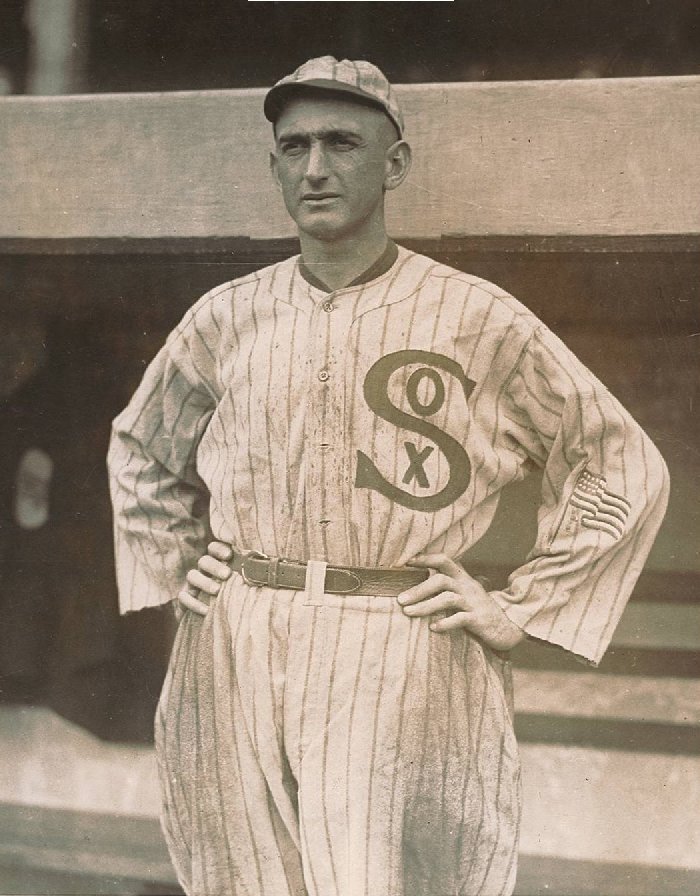
Shoeless Joe Jackson was born on this day in 1889 in Pickens County, South Carolina.

An illiterate textile mill laborer from South Carolina, Jackson had great natural batting talent, and for a time he rivaled Ty Cobb as the greatest hitter of the American League. Having led his team to the AL pennant at the peak of his powers in 1919, Jackson's brilliant playing that season helped to set the stage for what has come to be known as the "Black Sox Scandal." Just prior to the World Series, Jackson's teammate, first baseman Chick Gandil, approached a Boston bookmaker with a plan to throw the World Series to the underdog Cincinnati Reds in exchange for $80,000, which was probably fronted by New York gambler Arnold Rothstein. Gandil then enlisted the help of several key White Sox players who either openly shared his lack of ethical restraint, or who had developed a conquering resentment of the draconian cheapness of the owner of the Sox, Charles Comiskey.

Jackson clearly shared the conspirators' sense of resentment of their surroundings; however, there is little evidence to suggest that Jackson was an active participant in the conspiracy: he played exemplary baseball during the World Series, even as his teammates made obvious gaffes on the field. After the Sox lost the Series to Cincinnati, teammate Lefty Williams explained to Jackson that the conspirators had told the gamblers that Jackson was part of the conspiracy, and presented Jackson with $5,000 as his cut from the scheme. With the $5,000 in hand, Jackson made an effort to tell Comiskey about the conspiracy but was rebuffed. With pressure mounting from the newspapers, which began running stories about the fix, Comiskey turned around and offered a $10,000 reward for information about the alleged scheme, and vowed that if any of his players were involved, he would make sure there would be no place for them in major league baseball.

As the 1920 season came to a close with Jackson having one of his greatest years ever, a Cook County grand jury prepared to hand out indictments against the conspirators in the 1919 World Series fix -- including Joe Jackson. Although at trial the eight ballplayers were acquitted of any wrongdoing, baseball's newly-anointed first Commissioner, Judge Kenesaw Mountain Landis, expelled the eight from major league baseball for life, stating that "(r)egardless of the verdicts of juries, no player who has entertained proposals or promises to throw a game, no player who sits in conference with a bunch of crooked players and gamblers where the ways and means of throwing games are discussed and does not promptly tell the club about it will ever play professional baseball."

Jackson played out the next 20 years under assumed names for textile teams, barnstormers and semi-pro clubs -- but his inimitable swing made him instantly recognizable to the fans who watched him play. He tirelessly and repeatedly applied for reinstatement to major league baseball, but it never came.

He died on December 5, 1951 in Greenville, South Carolina. Fated never to enter the Hall of Fame, he has nevertheless entered the realm of myth and legend as a character in W.P. Kinsella's novel Shoeless Joe and the popular movie it spawned, Field of Dreams.

Labels:

Wednesday, July 12, 2006

All-Star Sights


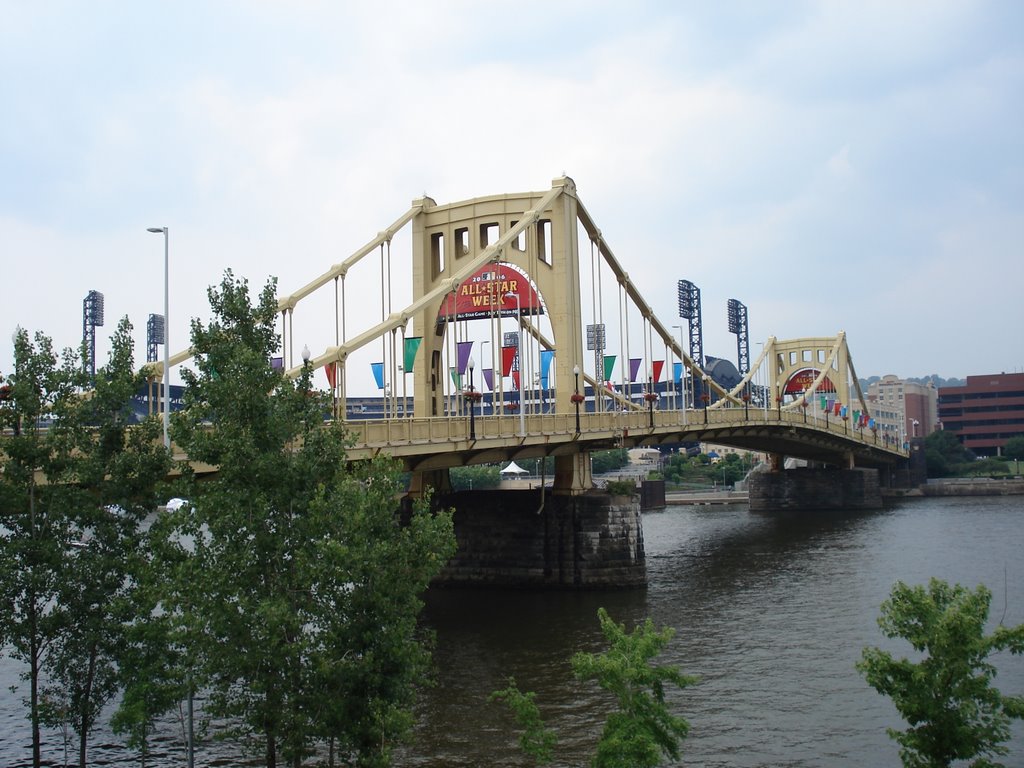
A Festooned Clemente Bridge on Sunday

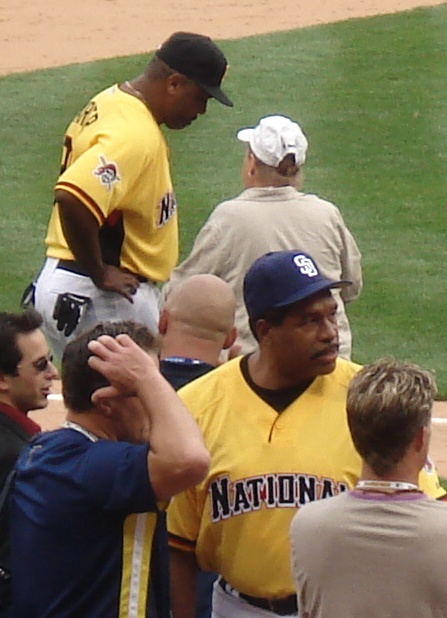
Daves Parker and Winfield at the Legends Softball Game

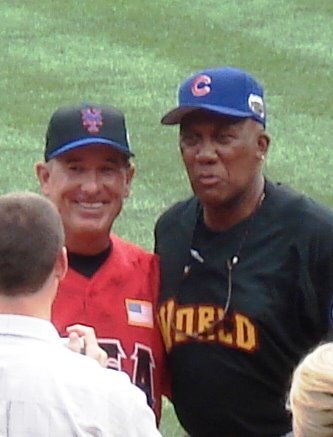
Gary Carter and Fergie Jenkins

Honorary Coach Bill Mazeroski and a Collection of Legends and Celebrities

Some Kind of Primanti's Hallucination

A Serious Reporter from Venezuela's Meridiano TV

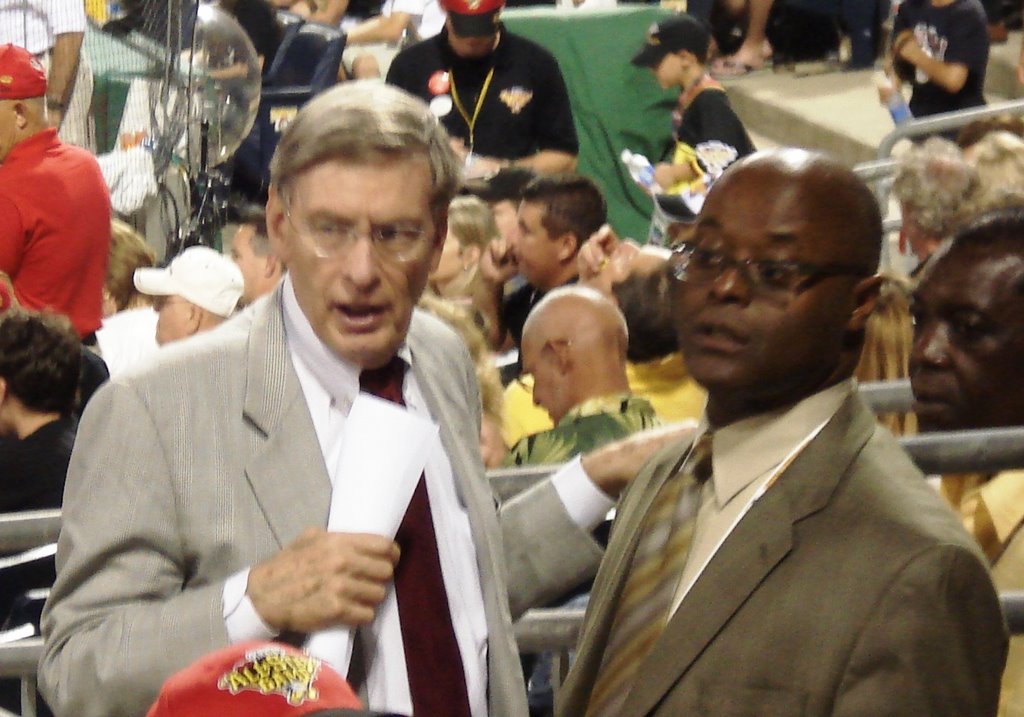
Bud Selig Can't Stand Still

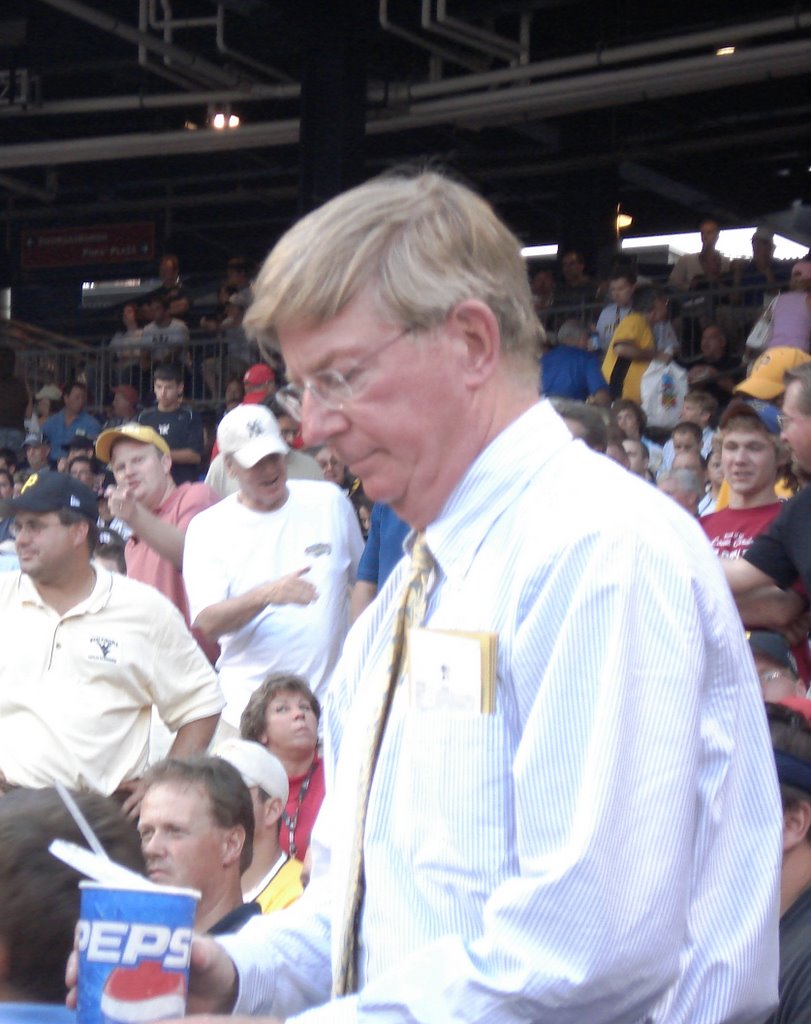
George Will Loves This Game

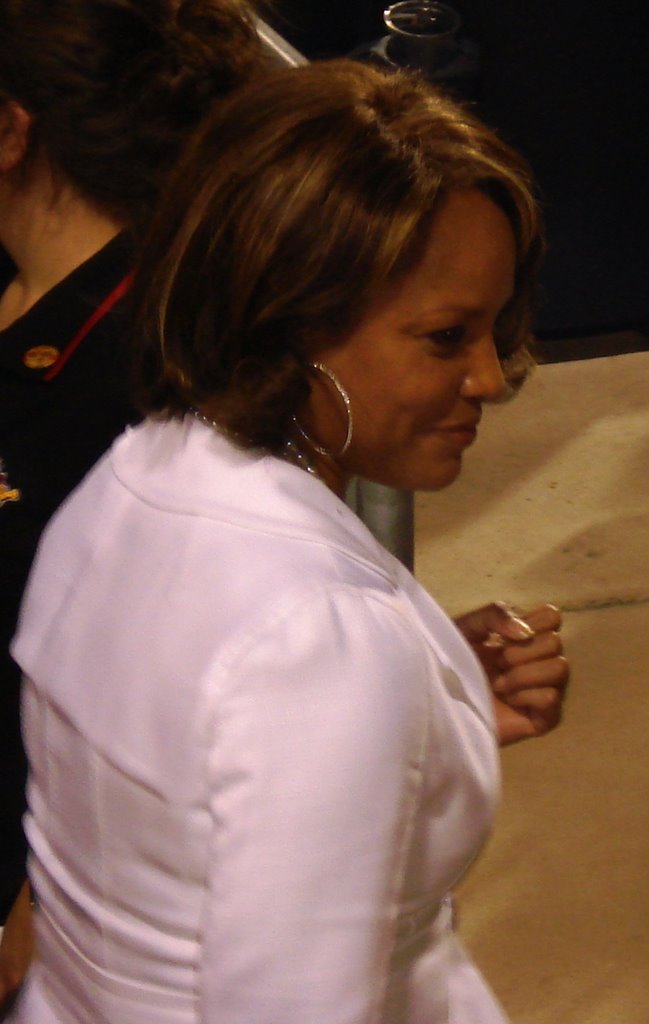
Lynn Whitfield

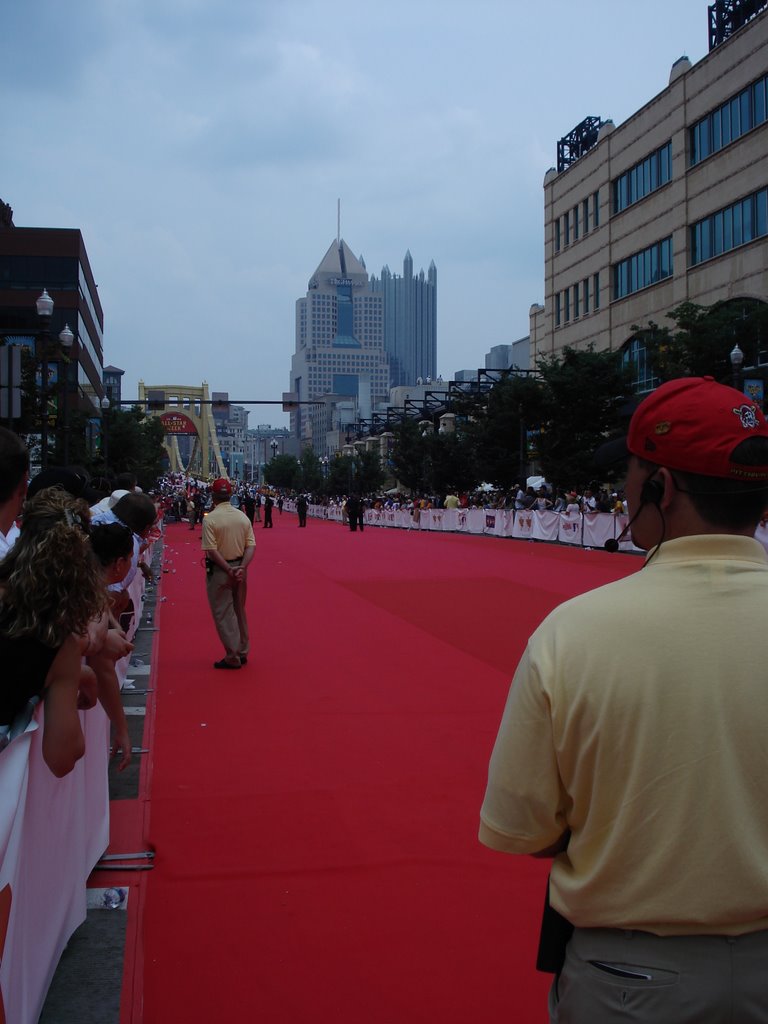
The Red Carpet

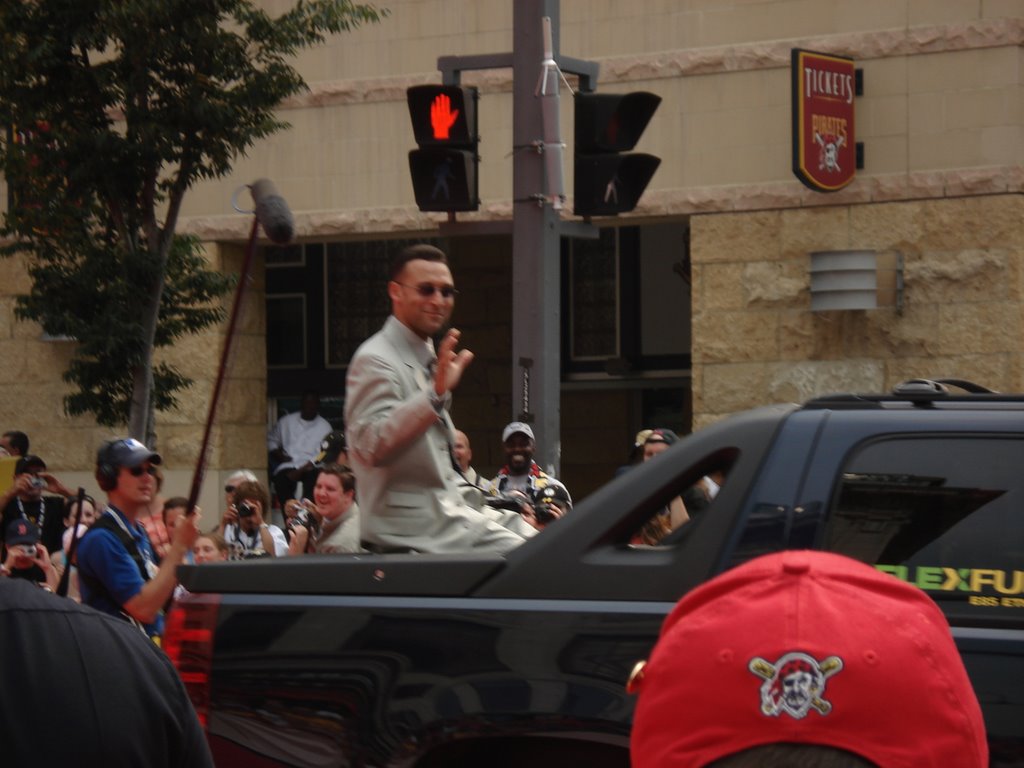
Derek Jeter as Conquering Hero

Alyssa Milano


Labels: , ,

Nationals Beat Themselves in Pirate-Like Loss


The usually impeccable Trevor Hoffman blew a one-run lead in the bottom of the eighth inning to give the American League All-Stars a 3-2 victory over the Nationals at PNC Park last night -- capping a string of consecutive victories over the senior circuit that has lasted since 1996. Mike Young, the Texas shortstop who punctured Hoffman's balloon with a two-run triple, won the game MVP award and a Chevy truck for his efforts.

That would be the only disappointment about last night's game -- or in fact, about All-Star week as a whole. Pittsburgh looked uncommonly beautiful for the events, the fans were switched on, and it certainly raised the spirits of Pirate fans to see Jason Bay and Freddie Sanchez pulling out sweet defensive plays during the game.

Labels: ,

Tuesday, July 11, 2006

Home Run Derby & Celebrity Toss


There used to be a cheap little black-and-white TV show called Home Run Derby that ran from 1959 to 1961. Hosted by Mark Scott, it pitted sluggers againts other sluggers in head-to-head competition -- like Gil Hodges vs. Willie Mays. Every show would begin and end with an announcer naming a litany of baseball stars who'd appeared on the show or would appear on the show, capped off by the words ". . . and many others" -- leading many young schoolchildren to wonder, no doubt, when that Latin slugger, Manny Uthers, would be on the show. But -- it was the 50s, and the Latin slugger hadn't quite been invented yet in America.

The patter on the show was classic Americana. In a typical episode, exchanges such as the following could be heard:

Scott: Boy, Mickey, Kenny Boyer sure hit that ball a long ways.
Mickey Mantle: He certainly did, Mark.
That's back when America surely assumed that Mickey Mantle went home after the show was over and had cookies and milk.

I'd never have guessed that from this meager beginning, Major League Baseball's Home Run Derby would emerge, and that it would be so much fun to watch. Last night was the 21st anniversary of MLB's version, so I guess it has some staying power. In front of a packed PNC Park crowd, Ryan Howard of the Phillies came back from behind, after little David Wright of the Mets surprised the crowd with 16 dingers in the first round, beating Wright in the 3rd round with a monster homer to left-center that bounced off of a Master Card sign, awarding a lucky fan 500 free airplane flights. Howard and David Ortiz put several home run balls into the Allegheny River outside PNC Park, initiating an impromptu game of bobbing-for-baseballs among kayakers paddling nearby.
As a backdrop to the conspicuous display of slugging, there were plenty of celebrities around at which to gawk. Directly in front of our section sat the MLB big-wigs and their guests, including baseball commissioner Bud Selig, who apparently travels with a big guy who opens bottles for him and stuff; George Will and his family; Lynn Whitfield; and many others (not "Manny Uthers"). George is, of course, known to be one of the foremost baseball fans on Sunday morning TV, but he got so excited when he appeared in a film clip on the Jumbotron, talking about Ted Williams, that he jumped and pointed at it, apparently doing his best to convince his sons that he's all-that when it comes to baseball.
Speaking of all-that, before the game, Alyssa Milano put in a cameo appearance down near the dugouts, shilling a line of ladies' baseball gear, trading body-checks with Derek Jeter and posing for photos with fans. A line of ladies' baseball gear? Because . . . when you think of Alyssa Milano, you think of baseball -- right? Anyway, that's one appearance I was not too happy about. Somebody should tell me when there's a chance that Alyssa and I are going to the same party -- we're not currently speaking to each other. Don't ask me about it, it's just too painful to talk about.

Labels: , ,

Monday, July 10, 2006

Italy Wins, and Legends Roam Pittsburgh


On a penalty kick shoot-out, no less. Having witnessed first-hand the focus and attention of the French fans on the Champions League final in Paris in May, when there was no French honor at stake, I can only imagine what the scene must have looked like oustide those bistros on Rue St. Andre des Arts during the match. Afterwards, however, instead of triumphant football crowds marching down the Champs-Elysees, I'm sure there were more than a few mourners clutching their half-empty wine bottles and banging their heads against lamposts, moaning the name "Zinedine Zidane." Say it ain't so, Zinedine.

Meanwhile, Pittsburgh kicked off its All-Star Baseball celebration yesterday with a high-scoring minor league "Futures" All-Star game, pitting American-born minor league stars vs. "foreigners"; the U.S. won, 8-5. Excellent performances were turned in by game MVP-winner Billy Butler, a leftfielder from the Wichita Wranglers in the Royals' system, who hit a two-run homer; and Curacao's Wladimir Balentien (currently playing for San Antonio in the Mariners' system), the DH for the "World" team who hit a homer and two doubles. Having been there to see it, I must confess that another player, Cameron Maybin of West Michigan (a Tigers' farm club) looks like he might be the real deal, going 2-for-3 and grabbing five shots to centerfield. Hall of Famer Ferguson Jenkins managed the World club in the Futures game, while Hall of Famer Gary Carter managed the U.S. club.

It was a lot of fun seeing all the old-timers milling around PNC Park on Sunday evening, even if it was a little surreal watching them play softball in the "Legends and Celebrity" game with the likes of Jimmy Kimmel, Sarah Silverman, Dean Cain, Franco Harris (who can't hit a softball for beans, although he proved he could lay down a decent bunt), Rob Reiner and Danny Masterson from That 70s Show.

Ozzie Smith and Ernie Banks were as gracious as always -- it's second nature to those guys to be able to convey how grateful they are to the fans and how wonderful it was to come to such a beautiful ballpark. Other fellows we've missed seeing on the diamond for some time and who participated in Sunday night's charade included Goose Gossage, playing a surprisingly limber first base; chatty Fred Lynn; Tommy John, whose history with his namesake surgery did not prohibit him from pitching for the Americans at age 63; John Kruk; Rollie Fingers; Daves Winfield and Parker; Bill Madlock; Bill Mazeroski (pictured), who received a heart-felt standing ovation from the hometown crowd; and Andre Dawson, who looks like he could still play if he really wanted to.

If anyone is counting, the Nationals beat the Americans 7-5 on the strength of Winfield's pitching and his 300-foot homer to left; Gary Carter was named the game's MVP.

Labels: , , , ,

Sunday, May 28, 2006

State v. Pearce 'What's the Use' Chiles, Part I


Ask anyone. I've spent thousands of hours -- poring over pages of microfiche; tracking down gravestones in unmapped graveyards; cold-calling innocents from the phone book; examining dusty, brittle books in dark, unloved corners of libraries from California to New York; and cajoling corporate PR flacks – all in the service of researching the biographical details of dead Americans about whom most living Americans could really care less.

I do have my standards. Usually my targets are pioneers of some kind, first-movers within a budding social, political or cultural institution who've been unjustly neglected by the keepers of the canon.

But not Pearce Chiles. Pearce Nuget Chiles was a ne'er-do-well, a scoundrel. A decent enough ballplayer, but a scoundrel. In two partial seasons with the Philadelphia Phillies (1899-1900), he was a late-inning pinch hitter whose lifetime at-bats to runs-batted-in ratio rivals that of Joe DiMaggio (22.04 to Joe’s 22.53) and a thoroughly disruptive baserunning coach, known for his devilishly ingenious system of stealing catcher's signals by employing an electric buzzer device hidden in a mud puddle in the third base coaching box. And as the late Lee Allen (organized baseball's Vasari in Florsheims) came to find before me, Pearce Chiles is one the most slippery, elusive historical characters major league baseball has ever produced.

First, there's the problem of nomenclature. Around the same time Pearce Chiles was knocking around from one minor league club to another, there was a flashy second baseman playing in Cleveland called Clarence Algernon Childs, better known as "Cupid." Cupid Childs should be better known today than he is – he retired with a higher on-base percentage than any second baseman in the Hall of Fame except Rogers Hornsby and Eddie Collins. However, Hall of Famer Christy Mathewson was guilty of careless conflation when, in his book Pitching in a Pinch (1912), he accuses the innocent Cupid Childs – not Pearce Chiles – of the sign-stealing scheme.

If that weren't bad enough, the year after Pearce Chiles "retired" from the Phillies, a utility player named Pete Childs made his debut in St. Louis, and quickly flamed out. Sportswriters of the period were understandably flummoxed, interchangeably referring to Pearce Chiles as "Pete Chiles," "Pete Childs" and, occasionally, "Pierce Chiles," "Pearce Childs," or "Pierce Childs."

Then there's his retirement. For a number of years, Lee Allen had the last word on Pearce Chiles. At the end of his research file on Pearce Chiles, there was a one-page form letter with typed interlineations from the Texas Department of Corrections, dated May 18, 1967. Regarding "CHILDS, Pierce, TDC #20498 (Active)," the Department informed Allen that "The subject was received in this Institution on June 22, 1901, from El Paso County . . . [and] was dXXXXXXd escaped from the Texas Department of Corrections on August 15, 1902." That was the last trace of him that Allen was able to find. The Macmillan Baseball Encyclopedia, long the standard reference work on major league baseball, lists Pearce Nuget Chiles' status as "Deceased" in lieu of giving a definitive date and place of death – a good guess, but an unconfirmed fact.

All scoundrels have parents, the families who spawned them. Pearce Nuget Chiles was born on May 28, 1867 in Deepwater, Henry County, Missouri, the fourth child and only son of Alfred M. Chiles and his wife, Amanda Rutherford. There were Chileses all over Henry County, having decamped there from Virginia. Unfortunately, Pearce's father died when Pearce was 8 years old. Pearce received $325 in the will. By the looks of Pearce's later behavior, it appears that his poor mother Amanda and his older sisters Martha, Anna and Lilley were no match for Pearce's . . . exuberance.

Although the exact date has as of yet eluded me, Pearce Chiles entered organized baseball, probably in his late teens. Unlike some ballplayers of the 19th century who tended to ply their trade near home, Pearce seems to have thought nothing of traveling far and wide, playing for one minor league club after another. By 1895, a reporter in Phoenix was referring to Chiles as a "crack ballplayer." Unfortunately, however, the article was a crime report.

Chiles must have returned to Deepwater for his mother’s funeral (she passed away on July 10, 1895) and gotten into some mischief. Having arrived in Phoenix in the Fall for the Winter League, word reached him that the authorities were after him. According to the February 11, 1896 article in the Los Angeles Times, Chiles "was wanted in Missouri for illicit relations with a sixteen-year-old girl there. As the age of consent in that State is eighteen years," the article went on, "the charge against him is constructive rape." Chiles, however, got the jump on the local authorities, and lit out of Phoenix just ahead of the arrest papers.

In the Summer of 1896 he had been signed to play in Hartford, but I've never confirmed that he made it there. He seems to have played in Galveston in the Texas League during this period, by then having acquired an unusual nickname. His habit of taunting opposing batters when they hit their pop-ups to him by shouting "What's the Use?" before stylishly catching the ball encouraged sportswriters to call him "Pearce 'What's the Use' Chiles," or sometimes, "Pearce 'It's No Use' Chiles." He wasn’t shy about adding insult to injury, and reporters noted that he often found himself in trouble with local authorities, but managed to get out of trouble on the goodwill of his baseball compatriots.

See Part II.

Labels: , , , ,

State v. Pearce 'What's the Use' Chiles, Part II


See Part I.

Turn-of-the century baseball had plenty of room for guys like Pearce Chiles, though. Baseball of the gay nineties vintage was about as nasty as baseball could get, as the unfailing Bill James describes: "Players spiked one another. A first baseman would grab the belt of the baserunner to hold him back a half-second after the ball was hit. Players tripped one another as they rounded the bases. Fights broke out more days than not. Players shoved umpires, spat on them, and punched them. Fans hurled insults and beer bottles at the players of opposing teams." The most successful managers were the ones that could train their players in the cleverest, dirtiest and most brutal ways to win.

Although 7 out of 9 players on the diamond might have felt like calling him a jackass on a good day, Chiles’ lawlessness on the field was considered leadership in those days. Thus, Chiles served a stint as the player-manager of the Lancaster Maroons in the Atlantic League – a money-losing team, but a winner with a record of 82-50 – before going to New Orleans for the Winter.

So it was that the Philadelphia Phillies probably thought they had someone who was future coaching material coming when Pearce "What’s the Use" Chiles joined the Phillies’ camp in Charlotte, North Carolina as a 33-year old rookie during the Spring of 1899.

He played for the "Yannigans," the alternate squad that faced the Phillies' starting line-up in practice games, but batted well and meshed well with the regulars. At their North State Street lodgings, Chiles and starting first baseman Duff Cooley were acknowledged as the best billiards players in camp. Meanwhile, Cooley rounded up a singing "Quintette" consisting of himself, third baseman Billy Lauder, pitcher Red Donahue, and shortstops Monte Cross and Dave Fultz, performing old-time classics such as "The Bridge the Heart Burned Down" and "You’ll Get All That’s Coming to You." The Quintette began to steal so much attention among the local women that reserve catcher Morgan Murphy conspired to start his own musical group; and in typical wise-ass fashion Chiles joined, along with outfielders Delahanty and Flick, to form a quartet better focused on clowning than harmonizing. By the time the club returned to Philadelphia for the start of the season, they had stolen the hearts of their Charlotte hosts.

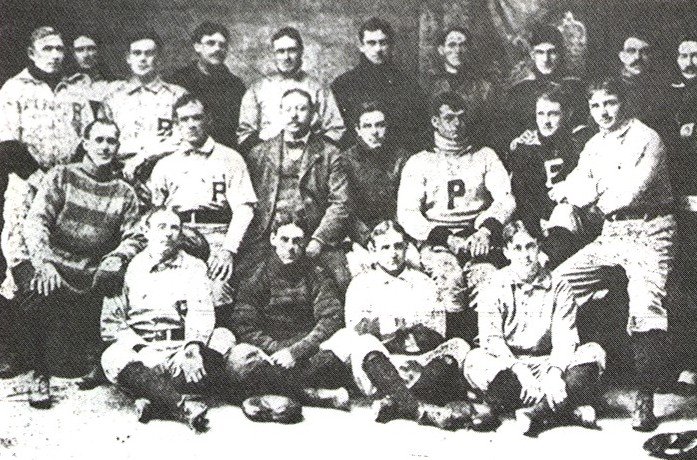
Chiles made his debut on April 18, 1899, pinch-hitting for pitcher Chick Fraser in the 9th; although he doubled and scored, the Phillies went down against the Senators, 6-4. The Philadelphia Inquirer referred to him as "the bright particular star of the matinee." But on a club that included future Hall of Famer Nap Lajoie at second base, future Hall of Famers Ed Delahanty and Elmer Flick in left and rightfield, and base-on-balls king Roy Thomas in center, there wasn't much playing time available for the new fellow. The papers would often refer to Chiles as a baserunning coach rather than as a player. Still, as a late-inning sub (often for Flick), Chiles managed to bat .320 and knocked in 76 RBIs in 354 plate appearances. That year, the Phillies finished 3rd behind Brooklyn and the Braves, but had a superlative record of 94-58, and Chiles' place on the club in 1900 (see photo above, with Chiles standing at the far left) seemed secure.

The authorities are silent as to Chiles' activities during the Winter, but one can assume that he was probably up to no good. The following Spring, Chiles was collecting splinters again until a team bust-up availed him of some starts. Nap Lajoie and Elmer Flick, it seems, were always in each other's way a bit – during the previous Spring, Flick had blown up at Lajoie over some on-field slight. On May 30, their tensions erupted when Flick picked up Lajoie's bat in the clubhouse and announced that he would be using it that day. Lajoie begged to differ, upon which Flick dared Lajoie to stop him. In the ensuing exchange of punches, Lajoie knocked Flick silly a few times, while Flick gave Lajoie a black eye and a cut on the face. The piece de resistance was when one of Lajoie's blows missed Flick and hit a locker behind him, resulting in Lajoie breaking his thumb. Flick threw a tantrum on the way out, vowing never to play with the Phillies again. With Flick out of the lineup for awhile, Chiles got the chance to fill in for him for a couple of days at rightfield. By June 4, however, Flick was back in the lineup, and Chiles was back on the bench.

Perhaps it was a combination of boredom and Chiles' natural instinct for larceny that sent Chiles out with Morgan Murphy to devise a crafty, totally illegal plan to steal the opposing catcher's signals, a technique that came to light one September afternoon against Cincinnati. It went as follows: Murphy, sitting behind the centerfield wall with a spyglass, would see the signals that the opposing catcher would make to the pitcher regarding whether the next pitch would be a fastball or a curve, and would relay the contents of the signal to Chiles via an electrical signal – over a wire that extended from Murphy's location to the third base coaching box, where, barely exposed, it would give Chiles a little shock. Chiles would then give a prearranged hand signal to the batter. Observers had remarked that Chiles had a strange leg twitch when he coached, so all was explained when Reds shortstop Tommy Corcoran stopped the game and found the buzzer device under Chiles' foot with the assistance of the umpire and the police.

On the following day, Chiles got his wise-ass revenge: he switched to first base and started his leg twitching again; but this time, when the Reds stopped the game and dug out the coach’s box, they found nothing. The incident, though, would be the beginning of the end of signal stealing for the present, as league officials went on a witch hunt for variations on Chiles’ theme perpetrated by other clubs.

That year, the Phillies finished in 3rd place again, but with the considerably less heroic record of 75-63. In October, Chiles' name appeared on the Phillies' official reserve list -- which suggests that, despite the fact that Chiles only hit .216 in 111 at-bats in 1900, the Phillies thought they had room for the 35-year old scoundrel on the 1901 squad.

See Part III.

Labels: , , ,

State v. Pearce 'What's the Use' Chiles, Part III


See Part I.
See Part II.

El Paso's first ever Mid-Winter Carnival opened on January 16, 1901. Miss Claire Kelly presided as Carnival Queen, with a court of twelve Maids of Honor, while attractions at the Carnival included an electric fountain; Lunette, the Flying Lady; Bosco, the Snake Man; a simulated volcanic eruption; roping, tying and rough riding contests; confetti and serpentine battles; and bullfights daily, just across the border in Ciudad Juarez.

People came from miles around to attend the Carnival, which of course drew all manner of commercial exhibitors, jugglers, acrobats and street entertainers. Also on hand were the usual bunch of thieves, con-men and pickpockets who could always be counted on showing up wherever there were big crowds. Pearce Chiles was there, too. We will never know what mischief he got into at the Carnival (he seems to have paid a $101 fine for some infraction there), but we have some idea of what he hoped to accomplish after it was over. What we do know comes from the official court records of Chiles' case.

On an eastbound train, the G.H. Limited, rolling through southern Texas and heading for Hot Springs on the evening of February 15, 1901, Chiles and his faceless companion, a D.B. Sherwood, spotted a young, recently discharged soldier, a fellow named Benjamin F. Henry from Albany, Georgia, and thought they had found an easy mark. According to Henry's testimony, the affable Sherwood struck up a conversation with Henry, and was soon sitting next to him for the ride. A while later, Chiles came down the aisle, stopping at Sherwood's shoulder and asking him for a light for his pipe. Sherwood pulled out a matchbox and handed it to Chiles. Chiles feigned difficulty opening it and protested to Sherwood. "What are you trying to do?" he asked. "Poke fun at me?" Sherwood insisted that there were matches inside the box, but Chiles still couldn't open it, finally handing the box back to his accomplice, declaring, "I can't open it, and nobody else can, either. I will bet you $50 or any amount of money that he," referring to Henry, "can’t open it." Sherwood leaned over and whispered to Henry, "How much money do you have? Bet it and we will win." Henry demurred, but Chiles kept the con alive, betting Sherwood $5 and saying, "I'll pay this man a dollar for every dollar in his pocket if he can open the box."

Sherwood handed the box to Henry, who opened it without difficulty. Chiles said, "All right. I am an honest man. I pay every time I lose." "Pay him $5," Sherwood said, pointing to Henry. "No, I won't," said Chiles. "He hasn't got any money on his person." Henry then admitted that he had $95 in his pocket. As Henry got his money out to show Chiles, Chiles and Sherwood engaged in a little pretend argument over the bet, and in the ensuing confusion, Sherwood got a hold of Henry's money. The thieves disappeared out of the coach, but Henry managed to raise the conductor and the brakeman, and before long, Chiles and Sherwood were in the custody of a state ranger.

In jail awaiting trial in El Paso, Chiles reached out to the folks who had always been able to help him in the past – his baseball compatriots. According to George Girsch, writing in the August 1958 issue of Baseball Digest, Chiles wrote a letter to one of his friends in Philadelphia. How Girsch got his hands on this letter, and where it is today, I do not know, but it reads in part:

"Friend Billy,
i taught that i would right you in regards to what happened to me while on the train i left this town on my way to hot Springs last friday night and while on the train a man had a match box which is hard to open so i bet him he could not open it while i counted on my fingers so i won and he had me arrested . . . so i dont know any body hear and hafto stay in jail this man told all kinds of lies and did not tell the truth at all So i want you to goe and get some good men to right to this Prosecuting atorney and tell him that I aint no theift . . . Dont let them put it off for this is a Bad country to have trouble in . . ."

Neither his friends nor the Phillies came to his aid. For a time, Chiles banked on the idea that Benjamin Henry would not return to El Paso to appear as a witness against him. When he later heard that Henry had arrived and had already testified at Sherwood's trial, he thought people were kidding with him; but after the news of Sherwood's conviction, Chiles folded, and according to the El Paso papers, pleaded guilty. The report from the sports pages read:

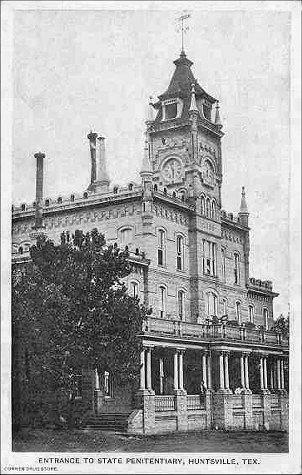
"Pearce Chiles, the famous coach and buzzer manipulator of the Philadelphia club, is now lost in the sea of despair. He has signed a new contract, but not for any $2400, nor will any American League team try to steal him away from his new employers. Chiles is to do two years on the Huntsville convict farm, and his uniform will be back and white, with the number 24876 across his back. He will not stop at the Fifth Avenue Hotel, but will sleep in an abandoned hog pen, and his daily menu will include sour bacon, hominy, corn bread and pure water. Incidentally, Chiles will be allowed to work from 6 a.m. to 6 p.m., and the work will be so different from that of last year that it will be an interesting novelty . . . Such is the fate of Pearce Chiles. How this man ever got on the Philadelphia team is a mystery. He was run out of Kansas and Texas years ago for serious crimes, and now gets the two-year trick for working a flimflam game."

My inquiry with the Texas Department of Corrections yielded no details of his escape from the Huntsville Prison on August 19, 1902, after serving less than sixteen months of his sentence. An administrative assistant wrote, "The above referenced individual was received from El Paso county, Texas for Theft of Person a 2 year sentence. Due to the age of this information that is all the information available to us. We are sorry but this is all the information we are allowed to give."
He apparently had the chutzpah to play a stint with the Natchez Indians in the Cotton States League at the end of the 1902 season. After that, it seems that the slippery con-man made his way to Portland, intending to play for the Portland Browns club in the Pacific Coast League, but he was quickly dismissed from the team in February 1903 after getting arrested for an alleged assault on a young woman named Roe. As Sporting Life reported the incident, "Chiles struck her in the face, blackening her and loosening her teeth." Today, Portland doesn't seem to have any record of the incident. The following month, Pacific Northwest League president W.H. Lucas strenuously denied that Chiles had been signed by the League’s San Francisco club, declaring that “Chiles will never be permitted to play in the Pacific Northwest League so long as I am president of it.”

Later in 1903, Chiles was playing for Fortuna, a semi-pro club in a one-horse northern California town. After that, he seems to have disappeared.

Leave it to the larcenous fellow to cover his tracks so well. Did he flee to Canada? Or Mexico? Did history intervene, leaving him an unidentified victim of the San Francisco earthquake or the sinking of an ocean liner? Or did he just fade away -- like thousands of roving oddjobbers, good and bad ones alike, without roots or loved ones? It's possible we won’t ever know the final chapter of this strange, sad little story.

[With helpful correspondence from Joe Dittmar.]

Labels: , , ,

Tuesday, April 18, 2006

Wahoo Sam


"So you're doing a book about baseball in the old days. Why does a young fellow like you want to spend his time on something like that? Do you remember what Robert Ingersoll used to say? 'Let the dead past bury its dead.' That's what he used to say. Robert Ingersoll, remember him? A great man. I always admired him. He was a very famous lecturer in the late 1800s. Very famous and very controversial. He was supposed to be an atheist, but he wasn't really. More a skeptic, more an agnostic, than an atheist. You should read his Lectures some time. Very interesting. Now he's forgotten. Hardly anybody remembers his name any more. That probably proves something, but I'm not sure what.
"Anyway, those days are all back in the past. We're going to spend the rest of our lives in the future, not the past: 'Let the dead past bury its dead.' On the other hand, Santayana said: 'Those who forget the past are condemned to repeat it.' So maybe there are two sides to this matter. But I don't think we'll ever repeat the old days in baseball. They'll never come back. Everything has changed too much."

-- Sam Crawford, to Lawrence S. Ritter, in The Glory of Their Times.

Baseball star Wahoo Sam Crawford was born on this day in 1880 in (where else?) Wahoo, Nebraska. Though considered to be somewhat prickly and a prima donna by some of his contemporaries, rightfielder Sam Crawford was at least more popular with Detroit fans than his teammate in centerfield, the paranoiac, violent Ty Cobb. Crawford's popularity and established stardom at the time of Cobb's arrival in Detroit caused a career-long personal rift between the two men. Nevertheless, the usually unforgiving Cobb campaigned strenuously for Crawford's election to the Hall of Fame, such was his admiration for Crawford's abilities.

Crawford was, and still is, the greatest triples hitter in history, holding the lifetime record with 312 -- 15 more than Ty Cobb -- and finished his major league career in 1917 just 36 hits hits shy of 3,000. As Ritter would note, "Most baseball writers of that period agree that Sam Crawford was the outstanding power hitter of the dead ball era."

Sam Crawford died on June 15, 1968 in Hollywood, California.

Labels:

Saturday, March 11, 2006

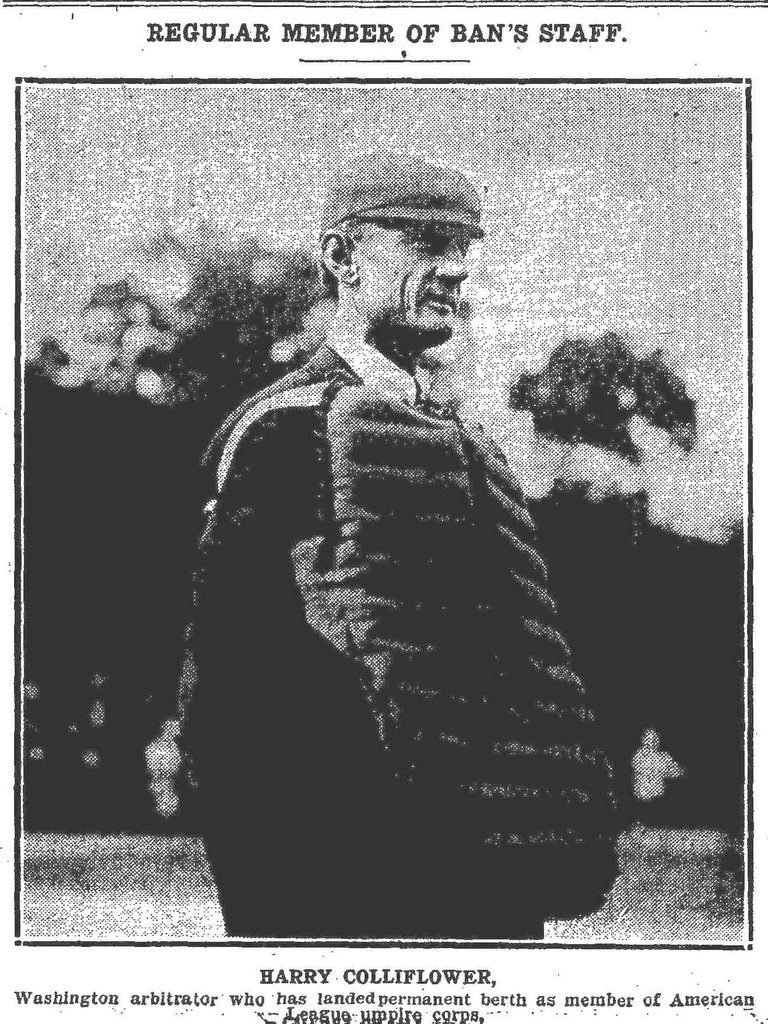
Harry Colliflower and the 1899 Cleveland Spiders


Major league pitcher and umpire J. Harry Colliflower was born on this day in 1869 in Petersville, Maryland.

Colliflower only pitched one partial season in the majors, and is remembered today, if at all, as a paragon of big league futility. It was Colliflower’s fate to be picked up in July 1899 by the Cleveland Spiders, a National League ballclub that was destined to set a record as the worst team in major league baseball history -- yes, even worse than the 1962 New York Mets, who finished with a .250 win percentage.

In 1889, the Cleveland National League franchise, then known as the "Forest Citys," was purchased by horse-drawn streetcar tycoon Frank DeHaas Robison. Under Robison's leadership, the Cleveland Spiders were built into one of the most successful franchises of the 1890s — the 1895 Temple Cup champions and perennial contenders, featuring future Hall of Famers such as Cy Young and Jesse Burkett.

Things changed overnight for the Spiders when, after the 1898 season, Robison bought the St. Louis ballclub in a sheriff's sale. In what has become the living embodiment of major league sports prohibitions against the ownership of more than one competing club by a single owner, Robison decided that St. Louis would be a more profitable baseball city, and essentially robbed his Cleveland club of its best players to support his preferred St. Louis team, which he named the Perfectos. That left Robison’s brother Stanley to run the Spiders as a “sideshow,” populating the club with a rag-tag collection of minor league and semi-pro players, and whomever else Brother Stan could manage to snag on short notice.

In their first 38 games of the 1899 season, the Spiders lost 30 and won only 8. That’s when Stanley Robison fired his player-manager, brave Lave Cross, and did him the favor of exporting him to St. Louis. Slick-fielding second baseman Joe Quinn picked up where Cross left off, and the results were even worse, if you can imagine it: the Spiders won just 12 games out of their next 116. On July 15, the Spiders reached the depths of ignominy when they were held scoreless in a double-header against Baltimore, losing 10-0 and 5-0.

The team was so bad and so unloved in Cleveland, that after July 1, they gave up playing in Cleveland altogether, playing the rest of their season on the road. Thereafter, the newspapers began referring to them as the "Wanderers," or the "Exiles." Meanwhile, sportswriter Elmer Bates recounted the reasons why it was good for one to follow the Cleveland Spiders: "There is everything to hope for and nothing to fear . . . Defeats do not disturb one's sleep . . . An occasional victory is a surprise and a delight . . . There is no danger of any club passing you . . . You are not asked 50 times a day, "What was the score?" People take it for granted that you lost."

Harry Colliflower was a Washington, D.C. carpenter who gained a bit of local renown as a semi-pro southpaw hurler with the Eastern Athletic Club. At the beginning of the 1899 season, the 30-year old was considering some minor league offers and almost signed with a Texas club. But on July 21, Colliflower was still pitching for Eastern when Joe Quinn, whose Spiders were in town to face the Senators, signed him to pitch.

In his first major league appearance, Colliflower shined, giving up only 3 runs on 6 hits to lead the Spiders to a 5-3 victory in the first half of a double header. The Washington Post gushed, "Colliflower possesses every quality that is required in a major league twirler. He has fine control of the ball, good speed, and, the requisite amount of nerve."

From there it was all down hill for poor Harry. Staying with the club for the rest of the 1899 season, Colliflower amassed a record of 1-11 with an ERA of 8.17, pitching his last game on October 12 during the Spiders' final road-series in Cincinnati, and losing to the Reds, 6-2. For their last game, the Spiders' starting pitcher was a 19-year old cigar stand clerk they found in Cincinnati named Eddie Kolb. The Spiders lost to the Reds, 19-3.

The Post for the most part kept mum about Washington's favorite son during the season, noting merely that Colliflower was batting well in September. True enough, Colliflower added more to the team as a hitter, finishing the season with a batting average of .303; Quinn put him in centerfield and at first base a few times just to get his bat into the lineup.

The Cleveland club, which finished in last place with a record of 20-134, folded at the end of the season as the National League contracted from 12 teams to 8. Robison may have ruined Cleveland, but he didn't manage to reap any rewards with his St. Louis super-club – they finished the season 18-1/2 games out of first place.

Having lost his major league berth, Colliflower drifted during the next few years -- pitching and/or coaching for one or another of Washington's semi-pro clubs or in the Virginia State League, umpiring high school games or refereeing in the nascent Professional Basketball circuit. In 1905, he coached Georgetown University's baseball team before catching on as a minor league umpire, returning to D.C. in the off-season to work in the D.C. Highway Department. He umpired for two seasons in the South Atlantic League before being engaged by American League president Ban Johnson to report for duty as an American League umpire in July 1910.

Writer David Q. Voigt notes what a difficult time Colliflower had adjusting as a major league umpire:


When an earnest young neophyte named Colliflower joined the American League staff, he was cruelly mocked for the name. He changed his name to James, but this was a bad choice since antagonists took to calling him 'Jesse.' Under such conditions, survival demanded that a man have tough moral fiber.
Colliflower umpired in the Southern League in 1911, and returned to D.C. in 1912 as an umpire for the "Departmental League," a collection of ballclubs organized by clerks in the various branches of the federal government. (The box scores from these games are quite entertaining –there's probably no where else can you find Interior beating the War Department, for example.)

As the years progressed, Colliflower spent some time scouting for the major leagues, allegedly discovering Detroit first baseman Lu Blue, but for the most part, he worked as a clerk for his nephew James E. Colliflower's fuel oil and coal company. James E. Colliflower was known as a leading citizen of D.C., "the fellow who has a hand in everything that goes on around Washington," and is enshrined in the Georgetown Sports Hall of Fame for coaching the Georgetown varsity basketball squad from 1911 to 1914, having received his bachelor's degree and three law degrees there. Nephew James saw to it that Harry Colliflower was never wanting – and Harry eased into a graceful retirement from the sporting scene, coming out occasionally to perform "Casey at the Bat" for athletic club luncheons. Harry passed away at the age of 92 on August 12, 1961 in Washington, D.C.

Labels: ,

Wednesday, March 08, 2006

A Place in the Hall for Minnie


Hell, yes! – I was surprised that Buck O'Neil didn’t get elected to the Baseball Hall of Fame in the recent special "Negro League and Pre-Negro-League" election. I’m even surprised that Spottswood Poles, the early Negro League outfielder who is considered to be one of the best black players of the 1910s, wasn’t elected.

I have a problem in attacking these decisions, though, because I haven’t been given the ammunition. The decisions of the Baseball Hall of Fame Veterans' Committees over the years, the ones that kept Leo Durocher and Bill Mazeroski out of the Hall of Fame for awhile, were secret ballots, but our ability to criticize those decisions arose from our ability to view the statistics for ourselves. We were all playing from the same base of information.

Regrettably, in the case of Buck O'Neil and the other Negro League candidates who did not win election to the Hall, we don’t have the statistical record that the Committee reviewed – the 3,000 day-by-day records and box scores of Negro League play compiled by the Committee over the last several years. Someday soon, I hope, we’ll get to see that data. My assumption, however -- based on the limited stats that have been published, in addition to his impact as a major league coach, scout and goodwill ambassador -- is that Buck O'Neil would be a worthy addition to the Hall, regardless of whether he is classified as a "Negro League player" or a "person who has had a significant impact on the game."

Regarding Minnie Minoso, the Hall of Fame cannot fall back on any convenient excuses. As O’Neil himself said, on Keith Olbermann’s Countdown last Wednesday, "I don’t think Minnie should have been on this ballot, the Negro League ballot . . . he put up the numbers in the major leagues, and I think he should go in the Hall of Fame [through the Veteran’s Committee]."

Minoso's major league record alone should indeed suffice for his election. Minnie Minoso, who was the first black Latino player in the major leagues and the first black player on the White Sox, is ranked by stats guru Bill James as the 10th greatest leftfielder in major league history -- in rarefied company with Ted Williams, Stan Musial, Carl Yastrzemski and Willie Stargell, and well ahead of Hall of Famers Ralph Kiner, Joe Medwick, Lou Brock and Zack Wheat. Furthermore, James asserts, Minoso ranks among the best players of all time (#16, between Eddie Collins and Paul Molitor), based on contributions ("Win Shares," in James' idiom) as a player between the ages of 30 and 39 – the only player on James' list of the top 20 of such players who has not yet been elected to the Hall of Fame. A 3-time Gold Glove winner and 7-time All-Star, Minoso drove in 100 or more runs four times and at different times led the league in hits, doubles, triples, total bases, being hit by pitches and stolen bases, while consistently ranking in the top 10 in on-base percentage.

His style of play for the White Sox and the Indians was unusual for its time -- the stars of the late 1950s and early 1960s were, more often than not, big guys who hit home runs every once in a while, couldn’t run all that well, and had lower batting averages. Minoso was a harbinger of a new style that would begin to emerge in the 1960s – a combination of power, speed and batting average that we now recognize in the careers of such players as Alex Rodriguez, Alfonso Soriano and Barry Bonds (before things got wacky with him).

To all of that, we must add that Minoso has been, much like Buck O'Neil, an extraordinary goodwill ambassador for major league baseball, always eager to please the fans. To be sure, there has been a certain circus-like quality to Minoso's appearances since the 1960s – making highly-publicized plate appearances with the White Sox in 1976 at the age of 53 and in 1980 at the age of 57, as well as drawing a walk in one appearance with the St. Paul Saints at the age of 80 in 2003 – but, can you really begrudge a fellow for his love of the game?

Let’s hope that both O'Neil and Minoso – and even Spot Poles – will be given the official recognition they deserve. For Minoso, who is 84, and for O'Neil, who is 94, I hope that day comes very soon indeed.

Labels:

Saturday, March 04, 2006

Fred Herbert, and Fairy Dust on the Diamond

If you say you know baseball, I won't hold it against you if you've never heard of Fred Herbert.

Nevertheless, in 17 innings as a pitcher for the New York Giants in 1915, he fared pretty well:


An ERA of 1.06 in 17 innings? Well, it's not the final word on whether Fred Herbert was a good major league pitcher, but it certainly shows he had some good stuff. It would seem to be somewhat of a rare thing for a pitcher to pitch that well in the majors for two games and then disappear.

Fred Herbert was actually born Herbert Frederick Kemman in La Grange Park, Illinois on this day in 1887. Although the Kemmans were serious farmers, young Herbert and his brothers loved baseball, and even went so far as to form a semi-pro team that played its home games on a makeshift diamond out in the pasture on the Kemman farm.

Herbert went to the University of Illinois, where he lettered as a right-handed pitcher for the Illini under coach George Huff, before joining the Ottawa Senators minor league club. At the moment of his entry into professional ball, Herbert changed his name to "Fred Herbert" – perhaps, like many other serious young men of his day, he was a little sheepish about being known as a ballplayer.

He ended up in the International League with Toronto, where he pitched a no-hitter against the Baltimore club. Although he was drafted by Brooklyn – the NL club then known as the "Robins," after their hapless manager Wilbert Robinson – he ended up with John McGraw’s New York Giants in September 1915, after some amount of trouble.

At the moment when Fred Herbert was breaking in, major league baseball had briefly fractured into three leagues – the cooperating National and American Leagues, and a third, rogue league known as the Federal League. James Gilmore started the Federal League in 1913 with the idea that it would rival the National and American Leagues, enabling a fresh new band of industrialist-club owners to exploit the advertising power of baseball and to reap easy profits. While NL and AL owners were trying to hold the line against higher player salaries, the Federal League owners were waving lucrative contracts in front of major league talent, with the result that such luminaries as Three Finger Brown, Eddie Plank, Chief Bender, Joe Tinker, Hal Chase and even Walter Johnson were seduced into jumping from the other majors and joining the Federal League.

This, of course, caused a bit of a talent drain, and the New York Giants were struggling mightily in the stretch run of the 1915 season, battling with the Cubs for last place. With his pride on the line, McGraw was throwing everyone he could out there to win. It appears that McGraw first tried to obtain Herbert from Toronto in August by trading away his floundering southpaw hurler, future Hall of Famer Rube Marquard, straight-up for Herbert. Marquard refused to report to the minors, however, later signing with the Robins and having a superior 1916 season. On the second try, on September 20, McGraw signed Herbert for cash, along with Toronto catcher Bradley Kocher.

Herbert was given his first major league start just 4 days later, on September 24, against the Cardinals in St. Louis. He pitched a complete game, beating the Cards 5-3 and allowing only 6 hits – although the Giants were lucky to avoid forfeiting the game in the 5th inning, when infielder Fred Brainerd refused to leave after being thrown out by umpire "Lord" Byron for "loud talking" (i.e. disagreeing with one of Byron’s calls) until Byron threatened to award the game to the Cards. Meanwhile, Herbert had even singled and scored the final Giants run in the 4th inning. The headlines proclaimed "Giants’ Recruit Hurler Beats Cardinals."

On four days' rest, McGraw started Herbert again, this time against the Robins at the Polo Grounds. Although he pitched well for 8 innings, giving up only 2 runs on 6 hits (including an inopportune triple by Robins rightfielder Casey Stengel), Herbert's good work would not win the day. The Robins beat the Giants 2-1, and Herbert's loss unfortunately clinched last place for the Giants. McGraw and the club were rewarded with a sarcastic editorial in the New York Times about the Giants being the "reverse champions," and on the next day, Giants' owner Harry Hempstead had to cancel a game due to poor attendance.

At the end of the 1915 season, the Federal League was collapsing in a snarl of lawsuits, and NL, AL and FL owners got together and worked out a settlement that resulted in the disbanding of the Federal League. In January 1916, there was talk that McGraw was looking at keeping Herbert on board, but with Jeff Tesreau, Ferdie Schupp and the great Christy Mathewson on his roster, plus the signing of three ex-Federal Leaguers for the mammoth sum of $50,000, McGraw released Herbert to Toronto on January 31. Mathewson would unfortunately injure himself before the Spring was over, and later in the year he was dealt by McGraw to the Reds.

Herbert, however, was long gone by then. During the 1916 season, he sidled up to the unfortunately-named Beloit Fairies (which played in and out of the outlaw Midwest League), and became a star of the club's pitching staff – this time under his own name, Herb Kemman. In his debut with the club, he won both ends of a double-header.
As a Fairy, Kemman would pitch alongside another footnote hurler from the Deadball Era, George "Zip" Zabel, a former Kansas chemist who would get his name into the sports history books for two notable items – first, as a reliever with the Cubs, he set a major league record for the longest relief appearance, taking over after 2 outs in the first inning and beating Jeff Pfeffer 4-3 at the end of 18-1/3 innings of pitching; and secondly, as the referee whose questionable officiating is blamed for giving the Green Bay Packers its first-ever loss as a semi-pro gridiron squad, against (you guessed it) the Beloit Fairies football squad on November 19, 1923. After losing to the Fairies, the Packers joined the NFL.

After Kemman retired from the Fairies baseball club, he stayed on in Beloit, and managed to cut quite a swath there. In 1926, the Beloit Daily News sponsored its first-ever city bowling tournament. Herb Kemman, bowling for (yep) the Beloit Fairies bowling team, took the title, knocking down 4,599 pins to 4,423 by the nearest competitor. Kemman went on to win the Beloit Daily News tournament again in 1929, and once more in 1948 at the age of 61.

Kemman served as mayor of Beloit for a time, and was later inducted into Beloit's Sports Hall of Fame -- along with a number of other Fairies, one would assume. Presumably he retired to Florida, passing there on May 29, 1963.
So what's the deal with the "Beloit Fairies" and all that fairy dust on the diamond? It's simple, really -- Fairbanks-Morse, a Beloit engine manufacturer, was an enthusiastic supporter of local semi-pro sports teams, and "Fairies" was just short for "Fairbanks-Morse." Kemman, in fact, worked there for a number of years as a foreman while also playing on the company teams.

Labels: , ,