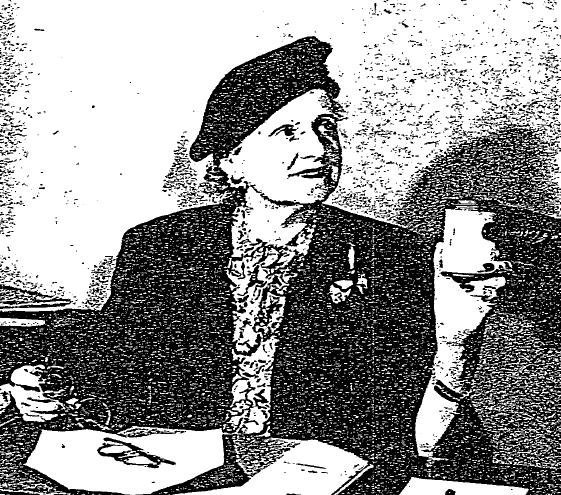
Jane Addams

Jane Addams was born on this day in 1860 in Cedarville, Illinois.
Growing up in frail health and uncertain of her future after studies at Rockford College and the Women's Medical College in Philadelphia, Addams became attracted to social reform after visiting Toynbee Hall, the London charity house. Arriving in Chicago in 1889, Addams sought out the city's most needy neighborhood, rented a portion of the old Hull mansion on South Halstead Street and founded Hull House, one of the first settlement houses in America attempting to address the needs of the poor immigrant families in the neighborhood.
Largely through the force of her own personality -- her tact, personal charm and leadership abilities -- Hull House became a center of social reform in the U.S., attracting like-minded talents from a variety of disciplines such as Florence Kelley, Julia Lathrop, Alice Hamilton and Grace Abbott, as well as exerting a powerful influence over Chicago political battles regarding child labor laws, protection of immigrants, industrial safety and organized labor. With respect to labor, she was an enthusiastic supporter of worker organization and helped to negotiate a number of labor disputes. She lobbied for municipal suffrage in Chicago and served as vice president of the National American Woman Suffrage Assocation from 1911 to 1914.
When World War I broke out, Addams turned her attention to pacifist causes, observing that war consistently destroys social reform and that reform and peace were inseparable. As president of the International Congress of Women, Addams visited the heads of state of warring and neutral antions urging round-the-clock peace negotiations, and attempted to convince President Wilson to initiate an international mediation. Although Wilson would not heed her advice, he later adapted some of Addams' 11 peace planks, drafted in 1915 for the Women's Peace Party, to his famous "Fourteen Points." During the war, she led food drives to help the starving women and children of the warring nations -- including those of the enemy. While American Relief Committee chair Herbert Hoover and others supported her efforts, Addams was branded unpatriotic or worse by newspapers and was expelled from the Daughters of the American Revolution.
In addition to her peace efforts, she assisted in the establishment of the National Assocation for the Advancement of Colored People and the American Civil Liberties Union. After suffering an angina attack and reducing her workload, she received the Nobel Peace Prize (with Nicholas Murray Butler) in 1931, and donated the $16,000 in prize money to peace organizations.
Her writings, principally about the philosphical underpinnings of reform and peace (including Democracy and Social Ethics, 1902; Newer Ideals of Peace, 1907; Twenty Years at Hull House, 1910; and The Second Twenty Years at Hull House, 1930), combined analysis with anecdote to raise American consciousness about the poor and the disenfranchised. She died on May 21, 1935.
Labels: Peace Activism, Philanthropy, Trailblazing Women
posted by Ron Schuler at
6:14 AM
0 Comments