Saturday, August 04, 2007
Wednesday, August 01, 2007
The Man Who Almost Made It

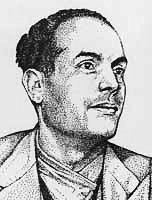
Mountaineer Eric Shipton, the man who almost made it, was born on this day in 1907 in Ceylon.
Eric Shipton was one of the world's most respected climbers in the two decades before Mt. Everest was finally conquered by Hillary and Tenzing in 1953, and was scheduled to lead the 1953 expedition himself. Shipton, however, was more interested in climbing than in summiting, and was perhaps a victim of British ambitions regarding Everest.
The son of a colonial tea planter who died when Shipton was 3, Shipton grew up with dyslexia and without any discernible prospects. After ambling around the Alps during his 20s, he went to work on a coffee plantation in Kenya, where he made his mark as an amateur mountaineer on some previously unclimbed mountains in East Africa.
A scant 7 years after the disappearance of George Mallory on Everest, Shipton was in the Himalayas. In 1931 he summited Kamet (25,263 ft.), and participated in or led small mapping and reconnaissance expeditions (the kind of climbing he enjoyed most) on the Tibetan side of Everest in 1933, 1935, 1936 and 1938 - bagging 26 20,000-ft. peaks during the 1935 expedition alone, and establishing a camp at 27,200 ft. on Everest in 1938. In 1938 he received the Patron's Medal of the Royal Geographical Society, but he was still dirt-poor, and with World War II beginning, Everest seemed out of the question for awhile; so highly-placed friends saw to it that Shipton would be appointed as consul-general in some of the greater Indian territories where he could continue map-climbing in uncharted areas. Chinese border hostilities limited his efforts, however, and in 1951 he was expelled from Yunnan.
Later that year, however, he led another reconnaissance mission on Everest, this time from the Nepal side. The British offered Shipton the chance to lead the 1953 group which eventually got to the top of Everest, but they made it clear to Shipton that his casual style of exploration was not at all what was expected, and basically forced him to resign from the job, leaving John Hunt in charge.
Afterwards, Shipton's reputation was never quite the same. He never made it to the top of Everest, although during the 1960s he made important reconnaissance missions in Patagonia and Tierra del Fuego, and armed with his knowledge of the terrain was an adviser to Chile in their border dispute with Argentina. Shipton died on March 28, 1977 in Anstey, Wiltshsire.
Labels: India, Mountaineering, Nepal
Thursday, May 31, 2007
Wednesday, November 01, 2006
Laxmi Prasad Devkota

The poet Laxmi Prasad Devkota, considered to be Nepal's greatest, is traditionally held to have been born on this date in 1909 in Kathmandu.
Born to the impoverished family of a Hindu priest, Devkota left school early to help support his family, and by the age of 25 found that by selling his poetry, he could earn a meager living. In 1934 he sold 3 poems to the Nepali journal Sharada and attracted widespread attention within the literary community. Two years later he published his first collection, Muna Madan. His poetry was a combination of traditional Sanskrit idioms and themes with currents from European Romantic poetry -- at times evidencing a desire for change in the oppressive regime in Nepal. He occasionally found his poems censored by the ruling Rana family.
Despite publishing and being awarded cultural and government positions, Devkota toiled in poverty throughout his life; his early death by cancer is thought to have resulted from receiving inadequate medical treatment.
"Dirty hands and golden plates -- what can you do with wealth? Better to eat greens and nettles with a happy heart." -- L. Devkota, from Muna Madan.
Labels: Literature, Nepal
Thursday, June 22, 2006
Everest's Forgotten Scout

"The relationship between a man and what he does on a mountain is one of humility. They make you feel small, mountains, which is a salutary feeling. And therefore, to feel that you've conquered them is a presumption." -- Sir John Hunt.
Sir John Hunt was born on this day in 1910 in India. A career Army officer and great-great-grand-nephew of explorer Richard Burton, Col. John Hunt assumed the leadership of the British effort to place the first men on the summit of 29,002-foot Mt. Everest in October 1952, having been appointed by the Joint Himalayan Committee of the Royal Geographical Society and the Alpine Club after the previous leader, Eric Shipton, resigned (or was forced to resign) over differences of opinion with the Committee over the size and scope of the 1953 Everest expedition.
Hunt responded stoically with a soldier's focused sense of planning and logistics to what could easily have been the thankless task of leading a group of men who had already climbed under the leadership of the popular Shipton on what was sure to be Britain's last attempt to be the first to scale Everest; the British received a permit from the Nepal government for the 1953 climbing season, but had no permits for 1954 (reserved for a French expedition) or 1955 (reserved for the Swiss). Arriving in Nepal in March 1953, Hunt had assembled an expeditionary inventory of 12 British climbers (including Ed Hillary, a New Zealander), 36 Sherpa guides (including Tenzing Norgay), 362 Nepalese porters and some 10,000 pounds of baggage and supplies.
The team reached base camp on April 12, and on May 29, after an unsuccessful assault by two other members of the British team, Hillary and Tenzing stood on the summit. Upon hearing of their success, Hunt wept for joy at base camp; although he wanted to be there with them, he felt he could not lead the expedition very well while enduring the harsh final ascent.
Hunt and Hillary were knighted, and later in the year Hunt published an exhaustive account of the expedition, The Ascent of Everest. It should be said that Hunt was no accidental hero: by the time of the Everest expedition, Hunt had ascended about 60 peaks in the Alps and participated in several Himalayan climbs, as well as seeing military action in India during the civil disobedience campaigns of the 1930s (where he was commended for treating his Indian colleagues as equals, unlike many British officers, and earning their trust) and in Italy during World War II, receiving the Military Cross for heroism.
In 1966 he was elevated to the House of Lords with the title of Baron Hunt of Llanfairwaterdine, and advised Prime Minister Harold Wilson during the 1960s on the Nigerian civil war. He died on November 7, 1998 in Henley-on-Thames, England
Labels: Mountaineering, Nepal
Sunday, June 18, 2006
'Because It's There'

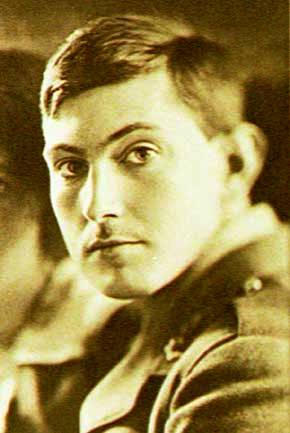
On May 2, 1999, an expedition of climbers reported that they had found the frozen body of George L. Mallory, the leader of the 1924 British Mt. Everest expedition, at 26,800 feet on the North face of the mountain, where it apparently had lain for 75 years. When asked why he wanted to climb Everest, Mallory famously replied, "Because it's there." To his friends, he also revealed a fear of "drying up like a pea in its shell" if he were to turn his back from adventure.
Born on this day in 1886 in Mobberley, England, the son of a Cheshire parson, Mallory read history at Magdalen College Cambridge (where he befriended such budding talents as Rupert Brooke, Lytton Strachey, John Maynard Keynes and Duncan Grant, for whom he posed for paintings and photographs) and in 1910 he became a teacher at the Charterhouse School; but he was mountain-wild, climbing in the Alps and in Wales with every bit of spare time.
In 1921, Mt. Everest was a remote objective -- especially since the nations that it straddled, Tibet and Nepal, were closed to foreigners -- but after negotiating the appropriate permits, Mallory participated in a British reconnaissance mission on the North Col of Everest, climbing several nearby peaks to gain a sense of the climbing environment. Convinced there was a clear route on the North Col, in 1922, Mallory led an expedition back up the North Col, but it ended tragically as an avalanche overran the party, killing 7 sherpas.
He hesitated about going back in 1924 -- he had a new job at Cambridge and was enjoying married life -- but he was unable to resist the call of adventure. Thus it was that Mallory and another member of the British party, 22-year old Andrew Irvine, attempted to climb the North Col again in 1924, with the express aim of reaching Everest's summit.
As far as we know, Edmund Hillary was the first person to reach the summit of Everest (29 years later, along with Tenzing Norgay), and as Hillary descended, he mused "Wouldn't Mallory be pleased if he knew about this." Many have speculated, however, over whether Mallory and Irvine had actually reached the top before their disappearance, and while the discovery of Mallory's body yielded no clues, investigators still hope to find Irvine's body, and perhaps a camera with undeveloped film showing the summit. Hillary himself observed, however, "The point of climbing Everest should not be just to reach the summit. I'm rather inclined to think that maybe it's quite important, the getting down."
Everest veteran Reinhold Messner was opposed to the effort to find Mallory's body on the grounds that it robbed the climber of the air of mystery surrounding his achievements; and although he was also quite skeptical about whether Mallory was skilled enough to tackle the Second Step, the steep rock outcropping just near the summit, Messner refers to Mallory's expedition as a "masterpiece in the annals of high-altitude mountaineering," achieved in tweed coats and hobnailed boots as opposed to the modern equipment available to climbers today, and argues that all who have attempted Everest since owe him a debt of gratitude.
See also my previous post, Going Up is Optional, Getting Down is Mandatory.
Labels: Mountaineering, Nepal
Tuesday, October 11, 2005
Child Worship in Kathmandu

In 1997, before venturing into the Sagarmatha National Park on my trek of the environs of Mount Everest, I had the opportunity to visit the Kathmandu Buddhist neighborhood of Bodhnath, and there I had a peculiar visit with Deshung Trulku-la, then a 6-year old Tibetan lama.
Deshung Rinpoche III (1906-1987) was a Tibetan lama who was considered to be the third reincarnation of Deshung Lungrig Nyima, the historic founder of the Deshung Monastery in Tibet. During the 1950s, Deshung III fled Tibet at the onslaught of Mao's army, and while teaching and raising funds in the U.S. established the Tharlam Monastery in Bodhnath, near Kathmandu, Nepal.
Seven years after his death, Deshung III's followers found Sonam Wangdu, a 3-year old half-Tibetan child living in Seattle with his mother (his Tibetan father had died in a car accident) and proclaimed him to be the fourth reincarnation of Deshung Lungrig Nyima, or Deshung Rinpoche IV. (Deshung III had apparently told his followers that his successor would be born in Seattle.) Sonam's white American mother, Carolyn Lama, was unhesitatingly cooperative with the monks, much to the highly-publicized wrath of her own parents and child protection authorities: it seems that she had had a dream about her son before he was born that when he was 8 years old, thousands of people (including the Dalai Lama) would come to hear him teach.
Having passed the tests of Deshung III's followers, the tot was enthroned as Deshung Trulku-la, the abbot of Tharlam Monastery, in a ceremony on March 8, 1994. Since then, Carolyn has been permitted to visit her son in Nepal only on rare occasions, while the monks at Tharlam raise Deshung Trulku-la and train him to accept leadership of the Sakya sect of Tibetan Buddhism. (Incidentally, Bernardo Bertolucci's depiction of a white child from Seattle being a considered as the successor to a Buddhist lama in his 1993 film Little Buddha is merely coincidence and was not based on Deshung Trulku-la's experience.)
While wandering the streets of Bodhnath, I asked my guide for the day, Mr. Surendira, if he knew anything about the boy lama from America, whom I had heard about on an episode of Dateline NBC.
“Oh, yes,” said Surendira, “he lives near here.”
“Well, I’d like to see his monastery,” I said.
“Yes, no problem, I will take you,” he replied, and with that we were sprinting through the streets of Bodhnath. Soon we came upon the Tharlam compound, and I began to take it in, not realizing that in following Surendira, I was wandering into the living quarters of Deshung Trulku-la.
Suddenly, as Mr. Surendira led me to the threshold of a room deep within the compound, I realized, without introduction or ceremony, that I was standing in little Deshung’s room. “Here he is,” Surendira said to me, beaming.
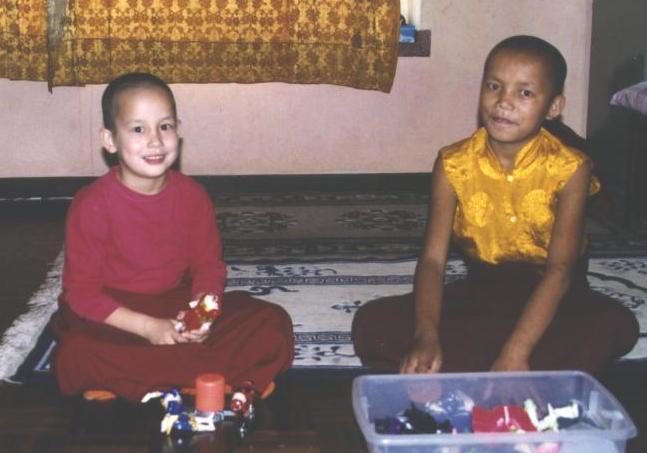
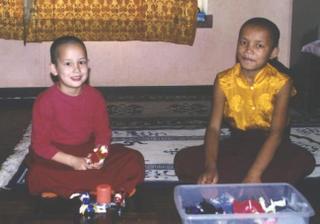
The child was busy playing Power Rangers with a young friend of his from the monastery. “Deshung, this man has come all the way from America to see you,” Surendira said.
Deshung looked up at me. “Yeah, yeah, yeah,” he said wearily, as though it happened a dozen times a day, proceeding then to take a red robot action figure and crash it down onto the head of a plastic Tyrannosaurus Rex.
We exchanged few words, to be honest. I asked and received his permission to take a picture. I felt totally unprepared for the moment – as if I were going to the grocery store to buy a bar of soap and suddenly encountered Pope Benedict XVI in the frozen foods section. If you had a chance to speak to an exalted holy man, even if he was only a child – what would you ask? What nagging metaphysical concerns would you seek to clear up? “Nice to meet you,” I said.
After my trek in the Himalayas, I visited the Kumari Bahal, a temple which is the home of the Royal Kumari, or living virgin goddess – at that time, a 4-year old girl who is worshipped as a Hindu goddess by the king of Nepal. She is chosen from among the Buddhist Sakya families of Kathmandu and must possess the 32 qualities of a flawless girl – i.e., she must have eyelashes like a cow’s, a neck like a conch shell, she must be intrepid and unblemished, etc. Then she is taken to spend each day in placid luxury within the walls of the Bahal, dressed in her ceremonial finery, never to emerge except during two celebrations each year, when she is carried through the streets without letting her feet touch the ground. Visitors are not permitted to photograph her, but there are photos of her for sale at the Bahal. When she reaches puberty, she retires with a pension from the king and a new Kumari is chosen.
I entered the courtyard of the Bahal and, for a small donation, I was able to see her briefly in her balcony window. She looked down on me with as blank an expression as I can recall seeing. It is said, however, that she

possesses an all-knowing gaze and, like a Magic 8-Ball, can answer your questions with just a glance. Unfortunately, my mind was a blank, too.There are numerous legends about ex-Kumaris – including, most significantly, that a man who marries one is cursed to live a short unhappy life. One ex-Kumari, an 84-year old woman who was the living goddess in the 1920s and who was married for more than 70 years to a Kathmandu craftsman, took the moment of the installation of a new Kumari to dispel the rumor, pointing to her own experience. Her husband was even more definitive: “I do not say Kumaris' husbands never die,” he said. “Everyone has to die one day. There are widows, widowers. It is natural and not because they were former Kumaris or their husbands.”
Still, one has to assume that the bridegroom of an ex-Kumari must require an exceedingly stiff spine to deal with someone who has lived most of her childhood as a goddess – not unlike the spine one must certainly have if one were to, say, marry an Olsen twin.
Thursday, September 29, 2005
Going Up is Optional, Getting Down is Mandatory

Having forlornly decided against taking the $400 floor tickets for the Rolling Stones concert at PNC Park, we went to see a talk by Beck Weathers last night. Weathers, you will recall, was the 49-year old Dallas pathologist and amateur mountain climber who was left for dead, unconscious and partially buried in snow for 14 hours, during the tragic Mount Everest expeditions of May 1996 (in which nine climbers died) – but who somehow managed to come back to tell the tale.
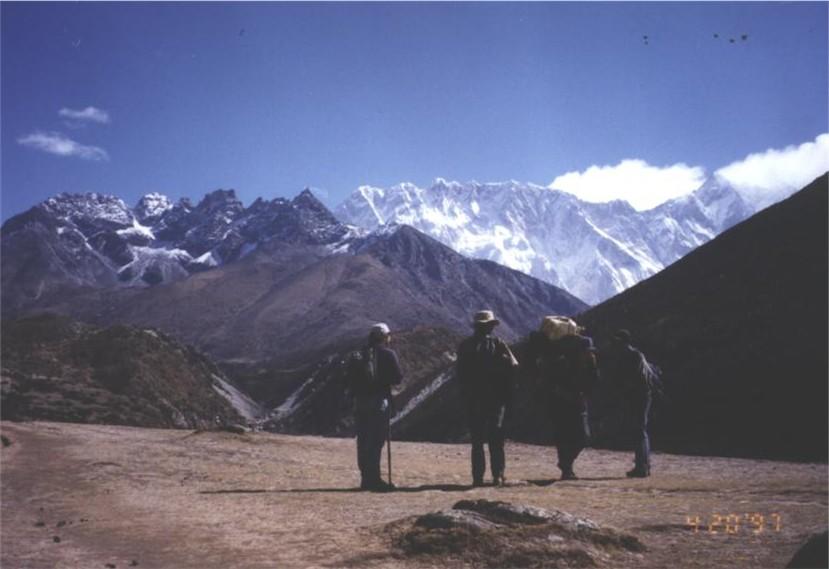
I was only vaguely aware of the 1996 Mt. Everest disaster when I made my own considerably less ambitious trek of Sagarmatha (Everest) National Park in April 1997 (see photo below; I’m the hunched figure on the left). I had somehow missed Jon Krakauer’s first-person account in the September 1996 issue of Outside magazine. However, perhaps not surprisingly, there was a dog-eared copy of it available for me to experience for the first time -- inside a smoky lodge in the village of Dingboche, at 14,500 feet.
Sitting next to a stove burning yak dung for warmth, light-headed and slightly dehydrated from the altitude, I remember experiencing conflicting emotions as I read Krakauer’s tale. I had seen Everest’s peak, with its disarming, churlish cloud-cowlick, from several vantage points during my trek up to that point, imagining that all I really had to do if I desired was to reach out and touch it. During the trek I had been lulled into believing that it was an attainable goal for the likes of me. I could see myself in Krakauer’s portrayal of poor Doug Hansen, the postal worker from Seattle who would die in 1996 after reaching the summit, or of Dr. Weathers – I could understand the sense of optimism that they clearly had that such a dream was possible.Yet, at the same time, I was also very aware of the toll upon my mind and body that even this paltry 14,000-foot trek could induce. Dehydration, loss of appetite, a general fogginess of consciousness in the evenings, a knee ache and a foot ache, sunburn . . . just imagine, I thought – the punishment you’d take just to get above base camp at 17,000 feet. Brain hypoxia, apoptosis, the gradual death of one’s own cells, at 26,000 feet on the way up – only to be turned away from the peak by weather or exhaustion or some other unforeseen obstacle. The weight of failure was surely more than just emotional when you’ve reached that height.
Then imagine being chased by your own mortality back down the mountain. For the light-headed reader I was, the thought was harrowing.
Weathers, who broke out into the first couple of bars of “Satisfaction” in an impromptu acknowledgement of the evening’s competing entertainment, bursts onto the stage and “acts” his tale, using the entire stage to show how he inched sideways across the blade of the summit ridge, and how he would draw lungfuls of breath after every painful step above 22,000 feet. He works the crowd like a brass-band throwback to the most entertaining of the “famous-for-a-moment” lecturers on the old vaudeville circuit.
Weathers never made it to the summit on May 10, 1996. A few years earlier, Weathers had radial keratotomy surgery to correct bad vision in his eyes, observing that eyeglasses were no man’s friend in the mountains. Although he had heard of the phenomenon before, apparently he had never experienced one of its rare side effects – a loss of vision at high-altitude low barometric pressures. He had reached the ice balcony just before the South Summit Ridge, but at that moment he had to admit his utter blindness. After informing his team leader that he couldn’t make the rest of the ascent, Rob Hall made Weathers swear that he wouldn’t move from the ice balcony until Hall returned from the summit with his other clients. Weathers had no idea that Hall would never return (Hall would later die on the mountain), and ended up standing there in below zero temperatures until nearly nightfall, when Mike Groom, one of Hall’s guides, came down and short-roped him. Weathers was so blind by this time that he would occasionally step off into dead air, causing Groom to have to catch him using every ounce of his strength.
Then the storm came -- a freak white-out that caused Groom, Weathers and several members of Scott Fischer’s rival expedition to lose their bearings. They hunkered down on the South Col, strength gradually succumbing to the elements; but when a short break in the storm occurred, Groom and a couple of the other ambulatory climbers felt their way down to “Camp Four” at 26,100 feet to find help. Anatoly Boukreev, one of Fischer’s experienced guides, came and rescued Fischer’s clients one by one, but Weathers and little Yasuko Namba -- who earlier that day, at 47, became the oldest Japanese woman to reach the summit -- were incapacitated. Weathers lost a glove trying warm his hand inside his armpit, exposing his right hand to wind chills 100° below zero. By the time another climber, Stuart Hutchison, arrived on the scene, Namba and Weathers had sunk into comas. Hutchison assumed they were irredeemably near death. Weathers’ wife and children in Texas were called and told that he had perished.
Namba, lying in the snow beside him, would not survive. But Weathers opened his eyes at some point during that second day (he’s calls that “the miracle” that saved him), and he banged his dead-frozen arms down on the ice to regain some sensibility, and he got up and staggered blindly into the wind toward camp like a mummy, his face blackened by frostbite.
Again, his compadres thought he wouldn’t survive the night. On May 12, however, he woke up asking for help, and he was short-roped down to “Camp Two,” where he’d heard that the Nepalese were going to attempt the impossible – a helicopter rescue at an altitude where the air was so thin there was no guarantee that a copter’s blades would be able to chisel into it for lift. Weathers’ wife, back home in Texas, had roused Senator Kay Bailey Hutchison, who had roused the State Department, who had roused the U.S. embassy in Nepal, who found KC Madan -- a Nepalese military pilot, who until that day had questioned whether he had ever done anything to challenge his courage to the limits. His white knuckle flights (two of them, to 21,000 feet) to save Weathers and Taiwanese climber Makalu Gau should have dispelled all doubt about such matters, Weathers observes.
Weathers made it back to Texas, eventually. He lost his right hand below the wrist, and surgeons managed to save an indistinct if partially functional paw for him on his left. His face was scarred by frostbite, and he says he’s rebuffed suggestions that he let a plastic surgeon fix them – he says he wants to remember this ordeal every morning when he looks in the mirror.
Those scars remind him, he says, of how much he values being home with his family.
Labels: Mountaineering, Nepal