Friday, January 19, 2007

Studying by Forgetting


"There is an easy way to become a Buddha: refraining from all evils, not clinging to birth and death, working in deep compassion for all sentient beings, respecting those over you and pitying those below you, without any detesting or desiring, worrying or lamentation -- this is what is called Buddha. Do not search beyond it." -- Dogen.

One of the most important religious thinkers in Japanese history -- the man who articulated for Japanese Buddhists the relationship between the life of the model monk and the quest for spiritual enlightenment -- Dogen was born at the beginning of the 13th century into the luxuries of a noble household. He was a child prodigy, lovingly encouraged by his elders, although his father died he was 2 and his mother died when he was 7. At the age of 4, he was reading Chinese poetry, and by the age of 9 he had become deeply immersed in Chinese Buddhist treatises.

Through the indulgence of an uncle, he entered monkhood at 13, but found monastic life in Japan at the beginning of the 13th century lacking in discipline and depth of thought; by and large, Japanese Buddhism at that time held that salvation lay in merely following a set of simplified tenets. After traveling through Japan looking without success for a great teacher, in 1223 he went to China. There, under the tutelage of the Ts'ao-tung Buddhist master Ju-ching, he began to see for the first time the expression of religious practice through daily chores, as well as through the practice of zazen (Zen meditation in a cross-legged sitting position).

While receiving instruction from Ju-ching, Dogen experienced enlightenment when Ju-ching noticed a sleeping monk and quipped, "In Zen, body and mind are cast off. Why do you sleep?" He stayed on with Ju-ching for two more years, and before returning to Japan, Dogen received the seal of succession from his master, thereby bridging the traditions of Chinese Zen Buddhism with a young Japanese master and marking the beginning of the Japanese Soto Zen sect.

Back in Japan in 1227, Dogen gained a reputation as a virtuous character and severe training techniques, and attracted many followers during the 1230s, monks as well as laymen. He was the first major Zen master to deliver homilies in Japanese instead of Chinese.

Dogen's essential message was that practice, in the form of zazen, and enlightenment were one, and in his treatise Fukanzazengi (1227), he described in minute detail the correct posture for sitting in meditation and gave specific instructions for proper practice. Through concentration on one's posture and other physical regimens, Dogen's notion of practice was to obliterate the self, or as he articulated it with almost mathematical rigor: "To study the Way is to study the self. To study the self is to forget the self. To forget the self is to be enlightened by all things. To be enlightened by all things is to remove the barrier between one's self and others."

Beyond practice, Dogen also concerned himself with metaphysics and ethics. While he shared the view of other Buddhist philosophers that there is an eternal consciousness, his original contribution to a Buddhist metaphysics (in his major work, Shobo-genzo, 1235-38) was his recognition of impermanence, the ever-changing reality (a unity of being and time, expressed similarly by the 20th century German philosopher Martin Heidegger) in which the Buddha nature could be revealed. Out of his metaphysical observations about unity of all beings grew an ethical system, recognizing a unity and equality among all men and women and calling for altruistic love for humanity.

Labels: ,

Monday, April 24, 2006

Shakespeare and Buddhism


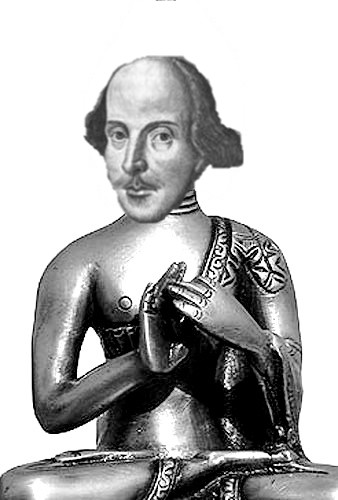
A few days ago, I listed the tenets of the "Eightfold Noble Path," as taught by Buddha. Today, on the day on which William Shakespeare's birthday is traditionally celebrated, I thought I would share with you an interesting coincidental illustration of the Eightfold Noble Path from Shakespeare's Hamlet, in which Polonius provides instruction on living a good life. This excerpt is from the book Whacking Buddha: The Mysterious World of Shakespeare and Buddhism, by Mark Lamonica, with Patrick McCulley (by way of Tricycle, Winter 2005):


I couldn't make this up even if I wanted to; there are eight precepts in Polonius's speech, interchangeable (depending on how you interpret them) with the Buddha's Eightfold Path:
Polonius: There; my blessing with thee! And these few precepts in thy memory see thou character.
1. Give thy thoughts no tongue, / Nor any unproportion'd thought his act. (right thought)
2. Be thou familiar, but by no means vulgar. (right mindfulness)
3. Those friends thou hast, and their adoption tried, / Grapple them to thy soul with hoops of steel, / But do not dull thy palm with entertainment / Of each new-hatch'd, unfledged comrade. (right livelihood)
4. Beware / of entrance to a quarrel, but being in, / Bear't the opposed may beware of thee. (right action)
5. Give every man thy ear, but few thy voice. (right speech)
6. Take each man's censure, but reserve thy judgment. (right concentration)
7. Costly thy habit as thy purse can buy, / But not express'd in fancy; rich, not gaudy; / For the apparel oft proclaims the man, / And they in France of the best rank and station / Are of a most select and generous chief in that. (right effort)
8. Neither a borrower nor a lender be, / For loan oft loses both itself and friend, / And borrowing dulls the edge of husbandry. / This above all: to thine own self be true, / And it must follow, as night the day, / Thou canst not then be false to any man. (right understanding)

Just another example of how we cannot help ourselves when it comes to Shakespeare – as a culture, we cannot rest until we see everything in his works. Next we'll be using them to predict oil prices.

The disarming thing about this habit of culture, however, is that Shakespeare is so damned obliging.

Labels: , ,

Friday, April 14, 2006

Siddhartha


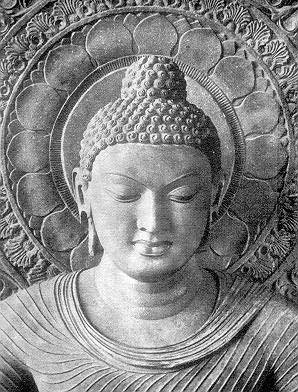
Around 563 B.C.E. in Kapilavastu (now Nepal), Suddhodhana Gautama, the reigning chieftain of the Shakya clan, had a wife who was with child, and a dilemma: his wife, Maya, dreamed that at the moment of the conception of her child, a white elephant entered her body. Unrestricted by P.T. Barnum's cynical conceptualization of white elephants centuries later, Suddhodhana's wise men interpreted Maya's dream as a prophecy that the child would either grow up to be a mighty king or a great spiritual leader.

Horrified that his progeny could grow up to live the inconsequential life of a mystic, Sudddhodhana did his best to train his son Siddhartha for kingship. He schooled Siddhartha in the arts and sciences, hosted banquets and floor shows for him, surrounded him with pretty young female attendants and robust courtier-buddies, and kept him isolated from poverty and suffering; in short, Suddhodhana did everything to encourage Siddhartha's desire for sensual pleasures and material luxury.

Prince Siddhartha married and had a son, but he was as intellectually restless as the domesticated Shakespeare would later prove to be at that age, and his desire to understand life beyond the four walls of the palace led Suddhodhana to arrange four guided tours outside the palace for him.

By legend, the 29-year old Siddhartha was profoundly moved by the first-time experience of seeing a man bent with age outside the first gate; by seeing a crippled man outside the second gate; by seeing a corpse outside the third gate; and by meeting a humble, peaceful monk outside the fourth gate, metaphorically representing the potential triumph of the soul over age, sickness and death.

His desire for inner peace led him to take one last look at his sleeping wife and child and to steal away from the palace in the dead of night, shaving his head and donning the clothes of a beggar -- a decision which no doubt embarrassed and exasperated Suddhodhana. Siddhartha spent six years living in systematic and extreme self-deprivation among Hindi yogis, but soon realized that the sense of macho pride which he had developed in his ability to withstand the harshness of his self-deprivations had blinded him from spiritual insight. Sitting cross-legged under a pipal tree in Buddh Gaya, India, Siddhartha decided to moderate his diet and meditate until he achieved enlightenment.

In one evening he explored his past incarnations (evidence of Siddhartha's Vedic world view) and broke through the facade of existence to see in all living things the endless cycle of suffering played out in death, life and rebirth. While the yogis faced this through abstinence from earthly pleasures to the point of starvation, the vast majority of people tried to ignore the inevitability of suffering by giving in to sensory experience and its illusory primacy, only to find themselves in misery when their desires went unfulfilled.

Siddhartha, now assuming the identity of the Buddha, sought to teach people a "Middle Way": leading moderate and ethical lives, supplemented by a level of earnest awareness of the impermanence of one's existence, one could end desire and ultimately, one could avoid rebirth into another life of suffering. Roaming the countryside of northern India with his follower Ananda for 45 years, he preached to anyone who would listen the tenets of his "Eightfold Noble Path":

(1) right ideas (recognition of the cycle of suffering and the impermanence of existence);
(2) right resolution (not allowing pain or suffering to restrict one's pursuit of the noble path);
(3) right speech (expressing wisdom, respect and kindness);
(4) right behavior (murder, adultery and abuse of alcohol are prohibited; honesty and self-control are encouraged);
(5) right vocation (employment should not involve harm to others, greed or deceit);
(6) right effort (tending to the goodwill of others in priority over one's own desires with sincerity and perseverance);
(7) right mindfulness (staying clear of dogmatism and considering things in relation to their underlying meanings and not merely their appearance); and
(8) right dhyana (absolute concentration on the path, to be retrieved when lost through meditation).

Around 483 B.C.E., at the age of 80, he declared he would live no more, telling Ananda, "Whatever is born bears within itself the seeds of destruction. Compound things are impermanent. Work out your own salvation with earnestness." Lying on his side, facing west with his head to the north, he achieved the "final nirvana," a state of total extinction.

For many years after Buddha's death, his teachings were followed by only handfuls of people in northern India -- particularly among merchants and start-up entrepreneurs, who saw in Buddhism a way of breaking the stale class relations inherent in the Hindu caste system, and who were attracted by Buddha's action-centered, self-reliant approach. With the conversion of Indian emperor Asoka to Buddhism in the 3rd century B.C., the relatively obscure religion spread quickly throughout southern Asia, fragmenting into thousands of sects; dominant strains include Theravada Buddhism (which recognizes that Buddha was an extraordinary human being but not a god, and that following the Eightfold Noble Path is the way to achieve nirvana) and Mahayana Buddhism (which postulates a transcendent existence beyond the impermanence of the empirical world, and that Buddha himself forms a part of the transcendental realm).

Artistic images and interpretations of Buddha have persisted for 25 centuries, more than most heroes of history, and he has found a most receptive audience among Western artists and thinkers in the 20th century -- perhaps because in the midst of a culturally exotic and enticing context, Westerners can find teachings not all that dissimilar in some respects to those of Jesus in the Sermon on the Mount. Among many modern examples of Western artists finding fascination in Buddha include Herman Hesse's novel Siddhartha (1922); Jack Kerouac's retelling of Buddha's life, Wake Up; and Bertolucci's film Little Buddha, 1993, with Keanu Reeves (of all people) as Siddhartha.

Labels:

Tuesday, October 11, 2005

Child Worship in Kathmandu


In 1997, before venturing into the Sagarmatha National Park on my trek of the environs of Mount Everest, I had the opportunity to visit the Kathmandu Buddhist neighborhood of Bodhnath, and there I had a peculiar visit with Deshung Trulku-la, then a 6-year old Tibetan lama.

Deshung Rinpoche III (1906-1987) was a Tibetan lama who was considered to be the third reincarnation of Deshung Lungrig Nyima, the historic founder of the Deshung Monastery in Tibet. During the 1950s, Deshung III fled Tibet at the onslaught of Mao's army, and while teaching and raising funds in the U.S. established the Tharlam Monastery in Bodhnath, near Kathmandu, Nepal.

Seven years after his death, Deshung III's followers found Sonam Wangdu, a 3-year old half-Tibetan child living in Seattle with his mother (his Tibetan father had died in a car accident) and proclaimed him to be the fourth reincarnation of Deshung Lungrig Nyima, or Deshung Rinpoche IV. (Deshung III had apparently told his followers that his successor would be born in Seattle.) Sonam's white American mother, Carolyn Lama, was unhesitatingly cooperative with the monks, much to the highly-publicized wrath of her own parents and child protection authorities: it seems that she had had a dream about her son before he was born that when he was 8 years old, thousands of people (including the Dalai Lama) would come to hear him teach.

Having passed the tests of Deshung III's followers, the tot was enthroned as Deshung Trulku-la, the abbot of Tharlam Monastery, in a ceremony on March 8, 1994. Since then, Carolyn has been permitted to visit her son in Nepal only on rare occasions, while the monks at Tharlam raise Deshung Trulku-la and train him to accept leadership of the Sakya sect of Tibetan Buddhism. (Incidentally, Bernardo Bertolucci's depiction of a white child from Seattle being a considered as the successor to a Buddhist lama in his 1993 film Little Buddha is merely coincidence and was not based on Deshung Trulku-la's experience.)

While wandering the streets of Bodhnath, I asked my guide for the day, Mr. Surendira, if he knew anything about the boy lama from America, whom I had heard about on an episode of Dateline NBC.

“Oh, yes,” said Surendira, “he lives near here.”

“Well, I’d like to see his monastery,” I said.

“Yes, no problem, I will take you,” he replied, and with that we were sprinting through the streets of Bodhnath. Soon we came upon the Tharlam compound, and I began to take it in, not realizing that in following Surendira, I was wandering into the living quarters of Deshung Trulku-la.

Suddenly, as Mr. Surendira led me to the threshold of a room deep within the compound, I realized, without introduction or ceremony, that I was standing in little Deshung’s room. “Here he is,” Surendira said to me, beaming.

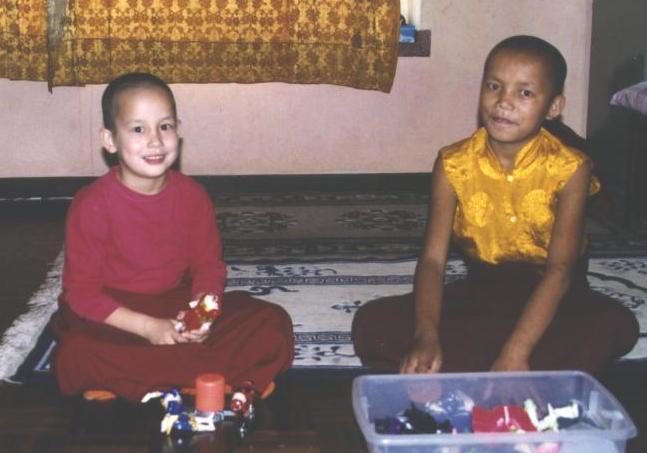
The child was busy playing Power Rangers with a young friend of his from the monastery. “Deshung, this man has come all the way from America to see you,” Surendira said.

Deshung looked up at me. “Yeah, yeah, yeah,” he said wearily, as though it happened a dozen times a day, proceeding then to take a red robot action figure and crash it down onto the head of a plastic Tyrannosaurus Rex.

We exchanged few words, to be honest. I asked and received his permission to take a picture. I felt totally unprepared for the moment – as if I were going to the grocery store to buy a bar of soap and suddenly encountered Pope Benedict XVI in the frozen foods section. If you had a chance to speak to an exalted holy man, even if he was only a child – what would you ask? What nagging metaphysical concerns would you seek to clear up? “Nice to meet you,” I said.

After my trek in the Himalayas, I visited the Kumari Bahal, a temple which is the home of the Royal Kumari, or living virgin goddess – at that time, a 4-year old girl who is worshipped as a Hindu goddess by the king of Nepal. She is chosen from among the Buddhist Sakya families of Kathmandu and must possess the 32 qualities of a flawless girl – i.e., she must have eyelashes like a cow’s, a neck like a conch shell, she must be intrepid and unblemished, etc. Then she is taken to spend each day in placid luxury within the walls of the Bahal, dressed in her ceremonial finery, never to emerge except during two celebrations each year, when she is carried through the streets without letting her feet touch the ground. Visitors are not permitted to photograph her, but there are photos of her for sale at the Bahal. When she reaches puberty, she retires with a pension from the king and a new Kumari is chosen.

I entered the courtyard of the Bahal and, for a small donation, I was able to see her briefly in her balcony window. She looked down on me with as blank an expression as I can recall seeing. It is said, however, that she possesses an all-knowing gaze and, like a Magic 8-Ball, can answer your questions with just a glance. Unfortunately, my mind was a blank, too.

There are numerous legends about ex-Kumaris – including, most significantly, that a man who marries one is cursed to live a short unhappy life. One ex-Kumari, an 84-year old woman who was the living goddess in the 1920s and who was married for more than 70 years to a Kathmandu craftsman, took the moment of the installation of a new Kumari to dispel the rumor, pointing to her own experience. Her husband was even more definitive: “I do not say Kumaris' husbands never die,” he said. “Everyone has to die one day. There are widows, widowers. It is natural and not because they were former Kumaris or their husbands.”

Still, one has to assume that the bridegroom of an ex-Kumari must require an exceedingly stiff spine to deal with someone who has lived most of her childhood as a goddess – not unlike the spine one must certainly have if one were to, say, marry an Olsen twin.

Labels: , ,