Monday, August 27, 2007

Exile in France


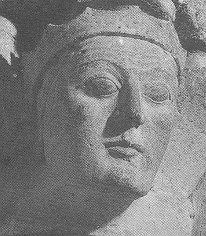
Childeric III, known as "Childeric the Lazy," King of the Franks (743-deposed 751), the last of the Merovingian kings of France, died on this day in 755 in a monastery near St. Omer, France.

In modern times France has been generous to deposed rulers of other countries, giving shelter to such characters as the Shah of Iran and Bebe Doc Duvalier, among others, after their ignominious defeats, in varying degrees of faroukian splendor. Such generosity has not generally been given to France's own, however, as the French Revolution amply proves.

Even before that, Childeric III learned this lesson first-hand. Childeric III became king of the Franks in 743, during the end of a period marked by the relative weakness of the kings' authority as compared to the power wielded by mayor of the palace in Paris. While the exact political reasons are obscured by history (although Childeric's sobriquet may provide at least a germ of an answer), mayor Pepin the Short asked Pope Zacharias for permission to sack Childeric III and take over the Frankish throne. Permission was granted, and Pepin confined Childeric to a monastery in the south, where one assumes he did not stroll around jauntily in caviar-stained silk shirts.


Labels: ,

Sunday, May 06, 2007

Robespierre


Maximillian de Robespierre was born on this day in 1758 in Arras, France.

A lawyer known for his advocacy on behalf of the poor, Robespierre entered politics with his election to the States General in 1789, and shortly thereafter he became a leader of the Jacobins on the Left. He called for the trial of Louis XVI after Louis revealed his disapproval of the subordination of Catholic administration to the civil government and attempted to flee France by way of Varennes in July 1791, and Robespierre advocated the outright overthrow of the monarchy a year later.

After the king was deposed in August 1792, Robespierre was among the most bitter enemies of compromise, encouraging the mobs to attack the moderate Girondins and calling for Louis' execution; as the tide turned toward the radicals, he became a member of the ruling Committee of Public Safety (CPS) in July 1793.

There he showed himself to be a ruthless tactician, less for the benefit of his own position than for his guiding principles -- stamping out excessive wealth and advocating state provision of resources for the citizens. When his rivals (such as Hebert and Danton) threatened to compromise these principles or his methods of achieving them, he skillfully maneuvered them to the guillotine in the belief that humane policies encouraged revived conspiracies, asserting that "Terror is nothing other than justice, prompt, severe and inflexible [and] it is therefore an emanation of virtue."

His Law of Prairial (June 1794) dispensed with even the appearance of fair trials, leading to the execution of 1,376 people in just 47 days. Feeling indestructible, Robespierre publicly lashed out against the more moderate members of the CPS the following month; they responded by having him arrested. He was quickly released by his supporters, and although a popular uprising from among the local Parisian government came to Robespierre's aid, at the eleventh hour of the military standoff against the National Guard, Robespierre lost his nerve, admitting that he did not have any confidence that he would succeed. He submitted to arrest again, and was summarily guillotined on July 28, 1794, along with 21 of his supporters. With Robespierre out of the way, the worst excesses of the Great Terror soon subsided.


Labels:

Monday, November 27, 2006

Clovis


By the time Clovis acceded to the leadership of the Franks, the Roman Empire was in a shambles: puppet emperors had been under the control of the Suevians since 456, but the Suevian power-broker Ricimer had died in 472, and the last person to hold the title of Roman emperor, the 16-year old boy Romulus Augustus, abdicated in 476. While Clovis' father Childeric still had to contend with stray Roman armies, by 481 these armies were little more than lost patrols. Clovis took the opportunity to drive the Romans out in 486, defeating (and decapitating) Syragius, the son and successor of the Roman governor of Gaul, Aegidius, and the model for the Arthurian romance Sir Sagramore the Foolish. After defeating Syragius, Clovis began to plan his conquest of the other "barbarians" along the Rhine.

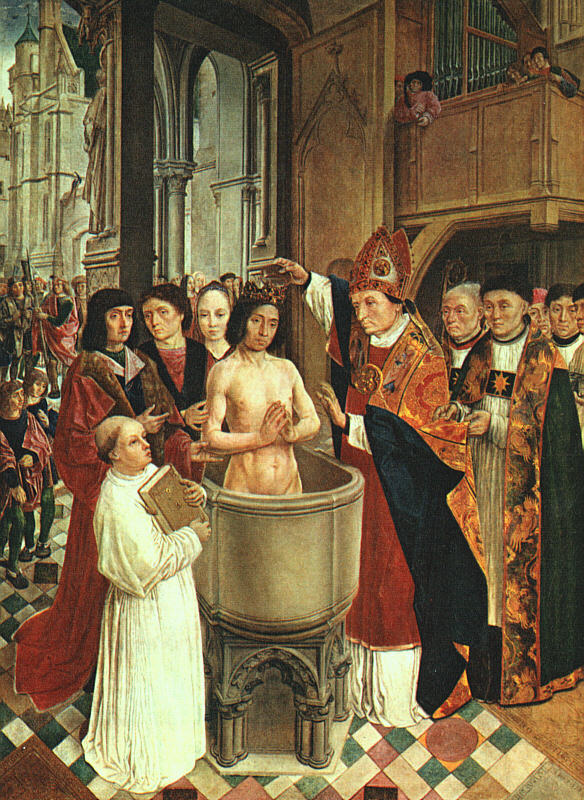
He chose as his wife Clotilda, a devout Catholic and the orphaned daughter of a brother of the Burgundian king Gontebaud; Gregory of Tours later suggested that Clovis's choice of spouse was meant to unnerve Gontebaud, who had supposedly murdered Clotilda's father. In any event, Clotilda had attempted to convert the pagan Clovis at the time of their marriage, but it wasn't until Clovis found himself having trouble with the Alemanns that Clovis relented. He vowed to become a Christian if he defeated the Alemanns; and after he defeated them, he received baptism amid great pomp and circumstance from St. Remigius on Christmas Eve, 496 -- becoming the first Christian king of the Franks and enjoying the cooperation of the Church thereafter.

Conspiracy theorists suggest that Clovis' baptism was actually the consummation of a bargain struck by the Roman Catholic Church -- that in exchange for the Church's support in temporal affairs, Clovis and his progeny would renounce the Merovingian claim that the family line began with the union of Jesus Christ and Mary Magdalen. If conspiracy theories about Roswell, Marilyn, Kennedy and Elvis have got you scratching your head, imagine what motivates a modern mind to hatch a conspiracy theory focusing on the baptism of a Frankish king from the 5th century. Today's Merovingian partisans mourn the reign of the independent-minded Dagobert II (676-9) as the last true Merovingian king under the bargain, and regard the papally-supported Carolingian coup which relegated Merovingian figurehead Childeric the Lazy to a monastery in 751 as the last semi-bloody deed in the silencing of the radical Christianity of Jesus' half-brother, James the Just; on the other side of the coin, the anti-Merovingians claim that the Merovingians went underground through organizations such as the Knights Templar and are at present the unseen powers behind international industry and finance.

Clovis subsequently took on and defeated Clotilda's uncle, Gontebaud, king of the Burgundians and one of the last sponsors of the Roman emperors, in 500, and went after the Visigoths, killing Alaric II, king of the Visigoths, at Toulouse in 507 -- thereby extending the Frankish kingdom to include much of modern France and Germany. He established his court at Paris, thereby establishing the city as the preferred capital of Gaul (or France) for centuries, where he promulgated the earliest Frankish canon of written laws and meddled poorly in church affairs. According to custom, when Clovis died (on this date in 511 in Paris at the age of about 46) his kingdom was split among his four sons, two of whom (Childebert I and Chlotar I) emerged as dominant kings of the Frankish realm for a time.

Labels: , , ,

Tuesday, August 15, 2006

Napoleon


A humorless, raw-tempered, 5'-4" to 5'-6" Corsican who possessed a vulgar twang when ordering his foie gras turned out to be the most influential French commander since Charlemagne, a fact which has left the proud French ambivalent about his memory. He was denied a burial in St. Denis, where the French kings are entombed, but given a dramatically set sarcophagus at the center of Les Invalides in Paris, inside seven nesting coffins ("to make sure he never gets out again," according to one wag).

Napoleon Bonaparte, born on this day in 1769 in Ajaccio, was the son of a minor Corsican nobleman whose family had never bothered itself with the dirty business of soldiering. Were it not for Napoleon being packed off to study at a military academy at Brienne, France, Napoleon might have followed his forefathers' footsteps as a gentleman landlord; but Napoleon became a voracious student of military history, and after completing his studies he joined the French artillery as a second lieutenant.

He was an active Jacobin as the French Revolution began, and when Corsica declared its independence, Napoleon completely severed his ties with his homeland, seeing his best hopes for advancement in supporting the revolutionaries. He became the hero at the British siege of Toulon, directing the focused barrage which resulted in French victory, and at 26, was promoted to brigadier general. Back in Paris, he happened to be on hand when a group of angry royalist protesters threatened to interrupt the revolutionary constitutional convention; he ordered a "whiff of grapeshot," a single artillery volley, to be fired at the crowd, which dispersed them so quickly that Napoleon was rewarded with the command of the Mediterranean army in Italy.

Following a quick succession of victories, by the end of 1797 he controlled most of Italy and Austria, and set his sights on Britain by attempting to disturb its Indian trade with an assault on Egypt. Avoiding a losing battle against Lord Nelson's fleet, Napoleon stopped his onslaught and returned to Paris, used the strength of his heroic reputation to assemble key supporters, and staged a quick coup over the Directory then ruling France, installing himself as first consul and leader of the French at age 30.

As an administrator, he was fast and effective -- he cracked down on street crime, began mandatory military conscription, and consolidated his power with new constitutions in 1802 and 1804, giving much to the appearance of democracy and the "sacred rights of property, equality and liberty" while ultimately giving himself the title of "emperor" (literally crowning himself in a ceremony in Paris on December 2, 1804, snatching the crown out of the hands of Pope Pius VII). His Napoleonic Code standardized laws, abolished serfdom, and provided freedom of religion and free education; it was the precedent for the laws of modern France, as well as Belgium, Quebec and the Louisiana Territory.

Successful at home, he grew tired of British attacks and restless for world domination. He planned to attack Britain, but his fleet was drawn into a devastating fight with the British at Trafalgar (led by Nelson again, who died winning); so Napoleon decided to move to the ground campaign (1805-7) in which he defeated Austria and Russia at Austerlitz, Prussia at Jena-Auerstadt, and Russia at Friedland using widely spaced columns of troops who lived off the land and moved with astonishing speed. By 1808, much of continental Europe was in his control, which he delegated to his brothers and nephews to rule over as constituent kings. His luck ran out, however, with an unsuccessful attack on Spain (in which he lost 300,000 troops) and the ill-fated invasion of Russia in 1812; his prize after slashing and burning his way across Eurasia was a self-immolated, abandoned Moscow, with no provisions for the winter. In retreat during 1813, Napoleon fought brilliantly against the coalition of Russian, Prussian, British and Swedish troops, but was defeated at Leipzig. He resisted an offer of a peace treaty with the coalition, which only inflamed his enemies, bringing them marching into Paris in January 1814; within 3 months, Napoleon had abdicated and accepted exile on the island of Elba.

In March 1815, however, he escaped and entered France at Cannes; his old compatriot Marshal Ney, sent to arrest him by Louis XVIII, instead joined him, beginning 100 days of moderately successful battles against the coalition. By June 1815, he and his troops had lost their spark, and Napoleon suffered his last, most decisive defeat at Waterloo, at the hands of Wellington and Blucher. Having already irrevocably changed the map of Europe, he surrendered again and was this time exiled to a British island in the South Atlantic, St. Helena.

This time, the formerly irrepressible Corsican settled into his fate gracefully, spending his time tending to his flower garden, horseback riding and playing with the neighborhood children. The Napoleonic legend sprang up almost immediately, fed by indulgent assessments by Lord Byron, Heine, Stendahl, Hugo and Walter Scott who saw him as the stabilizing harbinger of post-monarchial liberty, but balanced by popular preoccupations with his physical and emotional shortcomings.

Napoleon died on May 5, 1821 on St. Helena.

Labels:

Saturday, April 15, 2006

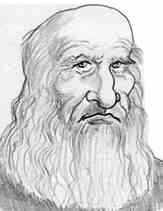
Leonardo Da Vinci


In many of the "most important people of the millennium" lists which popped up at the end of 1999, Leonardo da Vinci placed in the top 10, yet some historians argued that he was not deserving of the honor: as a painter, he produced relatively little work which survives; and as a scientist, while his copious private notebook doodles and commentaries are revealing about the thought processes and unfinished projects of a peculiar Italian dilettante, they produced little in terms of direct, lasting influence.

What continues to attract us to Leonardo, perhaps, is his unrelenting eye, the curiosity which drove him to dissect and probe and theorize in the manner of our 20th century heroes of science and technology. Those notebooks, in which Leonardo wrote from right to left in his careful, angular handwriting so that they may only be read with the aid of a mirror, showed not just a freelancer with an interest in topics ranging from architecture and botany to physics, engineering, cartography, anatomy and military science, but an innovator -- someone who saw his mission as one of searching for tiny lightbeams of visible scientific truth out in the darkness and encouraging their brilliance through previously unimagined practical designs (much as his style of painting seems to present the light of human forms struggling out of the shadows). In that sense, historians notwithstanding, Leonardo's life stands as a sort of signpost for the twinkling millions of anonymous workshop geniuses without specialty, and the elevated admiration popularly held for Leonardo (similar to the feelings reserved for Thomas Jefferson and Benjamin Franklin) is a method of doing them honor.

Born on this day in 1452 near Vinci, the illegitimate son of a notary, his lowly social status ensured that the clever child would not be whisked into a traditional profession, thereby allowing him the freedom to shape his own profession as nomad, thinker and craftsman. Seeing artistic talent in him, when he was 16 Leonardo's father apprenticed him to the workshop of Florentine painter/sculptor Andrea del Verrocchio, with whom it is said Leonardo developed a close bond. Some have surmised that Verrocchio used the handsome young Leonardo as the model for his bronze statue of David. Leonardo quickly surpassed the skills of his teacher, particularly in rendering the musculature of the human body, the suggestion of motion and in his bold use of light and shadow (in contrast to the flat "stage" lighting of many of his contemporaries).

He enjoyed some unusual commissions while other more established artists began to leave Florence for the papal art boom in Rome, but abruptly left Florence himself in 1481 to seek his fortune as a military advisor and genius-at-large in the court of Ludovico Sforza, duke of Milan. There he designed fortifications against potential invasions by the French, while filling his notebooks with designs for the most sadistic machines of human destruction one could imagine -- cold evidence of his detachment from other human beings (which he referred to as "sacks for food") despite his obvious admiration for the beauty of the human form. Yet he did not seem to be filled with hatred; rather, his calculating scientific eye seemed to blot out any access in him to love or hate, even as he could cultivate charm, grace and even humor when the company of society served his aims.

While in Milan, Leonardo painted one of his most famous works, The Last Supper (1495-98), on the wall of the refectory of Santa Maria delle Grazie, recalling Castagno's earlier Last Supper in its composition (except that Judas now sits on the same side of the table as the other disciples) but surpassing it in Leonardo's intimate rendition of the emotional states of each disciple at the moment Christ predicts his betrayal, and in his use of an ideal (rather than purely realistic) perspective design in which there is no place one can stand to make the lines of the picture come right. As to the latter innovation, Leonardo employed a kind of super-realistic plane of experience with which to engage the viewer, in effect "cheating" on the perspective to emphasize the drama, with Christ at the mathematical center of the mural and Judas' diagonal planes jutting exaggeratedly away from Christ, identifying his separateness. Use of this kind of super-real perspective would become a hallmark of the High Renaissance in the work of his younger contemporaries, Michelangelo and Raphael.

In 1502, Leonardo went to work for Cesare Borgia designing more fortifications and hydrological plans, making maps and giving strategic advice, although Borgia's mercurial temper ultimately drove Leonardo away within a few months. Back in Florence the following year, Leonardo began his portrait of the 24-year old Lisa di Antonio Maria Gherardini, wife of Florentine big shot Francesco del Gioncondo. Known as Mona Lisa, or La Gionconda, the portrait took Leonardo three years to complete, and ultimately he never gave it to Sr. Gioncondo, as it was in his own estate at the time of his death. Since then it has become the most famous of Leonardo's works, if not the most famous painting in history, a definitively reusable pop culture referent (see Nat King Cole's hit song, "Mona Lisa," 1950, among other manifestations) as well as the subject of years of intense analysis and comment by art critics, Renaissance historians and Sigmund Freud, among others. Thus, it is probably too easy to overstate its influence, yet it is clear that Leonardo's singular decision to paint the entire torso and head of Sra. Gioncondo in three-quarter view (as opposed to the close facial portrait typical of the time) became the standard in serious portraiture well into the 19th century.

Leonardo spent his last years as the beloved wise man of the French court of Francis I, ironically after spending so many years in the service of Italian nobles obsessed with French attacks. Vasari says that Leonardo stubbornly raised science over God even as he met his end on May 2, 1519 near Cloux, France, while other sources suggest he spent his last hours in pious observance, asking God to forgive him for squandering his time on science instead of his God-given talent for painting. It is perhaps more important to note that for Leonardo, art and science were intimately related, one toiling in the service of beauty and the other in the service of truth, both beginning and ending under the watch of the preeminent human eye.

Labels: , ,

Saturday, April 01, 2006

Eleanor of Aquitaine


Aquitaine, a region comprising the southern third of France which roughly corresponded with one of the 3 Roman divisions of Gaul, was at the beginning of the 12th century a fading independent duchy, still free from the control of any kingdom, but not on the strongest footing. William X, the duke of Aquitaine, had witnessed his province shrink from its zenith of power under his grandfather, and was not an especially formidable ruler. At the age of 38, William died of food poisoning on a pilgrimage to Santiago de Compostela, and left his only surviving child and heir, his 15-year old daughter Eleanor ("Alia-Aenor," or the "other Aenor," after her mother, Aenor de Chastellerault), as the ward of Louis VI ("the Fat"). Within just a few days, the opportunistic Louis arranged the marriage of Eleanor to his own son, the future Louis VII, thereby claiming Aquitaine for France.

Or so one would have thought at the time -- but Eleanor would grow to be a most resourceful woman, succeeding at playing a man's game (statecraft) while using every tool available to her as a woman. Within the corridors of 12th century European power, she was a foremost strategist of the gender politics of her time.

Young Louis, who succeeded his father to the French throne shortly after their wedding, was a boy better suited for reading than horseplay in general, but his piety led him to direct the Second Crusade to the Holy Land. Eleanor, now the mother of his eldest daughter, dutifully followed her husband from post to post, subtly transforming herself along the way from a compliant ingénue to a boisterous lady-to-be-reckoned-with. Her emotional dominance over the monkish Louis was clear, and soon there were rumors that she had committed adultery with, among others, Saladin, who would become a leading soldier of the Syrian army. (The affairs may have been real enough, but the liaison with Saladin was probably a revisionist fantasy.) Upon their return, Louis sought an annulment of their marriage from Eugenius III on the grounds of consanguinity (close kinship -- never mind that Eleanor was already the mother of his 2 daughters). Eugene granted the annulment in 1152, and in the bargain Eleanor managed to regain possession of Aquitaine.

Wasting no time at all, the 30-year old Eleanor turned to the one man outside of the Holy Land who most threatened Louis' sovereignty, a 19-year old boy named Henry who had extensive French holdings and a clear shot at the throne of England -- seducing the impetuous boy and securing him as her next groom. At her coronation as Henry's queen in Worcester a few years later, Eleanor declared, with an astute sense of her own life's purpose, "I am queen of England, by the wrath of God!"

Now Aquitaine, Anjou, Normandy and England were all under one banner, and it was inevitable that the hen-pecked Louis would have felt slighted; so Louis sent his forces against Henry. Check by bloody check, the bitter rivalry of two kings over Eleanor and her huge tracts of land initiated a conflict that would plague both England and France for decades.

Meanwhile, Eleanor bore Henry 5 sons and 3 daughters -- certainly enough progeny to guarantee the succession to all of Henry's realm, but more than enough to give Henry a lifetime of grief. Henry and Eleanor began to grow apart as Eleanor advanced in age, and Eleanor relocated to Poitiers, setting up her own trend-setting court (which became a center of artistic and literary taste) and using her sons as weapons against the philandering Henry.

In 1173, she returned to London to help her sons Henry, Richard (her personal favorite), Geoffrey and John lead a rebellion against King Henry, but her husband had her placed under house arrest for the next decade while he negotiated with his hot-headed boys. Following the deaths of Henry the Younger and Geoffrey, Eleanor's favorite son Richard became the natural successor to Henry, who died in 1189, a man broken and defeated by Eleanor's skillful uses of maternal power.

Richard promptly went off on the Third Crusade, leaving Eleanor as regent of England. Eleanor kept her youngest son John in check, who was attempting to mount his own rebellion while Richard was off fighting infidels; but after Richard's return and subsequent death, she fought to preserve John's authority, throwing off the challenges of her own grandson, Geoffrey's son Arthur of Brittany, in his attempts to overtake John's French territories. She also attempted to play her hand in diplomacy, again to preserve John's authority, by crossing the Pyrenees at age 78 to seize her granddaughter, Blanche of Castile, and deliver her to the French court to marry the future king, Louis VIII; it was Eleanor's hope, in the years immediately before her death (on this date in 1204 at Fontevrault, France, at the age of about 82), that the alliance would cause an end to the feud between the English and French monarchs; but Philip II kept up his assaults, resulting in John losing all of his French lands except for a portion of Poitou and his mother's beloved Aquitaine.

Labels: ,

Friday, December 23, 2005

The Dagobert Code


On this date in 679, an obscure 28-year old warlord styled as Dagobert II was assassinated in the Foret de Woevre, near Stennay, Lorraine.

One thing about being on the losing side of history, especially 7th century history, is that there is no one left to tell your side of the story with any accuracy. Nonetheless -- call it "underground history," call it "pop culture revisionist fantasy," if you will -- here in the 21st century there is a persistent suggestion (whiffs of which have been taken up famously, for example, in Dan Brown's best-selling novel The Da Vinci Code, and in Larry and Andy Wachowski's Matrix film trilogy) that the Merovingian dynasty of French kings met their end as a result of the breach of a bargain between Clovis I and Pope Anastasius II: specifically, that in exchange for Clovis' baptism and renunciation of a centuries old claim (embarrassing to the Church) that Clovis' family was directly descended from Jesus Christ, that the Church would be prepared to support Merovingian claims to the throne of the Holy Roman Empire.

For Clovis to have been seduced by such a bargain was the fatal error, according to the theorists, because by placing his progeny in a position of deriving their legitimacy from the Church, he guaranteed that the Church would, little by little, take all meaningful authority and legitimacy away from the Merovingians when it was politically expedient to do so.

To the most devoted theorists, Dagobert II was the last defiant Merovingian claimant to the throne. By 651, when Dagobert was born to Sigibert III, even though the Merovingians still retained their royal titles, the authority of the Frankish kings had already been largely usurped by the "mayors of the palace" -- in this case, an administrator named Grimoald. When Sigibert died in 656, Grimoald immediately dispatched the 5-year old Dagobert into the care of the bishop of Poitiers so that he could place a pliable family member on the throne.

Although Grimoald's intent may have been to have the child murdered, the bishop was apparently reluctant to carry out the deed. Instead, the bishop exiled the child to Ireland, to be raised in the monastery at Slane. There Dagobert found a mentor in St. Wilfrid, who educated and prepared him to assume royal duties. In 671, Dagobert married a Visigoth princess and moved to Rennes-le-Chateau, where he convinced his mother to back his claim to the Austrasian throne of the Franks. With the help of St. Wilfrid (who perhaps saw in Dagobert an instrument of mending fences between the Roman and Celtic wings of the Church), Dagobert was crowned king in 676.

Dagobert moved quickly to consolidate his authority and, in defiance of his former mentor, raised a larger treasury at the expense of the Church with the aim of reconquering Aquitaine, which had seceded from Merovingian territory about 40 years earlier. Dagobert's independence apparently caused significant distress among both ecclesiastics and secular administrators, and legend has it that the then-current mayor of the palace, Pepin the Fat (grandfather of Pepin the Short, the first Carolingian king of France), ordered Dagobert's assassination, which came at the hands of one of Dagobert's servants, who lanced him in the eye (a la Harold II and William Rufus of England) as Dagobert rested during a hunting trip.

The Church apparently did not pause to grieve Dagobert's death, and there is little evidence of him left in the records and contemporary histories of the Frankish line. On the other hand, Dagobert had enough of a cult following among his subjects to merit canonization as a saint -- not by the Church, but by a local conclave -- in 872. Modern conspiracy theorists see Dagobert's death as the beginning of an underground period of Merovingian activity by which, through shadowy organizations such as the Knights Templar and its shadowy subcommittee, the Prieure de Sion, the Merovingians have secretly regained control of the seat of European power and have promoted the European Union as a second Holy Roman Empire to replace the one they lost, controlling (in Lyndon-LaRouchian terminology) the prime levers of international industry and finance.

If that is the case, perhaps there is no good doggone reason to cry over "spilt Dagobert" today; indeed, it is sometimes unclear whether today's Merovingian conspiracy theorists stand in favor of, or against, the legacy of Dagobert II.

Labels: , ,